Vitamin B12 and GLP-1 Medicines: When Testing Matters
A GLP-1 medicine alone doesn’t establish a B12 problem, but symptoms, a limited diet, metformin, and absorption issues can make testing worth discussing.
Taking a GLP-1 medicine alone doesn’t show that your B12 is low. In a study of people taking metformin, GLP-1 co-use was associated with low B12 but wasn’t shown to cause it; a review in body-contouring care after major weight loss raised reduced nutrient intake as a concern. 23 Your symptoms, diet, other medicines, and absorption history can help determine whether testing makes sense. 1
First, separate the medicine from the rest of the picture
Taking a GLP-1 medicine does not, by itself, show that your vitamin B12 is low. A review focused on nutritional care after major weight loss and around body-contouring surgery notes that GLP-1 medicines may reduce micronutrient intake through appetite suppression. It does not establish that these medicines cause B12 deficiency. 3 If treatment has made it harder to eat a varied diet, that change may be worth mentioning, especially if you’re also avoiding foods that provide B12.
Check the full medication list, not just the weight-loss medicine. Metformin is a recognized B12-risk context, and long-term use of acid-reducing medicines such as proton pump inhibitors or H2 blockers can interfere with absorption of B12 from food. 1 Bring the medication names or a current list.
One study can be easy to misread: a cross-sectional study of adults with type 2 diabetes who were taking metformin found that GLP-1 receptor agonist use was more common in the group with low B12. But participants were also taking metformin, the study did not establish that the GLP-1 medicine caused the low level, and its authors said the reason for the association was unclear. 2
When your symptoms and history make testing relevant
B12 deficiency can cause fatigue, a sore or inflamed tongue, palpitations, anemia, and nerve symptoms such as numbness or tingling in the hands and feet. Nerve symptoms can occur even without anemia, so a normal-looking blood count alone doesn’t rule out a B12 concern. 1
Testing may be worth discussing if you have these symptoms, take metformin or long-term acid-reducing medicine, eat few or no animal products, have a condition or surgery that can affect absorption, or are an older adult. Absorption can become less reliable with age, including when stomach changes reduce the release of B12 from food. 1
Your usual diet matters because B12 occurs naturally in animal foods. Plant foods do not naturally provide it, though some foods, such as fortified cereals and fortified nutritional yeast, do. If you’re vegetarian or vegan, describe which fortified foods or supplements you use rather than assuming your diet is either adequate or deficient. 1
Pregnancy and breastfeeding add context, too. B12 levels in blood can fall during pregnancy and often return to normal after delivery, so a result needs to be interpreted in that setting. B12 is relevant to fetal and infant health; infants of women following vegan diets can be at risk when the mother’s B12 status is low. Mention pregnancy or breastfeeding and your dietary pattern when discussing whether testing is appropriate. 1
What to ask about the blood test
A blood B12 measurement is commonly used to assess status, but the line between normal and low varies by laboratory. If the result is borderline, a clinician may consider methylmalonic acid (MMA) to help clarify it. MMA also tends to rise with reduced kidney function and in older adults, so it needs to be read in context. 1
A focused conversation can start with four details:
- Symptoms: When did fatigue, tingling, numbness, tongue changes, or palpitations begin?
- Food pattern: Do you eat meat, fish, eggs, or dairy? If not, do you use B12-fortified foods or a supplement?
- Medicines: Do you take metformin or an acid reducer? Bring the exact names of the medicines you take.
- Life and health context: Are you pregnant or breastfeeding, an older adult, or living with a digestive condition or history of gastrointestinal surgery that may affect absorption?
Then ask whether a B12 test fits your symptoms and history, and how a borderline result would be interpreted. These details help separate a possible diet or absorption issue, or a known medication-related concern such as metformin use, from an unsupported assumption that a GLP-1 medicine itself has depleted B12. 12
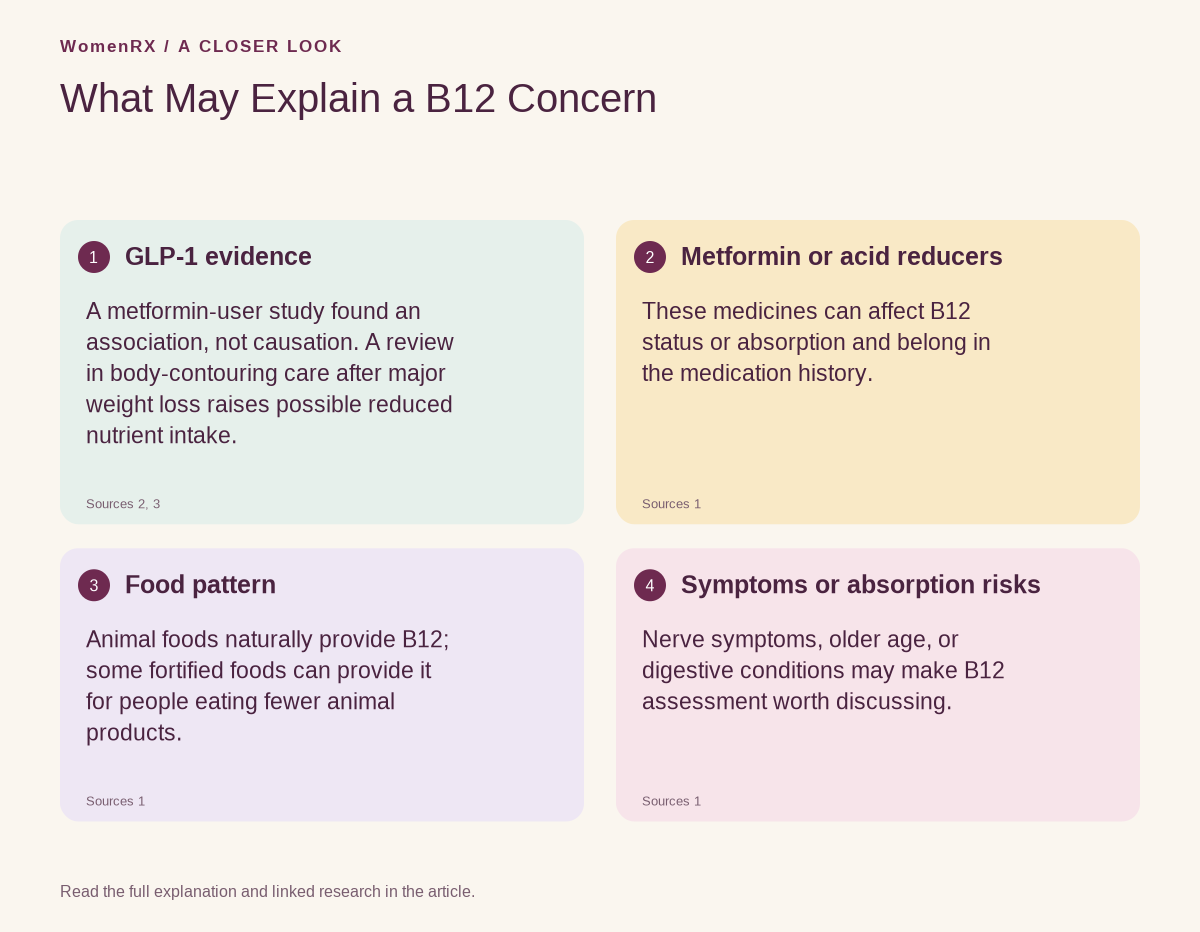
What May Explain a B12 Concern
GLP-1 evidence: A metformin-user study found an association, not causation. A review in body-contouring care after major weight loss raises possible reduced nutrient intake.23
Metformin or acid reducers: These medicines can affect B12 status or absorption and belong in the medication history.1
Food pattern: Animal foods naturally provide B12; some fortified foods can provide it for people eating fewer animal products.1
Symptoms or absorption risks: Nerve symptoms, older age, or digestive conditions may make B12 assessment worth discussing.1
Read the figure as text
Separate findings about GLP-1 use from established medication, diet, and absorption considerations before deciding whether to ask about testing.- GLP-1 evidence: A metformin-user study found an association, not causation. A review in body-contouring care after major weight loss raises possible reduced nutrient intake.23
- Metformin or acid reducers: These medicines can affect B12 status or absorption and belong in the medication history.1
- Food pattern: Animal foods naturally provide B12; some fortified foods can provide it for people eating fewer animal products.1
- Symptoms or absorption risks: Nerve symptoms, older age, or digestive conditions may make B12 assessment worth discussing.1
More questions, answered
Does taking a GLP-1 medicine mean I should take B12?
Not on its own. A study in people taking metformin found an association with GLP-1 co-use, not proof that GLP-1 treatment causes B12 deficiency. A review concerned with body-contouring care after major weight loss raises possible reduced nutrient intake, but doesn’t show that everyone taking a GLP-1 medicine needs B12. If your eating has changed or you have symptoms or another risk factor, discuss whether testing fits your situation. 231
Can B12-related nerve symptoms happen without anemia?
Yes. Numbness or tingling can occur even when anemia is absent, so a normal blood count does not necessarily settle a B12 concern. 1
Sources you can check
- Vitamin B12 - Health Professional Fact SheetAccessed 2026-09-25Return to first citation
- Association of vitamin B12 deficiency with metformin use in patients with type 2 diabetes treated in the largest tertiary care hospital in Qatar.Yousef Khan F, Yousif AB, Suliman A, Saleh AO, Magdi M, Alshurafa A, Abdelmoneim Hassan E, Ghazy A, Salameh OK, Abdallah A. · Qatar medical journal · 2021Return to first citation
- Nutritional Challenges in Post-Massive Weight Loss Body Contouring: Guidance for Plastic Surgeons on GLP-1 Agonists and Sleeve Gastrectomy.Mehta M, Rometo D, Gusenoff J, Rubin JP. · Plastic and reconstructive surgery · 2026Return to first citation