Vitamin A Foods: Retinol, Carotenoids, and Pregnancy
Animal foods provide ready-made vitamin A, while colorful plants provide carotenoids your body can convert.
Vitamin A comes from two main food forms: preformed vitamin A, or retinol and retinyl esters, in foods such as liver, eggs, fish, and dairy; and provitamin A carotenoids in plants such as sweet potatoes, carrots, and spinach. They’re counted together as vitamin A, but they aren’t interchangeable for pregnancy-related safety: the upper limit applies to preformed vitamin A, not carotenoids from food. 1
Two forms, one nutrient total
When you see “vitamin A” on a food label or nutrition table, the number can include more than one form. Animal foods and some fortified foods provide preformed vitamin A, mainly retinol and retinyl esters. Plants provide provitamin A carotenoids, including beta-carotene, which your body can convert into vitamin A. Other familiar plant pigments, such as lutein and lycopene, aren’t converted into vitamin A. 12
The difference matters because conversion isn’t one-to-one. Vitamin A values are expressed as micrograms of retinol activity equivalents (mcg RAE): 1 mcg RAE equals 1 mcg of retinol, but it takes 12 mcg of beta-carotene from food to provide 1 mcg RAE. So a food’s vitamin A value already accounts for the different contributions of these forms. 1
RAE is useful for comparing vitamin A activity, but it doesn’t mean every food form is absorbed identically. Research on preformed vitamin A absorption is better established for some foods than others; data for eggs and fortified flours remain limited. 2
Food sources, by form
Preformed vitamin A: Liver is especially concentrated. Fish, eggs, and dairy also contribute; some milk and margarine are fortified. For example, a 3-ounce serving of pan-fried beef liver provides 6,582 mcg RAE, while one hard-boiled egg provides 75 mcg RAE. 1
Provitamin A carotenoids: Look to leafy greens and orange or yellow produce. Examples include cooked spinach, baked sweet potato, raw carrots, cantaloupe, and mango. A baked sweet potato provides 1,403 mcg RAE; half a cup of raw carrots provides 459 mcg RAE. Tomato products and some vegetable oils also contribute carotenoids. 1
These figures are examples, not a ranking of what you should eat. A useful everyday distinction is that animal sources supply preformed vitamin A, while colorful plant foods supply carotenoids. You can meet vitamin A needs through either form as part of a varied diet; the forms simply have different conversion and safety considerations. 1
What changes when pregnancy is possible?
For adult women who aren’t pregnant, the recommended daily intake is 700 mcg RAE. It’s 770 mcg RAE during pregnancy and 1,300 mcg RAE while breastfeeding. These are recommended intakes, not upper limits. 1
The upper limit is specific to preformed vitamin A from food and supplements: 3,000 mcg RAE a day for adults, including during pregnancy and lactation. It doesn’t apply to beta-carotene and other provitamin A carotenoids in foods. Because liver is so concentrated, a single serving can exceed that daily upper-limit figure. That does not mean all vitamin A foods are unsafe; it does make liver and high-dose retinol supplements worth distinguishing from vegetables and fruit when pregnancy is possible. 1
The NIH fact sheet advises women who are or might be pregnant not to take high-dose vitamin A supplements, defined there as more than 3,000 mcg RAE (10,000 IU) daily. Check the supplement label for whether its vitamin A comes from retinol or a retinyl ester, beta-carotene, or a mix. When a supplement contains both, count only its preformed portion toward the preformed-vitamin-A upper limit. 1
A practical way to compare labels and meals
Use the RAE amount to compare total vitamin A, then look at the source to understand what that total represents. A serving of spinach and a serving of liver can both contribute vitamin A, but the spinach’s contribution comes from carotenoids and the liver’s from preformed vitamin A. In a supplement, the ingredient list or nutrient details may identify retinyl acetate, retinyl palmitate, or beta-carotene. 1
For most food choices, the key is not to treat every mcg RAE as the same form when considering pregnancy-related limits. Keep the distinction clear: plant carotenoids are not the preformed vitamin A covered by that limit, while retinol from animal foods and retinyl forms in supplements are. 1
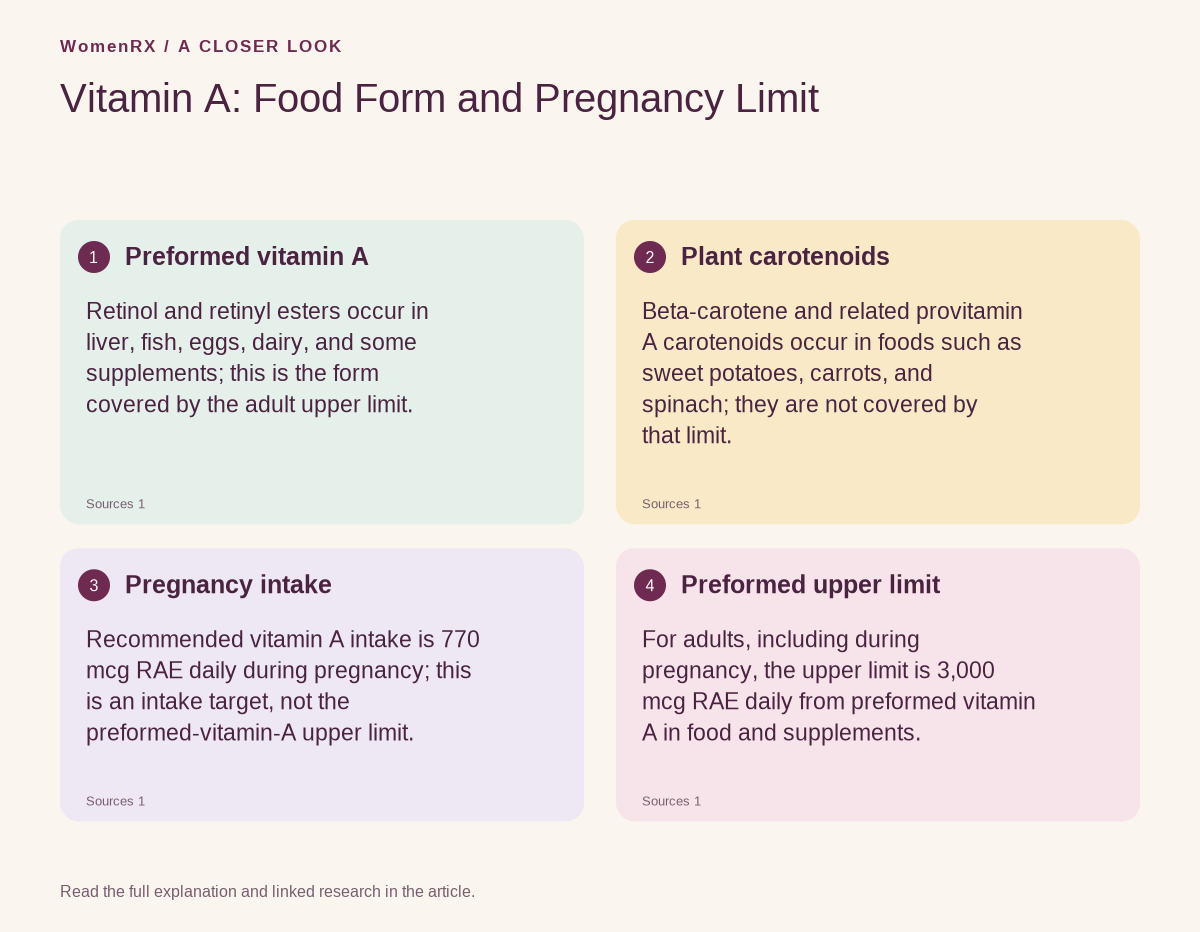
Vitamin A: Food Form and Pregnancy Limit
Preformed vitamin A: Retinol and retinyl esters occur in liver, fish, eggs, dairy, and some supplements; this is the form covered by the adult upper limit.1
Plant carotenoids: Beta-carotene and related provitamin A carotenoids occur in foods such as sweet potatoes, carrots, and spinach; they are not covered by that limit.1
Pregnancy intake: Recommended vitamin A intake is 770 mcg RAE daily during pregnancy; this is an intake target, not the preformed-vitamin-A upper limit.1
Preformed upper limit: For adults, including during pregnancy, the upper limit is 3,000 mcg RAE daily from preformed vitamin A in food and supplements.1
Read the figure as text
Compare the source of vitamin A, where it appears in foods, and which form counts toward the adult preformed-vitamin-A upper limit.- Preformed vitamin A: Retinol and retinyl esters occur in liver, fish, eggs, dairy, and some supplements; this is the form covered by the adult upper limit.1
- Plant carotenoids: Beta-carotene and related provitamin A carotenoids occur in foods such as sweet potatoes, carrots, and spinach; they are not covered by that limit.1
- Pregnancy intake: Recommended vitamin A intake is 770 mcg RAE daily during pregnancy; this is an intake target, not the preformed-vitamin-A upper limit.1
- Preformed upper limit: For adults, including during pregnancy, the upper limit is 3,000 mcg RAE daily from preformed vitamin A in food and supplements.1
More questions, answered
Does a food’s vitamin A number include carotenoids?
It can. Vitamin A is reported in mcg RAE, a unit that accounts for how much retinol or provitamin A carotenoids contribute after conversion. The amount of dietary beta-carotene needed to equal 1 mcg RAE is different from the amount of retinol. 1
Do the pregnancy upper limits apply to carrots and spinach?
No. The 3,000 mcg RAE upper limit for adults applies to preformed vitamin A from animal sources and supplements made with retinol or its esters. It doesn’t apply to provitamin A carotenoids in foods such as carrots and spinach. 1
Sources you can check
- Vitamin A and Carotenoids - Health Professional Fact SheetAccessed 2026-09-25Return to first citation
- State-of-the-art on absorption mechanisms and factors affecting the bioavailability of preformed vitamin A.Borel P, Le HD, Sabatier M. · Progress in lipid research · 2026Return to first citation