Vitamin A Deficiency: Signs, Risks, and Safe Assessment
Trouble seeing in dim light can be a warning sign, but symptoms alone can’t confirm vitamin A deficiency.
A classic early eye sign of vitamin A deficiency is night blindness: difficulty seeing in dim light or darkness. Deficiency is uncommon in the general U.S. population, but certain digestive, nutritional, and liver conditions raise concern. Assessment may include a blood retinol test interpreted alongside your symptoms and health history. Don’t start a high-dose vitamin A supplement on your own, especially during pregnancy. 1 2 3
Which signs deserve attention?
Vitamin A helps the retina respond to light. When deficiency affects the eye, a classic first sign is night blindness: trouble seeing in low light or darkness. More advanced deficiency can affect the surface of the eye, including the cornea, and may threaten vision. These changes call for assessment, but they don’t prove that vitamin A is the cause. 1
Dry eye was documented in some adults evaluated by an eye specialist in a U.S. study of people with low blood retinol. Dry eyes on their own, though, don’t establish vitamin A deficiency. 3 The pattern matters: a change in night vision is more concerning when it occurs alongside a condition that can affect nutrition, absorption, or vitamin A storage. In a separate U.S. case series of nine adults with deficiency-related retinal disease, common underlying issues included gastrointestinal surgery, liver disease, and a poor-quality diet. Those nine patients cannot tell us how common deficiency is in the wider population. 4
When your health history changes the picture
Frank vitamin A deficiency is rare in the United States, but risk isn’t the same for everyone. Crohn’s disease and ulcerative colitis can increase risk. In a U.S. study of adults who had retinol testing, liver disease, pancreatic insufficiency, and malnutrition or malabsorption after bariatric surgery were prominent among those with low levels. This was a group selected for testing, not a cross-section of U.S. adults. 1 3
Diet is another part of the picture. Preformed vitamin A is found in foods such as dairy products, eggs, and fish. Plant foods can provide provitamin A carotenoids, including beta-carotene, which the body can convert to vitamin A. If your eating has been very limited, or you’ve had digestive surgery or an illness affecting absorption, those details are worth bringing up when you seek assessment. 1 4
What a blood test can and can’t tell you
A clinician may consider your symptoms and health history and order a blood retinol test. A low result can help document significant deficiency, but a result needs context. Most vitamin A is stored in the liver, and blood retinol may not fall until stores are nearly depleted. Infection can also lower a blood retinol result. 1
In clinical practice, a serum or plasma retinol level of 20 micrograms per deciliter or less frequently reflects moderate deficiency; 10 micrograms per deciliter or less is considered an indicator of severe deficiency. These are useful findings to interpret with the rest of an assessment, not numbers to use for self-diagnosis. 1
If you’ve developed trouble seeing in dim light or your vision is worsening, seek assessment rather than waiting to see whether a supplement helps. An eye evaluation can help characterize the change. In a small case series of adults with vitamin A deficiency-related retinal disease, some findings improved with vitamin A repletion, while certain changes in eyes with longstanding deficiency persisted. 4
Why taking extra vitamin A isn’t a safe test
Taking vitamin A to see whether symptoms improve can delay finding the cause of a vision change, and extra vitamin A isn’t harmless. Pregnancy makes the decision particularly important because excessive vitamin A intake can harm fetal development. If you’re pregnant or planning pregnancy and are worried about deficiency, discuss any separate vitamin A supplement with your prenatal care clinician rather than choosing a dose yourself. 2
The useful distinction is between a reason to consider deficiency and a diagnosis. A dietary or medical risk without vision symptoms is worth raising during routine care. A new night-vision change or worsening vision deserves assessment sooner, whether or not you have a known risk factor. 1 4
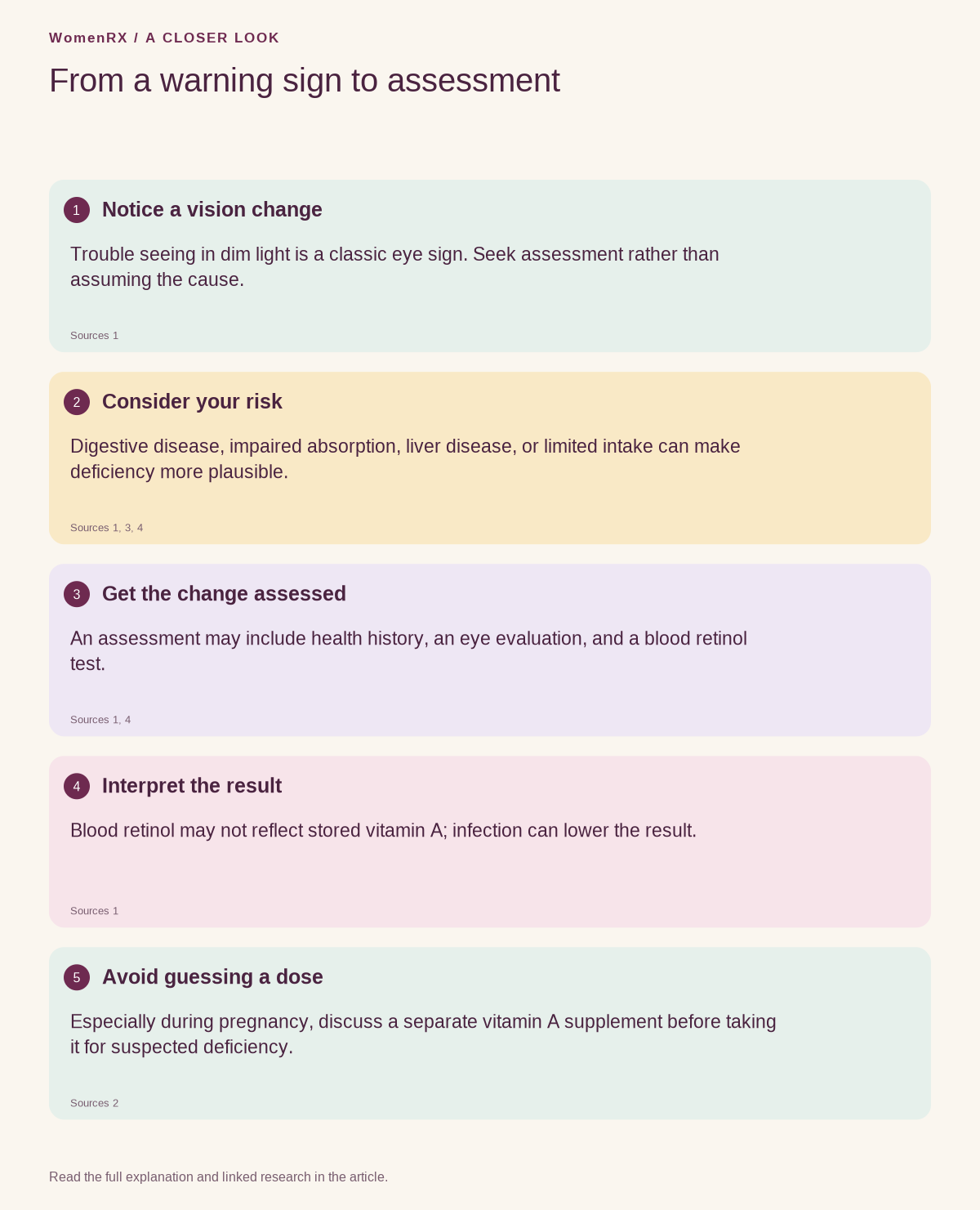
From a warning sign to assessment
Notice a vision change: Trouble seeing in dim light is a classic eye sign. Seek assessment rather than assuming the cause.1
Consider your risk: Digestive disease, impaired absorption, liver disease, or limited intake can make deficiency more plausible.134
Get the change assessed: An assessment may include health history, an eye evaluation, and a blood retinol test.14
Interpret the result: Blood retinol may not reflect stored vitamin A; infection can lower the result.1
Avoid guessing a dose: Especially during pregnancy, discuss a separate vitamin A supplement before taking it for suspected deficiency.2
Read the figure as text
A vision change and your health history offer clues, but neither symptoms nor one blood result tells the whole story.- Notice a vision change: Trouble seeing in dim light is a classic eye sign. Seek assessment rather than assuming the cause.1
- Consider your risk: Digestive disease, impaired absorption, liver disease, or limited intake can make deficiency more plausible.134
- Get the change assessed: An assessment may include health history, an eye evaluation, and a blood retinol test.14
- Interpret the result: Blood retinol may not reflect stored vitamin A; infection can lower the result.1
- Avoid guessing a dose: Especially during pregnancy, discuss a separate vitamin A supplement before taking it for suspected deficiency.2
More questions, answered
Does night blindness mean I have vitamin A deficiency?
No. Trouble seeing in dim light is a classic early sign when deficiency affects the eye, but it doesn’t establish the cause. Your health history, an eye evaluation, and sometimes blood retinol testing can help clarify what’s happening. 1 4
Should I add vitamin A if I’m pregnant and worried about deficiency?
Don’t add a separate vitamin A supplement to treat a suspected deficiency without discussing it with your prenatal care clinician. Both inadequate intake and excess matter during pregnancy, and excessive vitamin A can harm fetal development. 2
Sources you can check
- Vitamin A and Carotenoids - Health Professional Fact SheetAccessed 2026-09-25Return to first citation
- Vitamin A-Mediated Birth Defects: A Narrative Review.Abadie RB, Staples AA, Lauck LV, Dautel AD, Spillers NJ, Klapper RJ, Hirsch JD, Varrassi G, Ahmadzadeh S, Shekoohi S, Kaye AD. · Cureus · 2023Return to first citation
- Rethinking Vitamin A Deficiency: Its Causes, Ophthalmologic Presentation, and Management Gaps at a New England Tertiary Hospital.Fearon KH, Dameron CM, Kelleher SL, Al-Nimr A, Zegans ME. · Nutrients · 2026Return to first citation
- Characteristics of Vitamin A Deficiency Retinopathy at a Tertiary Referral Center in the United States.Levine DA, Mathew NE, Jung EH, Yan J, Newman NJ, Thulasi P, Yeh S, Ziegler TR, Wells J, Jain N. · Ophthalmology. Retina · 2024Return to first citation