Vitamin B6 Foods and When Supplements May Matter
Chickpeas, fish, poultry, potatoes, and bananas provide vitamin B6, while concentrated supplements deserve a different safety check.
For most adults, vitamin B6 can come from food: one cup of chickpeas provides 1.1 mg, while a serving of tuna provides 0.9 mg. The recommended intake is 1.3 mg daily for women ages 19-50 and 1.5 mg after 50. Food hasn’t been reported to cause B6 toxicity; long-term high-dose supplements can harm nerves. Pregnancy nausea is a specific treatment situation, not a reason everyone needs extra B6. 1
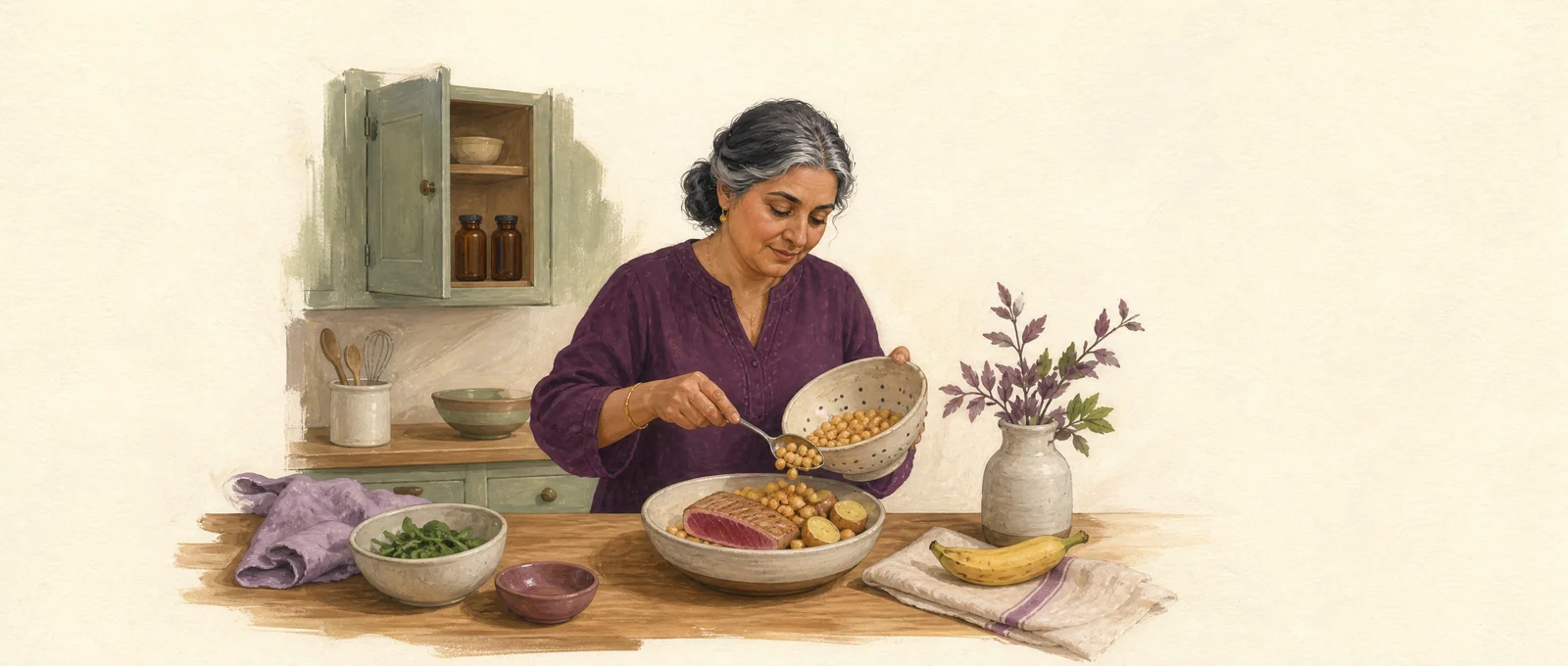
Get B6 from more than one kind of food
Vitamin B6 is found in many foods, so you don’t need to rely on one “superfood.” Useful sources include chickpeas, fish, poultry, potatoes, bananas, and some fortified breakfast cereals. Meat, legumes, nuts, whole grains, and starchy vegetables also contribute B6. 12 For a sense of serving sizes, one cup of canned chickpeas contains 1.1 mg; 3 ounces of cooked yellowfin tuna contains 0.9 mg; 3 ounces of salmon contains 0.6 mg; and a medium banana or one cup of boiled potatoes contains 0.4 mg. 1
Those numbers are amounts per serving, not a meal plan. A mix of foods across the day can contribute to your total. Labels can help with fortified products, though U.S. food labels aren’t required to list B6 unless it has been added. 1
For adult women, the recommended daily intake is 1.3 mg from ages 19 to 50 and 1.5 mg from age 51 onward. It’s 1.9 mg during pregnancy and 2.0 mg while breastfeeding. These recommendations describe total daily intake, not a supplement dose. 1
Food and supplements aren’t interchangeable
The amount of B6 in ordinary foods is generally modest and spread across servings. In contrast, a supplement can deliver a concentrated amount in one tablet, and B6 may also be included in a multivitamin or B-complex product. Check the labels on products you take so you can see the combined amount rather than considering each bottle on its own. 1
The U.S. adult tolerable upper intake level is 100 mg a day from all sources. That’s a safety limit, not a target or a recommended supplement dose. The NIH fact sheet also notes that Europe’s food-safety authority set a lower adult upper limit of 12 mg a day in 2023. The different limits reflect different assessments of the evidence; the U.S. limit shouldn’t be read as a guarantee that long-term supplement use below it is right for you. 1
High vitamin B6 intake from food hasn’t been reported to cause adverse effects. By contrast, long-term use of high-dose pyridoxine supplements has been linked to sensory nerve damage and problems with coordination. Don’t assume that a product is harmless because B6 is a vitamin. If you develop new sensory changes or coordination problems while taking a B6 supplement, get prompt advice from the clinician who prescribed it or your usual care team, and tell them about every product you use. 1
Pregnancy nausea is a separate question
Pregnancy raises the recommended intake, but that doesn’t mean everyone who is pregnant needs a separate B6 supplement. Vitamin B6 is one treatment option for nausea and vomiting in pregnancy. Trials of B6 alone had mixed results, while trials of B6 combined with doxylamine found improvement; the review summarized by NIH couldn’t draw a firm conclusion about B6 alone. 1
ACOG recommends B6 as an initial treatment option for pregnancy nausea, with doxylamine added if symptoms don’t improve. These are treatment amounts, not routine nutritional targets, and the upper limit can be approached depending on the regimen. Ask your pregnancy care clinician what is appropriate before starting a separate B6 product, especially if you already take a prenatal or other supplement. 1
Check supplements against your medicines
Some medicines and B6 can affect each other. Medicines used for epilepsy, including phenytoin, carbamazepine, and valproic acid, may lower B6 status over time. In the other direction, high-dose pyridoxine has been reported to lower blood levels of phenytoin and phenobarbital. If you take an antiseizure medicine, don’t add B6 on your own; ask your prescriber to review the amount and product. 1
Cycloserine, a medicine used to treat tuberculosis, can increase urinary loss of pyridoxine. That interaction is another reason to discuss B6 with the prescribing clinician rather than trying to adjust a supplement yourself. 1
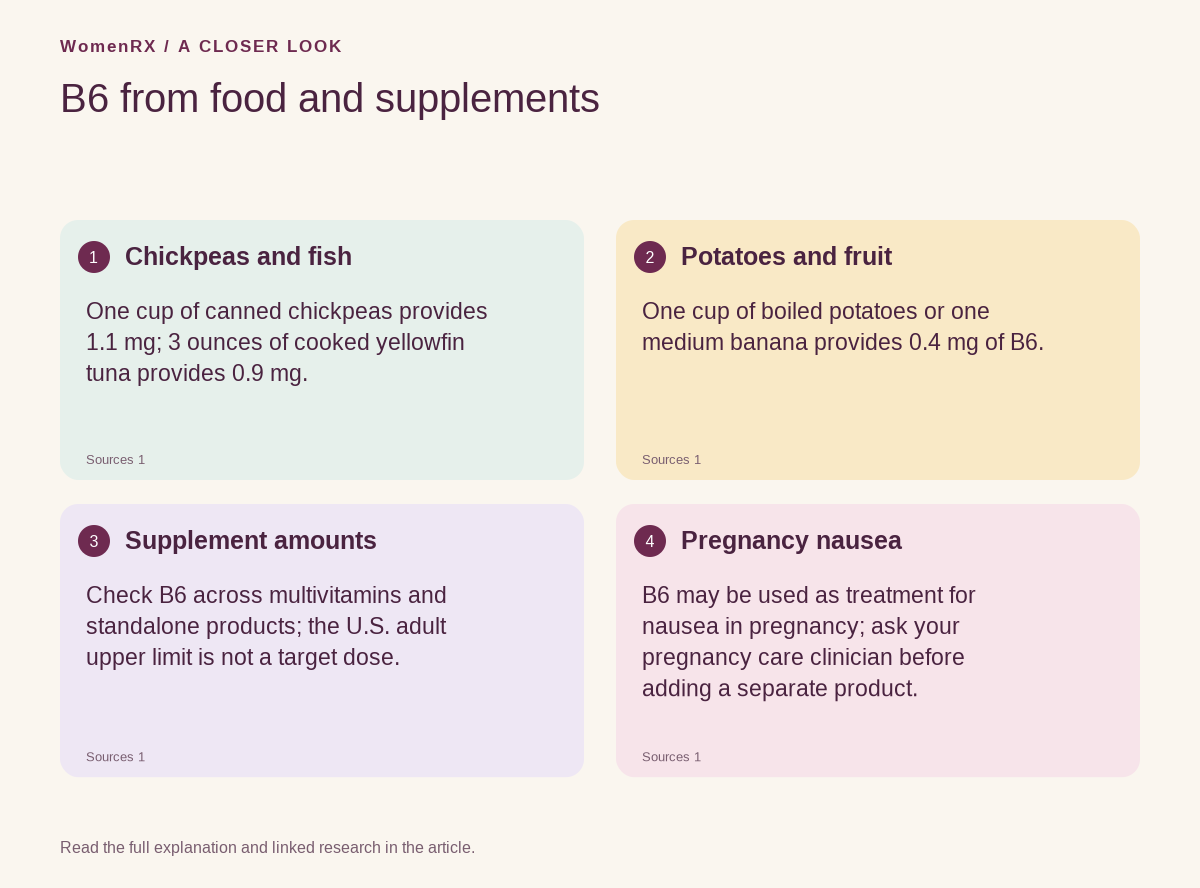
B6 from food and supplements
Chickpeas and fish: One cup of canned chickpeas provides 1.1 mg; 3 ounces of cooked yellowfin tuna provides 0.9 mg.1
Potatoes and fruit: One cup of boiled potatoes or one medium banana provides 0.4 mg of B6.1
Supplement amounts: Check B6 across multivitamins and standalone products; the U.S. adult upper limit is not a target dose.1
Pregnancy nausea: B6 may be used as treatment for nausea in pregnancy; ask your pregnancy care clinician before adding a separate product.1
Read the figure as text
Compare everyday food servings with concentrated supplement use, and keep pregnancy treatment separate from routine intake.- Chickpeas and fish: One cup of canned chickpeas provides 1.1 mg; 3 ounces of cooked yellowfin tuna provides 0.9 mg.1
- Potatoes and fruit: One cup of boiled potatoes or one medium banana provides 0.4 mg of B6.1
- Supplement amounts: Check B6 across multivitamins and standalone products; the U.S. adult upper limit is not a target dose.1
- Pregnancy nausea: B6 may be used as treatment for nausea in pregnancy; ask your pregnancy care clinician before adding a separate product.1
More questions, answered
Do I need a B6 supplement if I eat a varied diet?
Not necessarily. The recommended intake is a daily total from food and supplements together, and vitamin B6 occurs in a range of foods. A supplement may be relevant when there’s a specific medical or life-stage reason, but the amount in a product should be considered alongside other supplements. 1
Can too much B6 cause tingling or balance problems?
Long-term high-dose pyridoxine supplements have been linked to sensory neuropathy and impaired coordination. If new sensory or coordination problems occur while you’re taking B6, seek prompt advice and share the product label and your other medicines. 1
Sources you can check
- Vitamin B6 - Health Professional Fact SheetAccessed 2026-09-25Return to first citation
- Dietary Vitamin B6 Intake and Gastroesophageal Reflux Disease: A Case-Control Study.Mehrara A, Moradi S, Dorosti M, Dehghanian L, MirShafaie MS, Esfahanian M, Moradi B, Nouri A, Khoshdooz S, Bahmani P, Doaei S, Gholamalizadeh M. · JGH open : an open access journal of gastroenterology and hepatology · 2026Return to first citation