Urinary Leakage: What the Pattern Can Tell You
When leaks happen can point toward stress, urgency, or mixed incontinence and help shape a useful treatment conversation.
Leaks with coughing, sneezing, or exercise fit a stress pattern; leaks after a sudden, hard-to-delay urge fit an urgency pattern. Experiencing both can mean mixed incontinence. These clues help guide assessment, but they don’t confirm a diagnosis, and frequent dribbling or trouble emptying your bladder may point to a different problem. Treatment discussions can then focus on the pattern and what affects your daily life most. 1 2
Start with what happens just before the leak
When you describe a leak, note what you were doing, whether you felt an urgent need to urinate, and whether you could delay going to the bathroom.
Stress incontinence means urine leaks when pressure on the bladder rises, such as when you cough, sneeze, laugh, or exercise. “Stress” here means physical pressure, not emotional stress. Leaks are often small, though the amount can vary. 1 2
Urgency incontinence means urine leaks with a sudden, intense need to urinate or soon after it. The urge may be difficult to delay. Some people also notice frequent urination or waking at night to urinate, symptoms that can occur with overactive bladder. 2
Mixed incontinence means both patterns occur. For example, you might leak during a workout and also have a leak when a sudden urge hits. The two symptoms don’t have to happen at the same time. 2
These categories are clues for a conversation, not a home diagnosis. Leakage that is nearly constant, frequent small dribbles, a slow stream, straining, or a feeling that your bladder doesn’t empty may fit other lower urinary tract symptoms. Tell a clinician about those signs too. 1 2
What to bring to an assessment
A short record can make it easier to describe your pattern. You might note the activity or situation before each leak, whether urgency came first, how often you urinated, and whether emptying felt complete. A bladder diary is one tool a clinician may suggest; it can include how much you drink and how often you urinate. 1
You can also describe how much the symptoms interfere with exercise, sleep, work, sex, or getting out of the house. Mention when the problem began and whether it changed during pregnancy, after childbirth, or around menopause. Pregnancy and birth can affect the muscles involved in controlling urine, but that history alone doesn’t identify the type of leakage or explain every case. 1
Assessment may include questions about your symptoms and, depending on your situation, a pelvic examination. You don’t need to arrive with the right label. Describing what happens before the leak is a good starting point. 1
Treatment discussions depend on the pattern
For a stress pattern, ask whether pelvic-floor muscle training is a reasonable starting point and how to make sure you’re doing it correctly. If symptoms continue to disrupt your life, ask what other options fit your situation. Surgical procedures, including sling procedures, are among the options described for stress incontinence. 1
For urgency symptoms, bladder training is one option to discuss. It involves working on the time between feeling the need to urinate and going. A clinician may also discuss whether changes to drinking habits are relevant; caffeine and alcohol can contribute to urine production or bladder irritation for some people. 1
With mixed symptoms, say which pattern is more troublesome, but make sure both are part of the conversation. Treatments directed at stress leakage don’t guarantee that urgency will resolve. In a Norwegian registry study, 79% of women with pre-existing urgency symptoms in the retropubic tape group and 54% in the periurethral injection group reported improvement in urgency symptoms by 6-12 months. Among women with pure stress incontinence before treatment, new urgency was reported by 6% after retropubic tape and 20% after periurethral injection. This was an observational comparison of two registry groups, not a randomized trial; the percentages can’t establish that one procedure causes better urgency outcomes or predict an individual result. 3
Useful questions to ask
- Does my description fit stress, urgency, mixed, or another pattern?
- Could my trouble emptying, frequent dribbling, or other urinary symptoms change the assessment?
- Which treatment option targets the symptom that bothers me most, and what might it not improve?
- If a procedure is discussed, how could it affect my other type of leakage?
You don’t have to decide on treatment before getting a clearer explanation of the pattern. The goal is to connect what happens in your day-to-day life with options that address the symptoms you actually have.
Leak pattern and care conversation
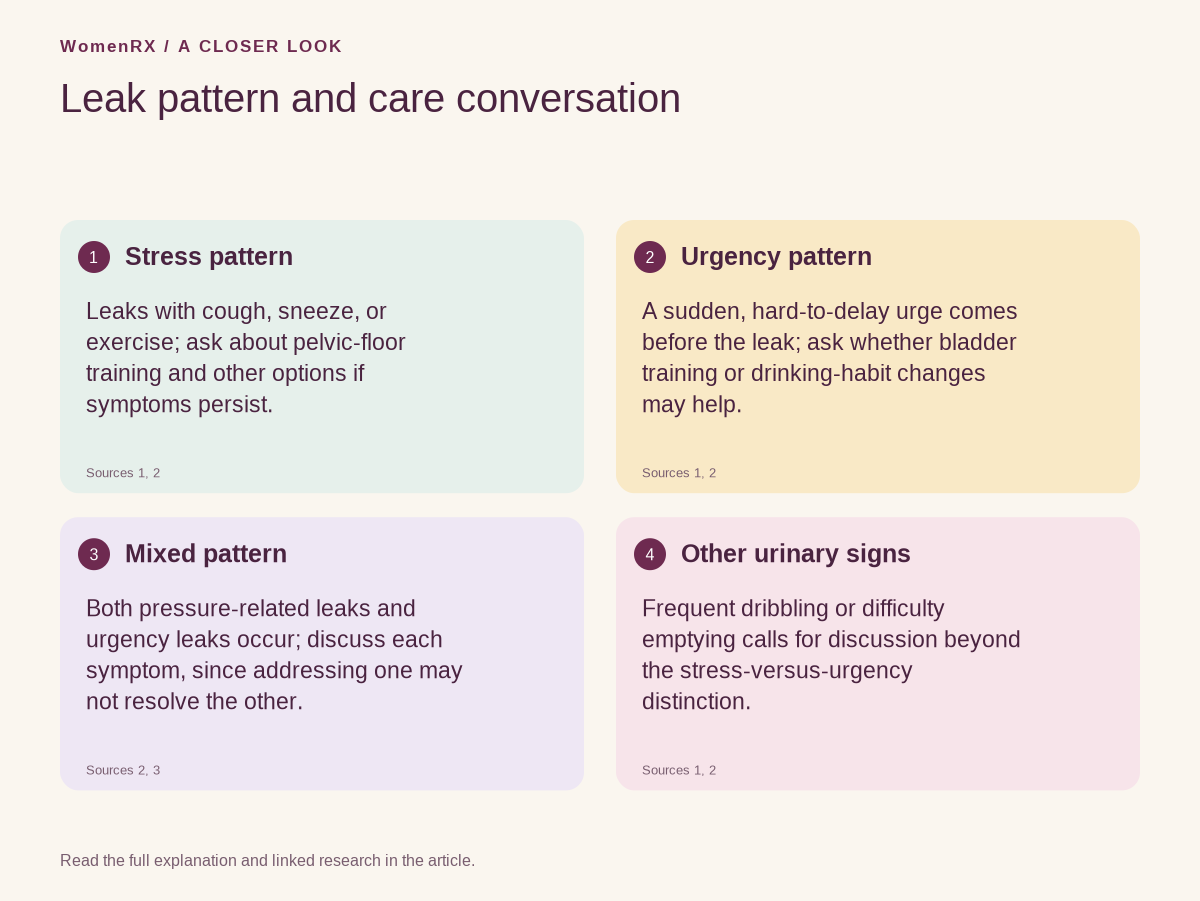
Stress pattern: Leaks with cough, sneeze, or exercise; ask about pelvic-floor training and other options if symptoms persist.12
Urgency pattern: A sudden, hard-to-delay urge comes before the leak; ask whether bladder training or drinking-habit changes may help.12
Mixed pattern: Both pressure-related leaks and urgency leaks occur; discuss each symptom, since addressing one may not resolve the other.23
Other urinary signs: Frequent dribbling or difficulty emptying calls for discussion beyond the stress-versus-urgency distinction.12
Read the figure as text
Compare what happens just before a leak with the treatment topics that may fit. These patterns guide assessment but don’t diagnose the cause.- Stress pattern: Leaks with cough, sneeze, or exercise; ask about pelvic-floor training and other options if symptoms persist.12
- Urgency pattern: A sudden, hard-to-delay urge comes before the leak; ask whether bladder training or drinking-habit changes may help.12
- Mixed pattern: Both pressure-related leaks and urgency leaks occur; discuss each symptom, since addressing one may not resolve the other.23
- Other urinary signs: Frequent dribbling or difficulty emptying calls for discussion beyond the stress-versus-urgency distinction.12
More questions, answered
Does “stress incontinence” mean emotional stress causes the leak?
No. The term refers to physical pressure on the bladder, such as pressure during a cough, sneeze, or exercise. 2
What if I leak and also feel I can’t empty my bladder?
Mention both symptoms. Frequent small dribbles or a feeling that your bladder never empties can occur with overflow incontinence, which differs from stress and urgency patterns and needs assessment. 1 2
Sources you can check
- Urinary incontinence - NHSAccessed 2026-09-25Return to first citation
- Urinary incontinence - Symptoms - NHSAccessed 2026-09-25Return to first citation
- Changes in Urgency Urinary Incontinence Symptoms After Stress Urinary Incontinence Surgery in Women.Schiøtz HA, Myhr SS. · International urogynecology journal · 2026Return to first citation