Unexpected Weight Gain: What to Check First
The pace of the change, any swelling, and recent medicine or routine changes can tell you more than one scale reading.
Start by checking whether the gain is a continuing pattern or one surprising reading. Contact a healthcare provider about unexplained rapid gain, especially if you also have swollen feet and shortness of breath. For a gradual change, review medicines, routines and other symptoms before assuming it’s a hormone problem. The scale alone can’t identify the cause. 25
First, establish what changed
A scale measures your total weight, including water, muscle, bone and fat. One higher reading can’t tell you which of those changed. Everyday factors can affect the number too. 2
If a reading surprises you, a practical first step is to compare it with earlier measurements and check again under similar conditions. You’re looking for a pattern, not trying to prove that a particular food, hormone or medicine caused it. Note when the change began and whether it has continued. Changes in eating or other daily routines may be relevant, but they aren’t reasons to dismiss a change you can’t explain. MedlinePlus advises discussing weight gain that happens without trying, whether or not it appeared suddenly. 25
A sudden gain calls for a different response
Gradual change and sudden, unexpected gain aren’t the same question. Because water is part of body weight, a rapid rise on the scale doesn’t establish that you’ve gained body fat. Nor can the scale confirm that the change is fluid. Fluid buildup can cause weight gain, and a rapid gain may signal dangerous fluid retention. Possible causes include heart or kidney failure, medicines, and, during pregnancy, preeclampsia. Those are possibilities to assess, not diagnoses to make from a scale reading. 25
If the gain is sudden and unexplained, contact a healthcare provider about the change rather than starting a weight-loss treatment based on the scale reading. Contact a healthcare provider if you have swollen feet together with shortness of breath. A slower, continuing gain you can’t explain is also worth discussing. 25
Check what changed around the same time
Make a list of medicines and supplements you started, stopped or changed around the time the pattern began. Corticosteroids, some medicines used for depression or other mental health conditions, and some diabetes medicines can contribute to weight gain. That doesn’t mean a medicine on your list is necessarily the cause. A healthcare provider can review the specific product and timing with you; don’t stop a prescribed medicine on your own. 5
Look at routines as context, not a verdict about what you’ve done ‘wrong.’ For example, has your activity, eating pattern or sleep schedule changed since a new work shift or a period of illness? Have you recently stopped smoking? Weight can change after smoking cessation without the explanation being simply that you ate more. Noticing a change helps you describe the timeline; it doesn’t rule out a medical cause. 5
If you already take levothyroxine for hypothyroidism, there’s a more specific question: could something affect how well your treatment works? Calcium and iron products can reduce levothyroxine absorption. Antacids and proton pump inhibitors can also affect absorption, and other medicines may alter its therapeutic effect. These are examples of treatment interactions, not a list of products shown to cause weight gain. Persistent clinical and laboratory evidence of hypothyroidism during treatment can reflect inadequate absorption, a drug interaction or other factors. Levothyroxine treatment is assessed using clinical findings and thyroid laboratory results, not weight alone. 3
Let other symptoms guide the next question
Weight gain alone doesn’t point to one hormone test. If you feel colder than usual or have constipation or hair loss alongside the gain, mention these symptoms to a healthcare provider. Hypothyroidism, polycystic ovary syndrome and Cushing syndrome are among the possible causes of unintentional gain, but none should be assumed from weight alone. A clinician can use the pace of change, your symptoms, medicines and an examination to decide whether tests are useful and which ones fit. 5
Could thyroid function account for some of the change? Possibly, but it’s not an explanation to assume from the scale. In a systematic review of adults with hypothyroidism who reached normal thyroid function after levothyroxine treatment, average weight reduction was modest. The review found more consistent weight reductions in overt than in subclinical hypothyroidism. It did not report a separate result for women, and an average treatment effect cannot explain an individual change on the scale. 4
Put your life stage in context
Pregnancy and menopause are possible contexts for a weight change, not default explanations for one. If pregnancy is possible, include that possibility when describing the timing. If you’re pregnant and gain weight rapidly or notice swelling, raise the change with your healthcare provider rather than assuming it’s an ordinary part of pregnancy: fluid retention can have causes that need assessment. 5
If you’re pregnant and take levothyroxine, mention the pregnancy when discussing treatment. Pregnancy can change levothyroxine needs, and thyroid monitoring is part of treatment during pregnancy. If you’ve recently given birth and remained on levothyroxine, mention that too: treatment needs can change again after delivery. Neither life stage makes thyroid treatment the automatic explanation for a weight change. 3
Irregular periods can be common just before menopause. 1 If your cycle has changed too, include that in the timeline you discuss, without assuming it explains the weight change. Menopause can be one contributor to unintentional gain, but it doesn’t explain every sudden or continuing change. 5
The useful distinction is between what you’ve observed and what you’ve established. A repeated gradual rise is worth reviewing alongside medicines, routines and symptoms. A sudden rise, particularly with swelling, calls for a different conversation. Neither pattern, by itself, confirms a hormone problem or tells you what changed inside your body. 25
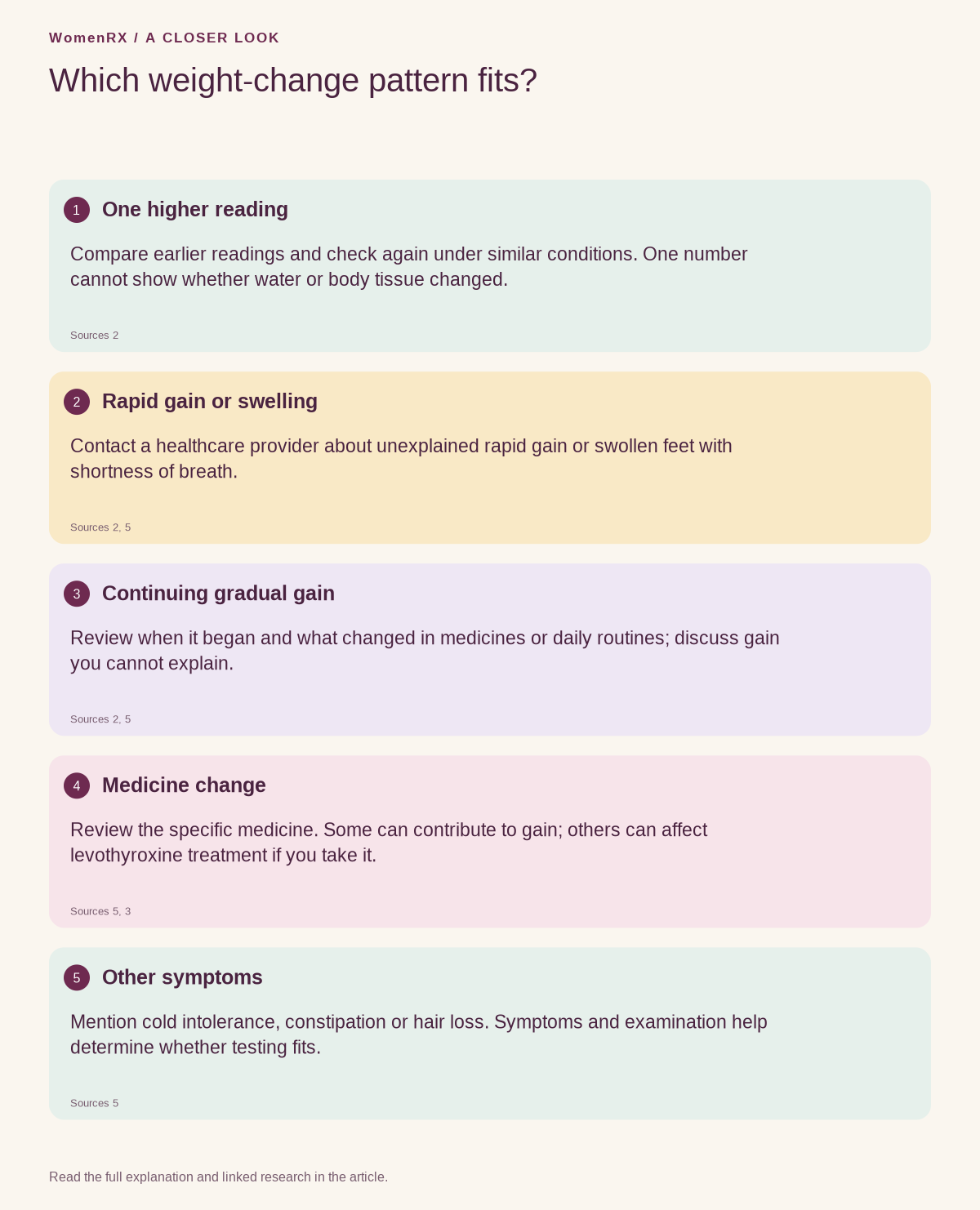
Which weight-change pattern fits?
One higher reading: Compare earlier readings and check again under similar conditions. One number cannot show whether water or body tissue changed.2
Rapid gain or swelling: Contact a healthcare provider about unexplained rapid gain or swollen feet with shortness of breath.25
Continuing gradual gain: Review when it began and what changed in medicines or daily routines; discuss gain you cannot explain.25
Medicine change: Review the specific medicine. Some can contribute to gain; others can affect levothyroxine treatment if you take it.53
Other symptoms: Mention cold intolerance, constipation or hair loss. Symptoms and examination help determine whether testing fits.5
Read the figure as text
Start with the pace of change, then use swelling, medicines and other symptoms to decide what needs review.- One higher reading: Compare earlier readings and check again under similar conditions. One number cannot show whether water or body tissue changed.2
- Rapid gain or swelling: Contact a healthcare provider about unexplained rapid gain or swollen feet with shortness of breath.25
- Continuing gradual gain: Review when it began and what changed in medicines or daily routines; discuss gain you cannot explain.25
- Medicine change: Review the specific medicine. Some can contribute to gain; others can affect levothyroxine treatment if you take it.53
- Other symptoms: Mention cold intolerance, constipation or hair loss. Symptoms and examination help determine whether testing fits.5
More questions, answered
Does weight gain mean my thyroid medicine needs changing?
Not by itself. Levothyroxine treatment is assessed with clinical evaluation and thyroid laboratory tests. Some medicines and supplements can affect its absorption, so mention what you take when discussing a weight change rather than drawing a conclusion from weight alone. 3
Sources you can check
- Period problems - NHSAccessed 2026-09-25Return to first citation
- Body Weight: MedlinePlusAccessed 2026-09-25Return to first citation
- LEVOTHYROXINE SODIUM TABLET [CARDINAL HEALTH 107, LLC] | US prescribing information and patient instructionsAccessed 2026-09-25Return to first citation
- Levothyroxine therapy for euthyroidism restoration results in clinically insignificant weight and anthropometric changes: a systematic review and meta-analysis.Wolde Sellasie S, Ossola N, Piticchio T, Uccioli L, Trimboli P. · International journal of obesity (2005) · 2026Return to first citation
- Weight gain â unintentional: MedlinePlus Medical EncyclopediaAccessed 2026-09-26Return to first citation