Menopause, Bloating, and Swelling: How to Tell the Difference
Where the fullness appears and how it changes can help distinguish digestive bloating from visible swelling or an unexpected weight change.
A full abdomen is often bloating, which can relate to gas or the menstrual cycle. It isn’t the same as visible swelling in your legs or feet. If that swelling persists or you can’t explain it, arrange a medical assessment rather than assuming it’s menopause. Sudden, unexplained weight change also deserves attention. Severe trouble breathing needs emergency care. 1 2 5
Start with where you notice the change
A belly that feels tight or full is different from ankles, feet, or legs that look visibly swollen. Bloating is a sensation in the abdomen, often accompanied by gas; it can occur around a period. Visible swelling in the limbs is called peripheral edema. It can have several causes, including heart, liver, or vein-related conditions, so it shouldn’t automatically be put down to menopause. 1 5
Weight alone can’t tell you whether a change is fluid, body fat, muscle, or something else. MedlinePlus notes that body weight includes water and that everyday factors can affect it. A sudden, unexpected gain or loss is worth discussing with a healthcare provider. 2
Read the pattern, not just the scale
Abdominal fullness that comes and goes: Gas is a common cause of bloating, and some people feel bloated around their period. Bloating that keeps returning or doesn’t go away merits attention, especially if it comes with unintentional weight loss or blood in your stool. 1
A quick change on the scale: Weight can vary for reasons that aren’t a lasting change in body fat, but the scale can’t identify the cause. If the gain is sudden and unexplained, arrange an assessment rather than assuming it’s a normal menopause change. 2
Visible swelling in your legs or feet: Peripheral edema has multiple possible causes. For example, heart-related fluid buildup can accompany heart failure, while liver disease and venous insufficiency are other recognized causes. The location and pattern alone can’t identify what’s behind it. If the swelling persists or you can’t explain it, arrange a medical assessment rather than assuming it’s hormonal. 5
Swelling after starting or changing hormone therapy: A US label for one specific estradiol-and-levonorgestrel patch, Climara Pro, says that estrogen plus progestogen may cause some fluid retention. That warning is product-specific, not proof that menopause itself causes edema or that every hormone therapy has the same effect. If swelling appears after starting or changing hormone therapy, raise it with the prescriber. 3
Breathing changes the urgency
Severe difficulty breathing needs emergency care. Shortness of breath and peripheral edema are among symptoms described in people with heart failure involving reduced or mildly reduced ejection fraction. Don’t dismiss breathing trouble as ordinary bloating or a menopause symptom. 1 4
For ongoing abdominal bloating, seek medical advice if it doesn’t go away or happens often. Bloating with unintentional weight loss or blood in your stool also warrants attention. 1 For a sudden, unexplained weight change, arrange an assessment rather than trying to guess the cause from the scale or the timing. 2
What to do while you work out the pattern
Notice whether the change is in your abdomen or limbs, whether it comes and goes, and whether it began around a menstrual period or after starting or changing hormone therapy. Those details can help explain what you’re seeing, but they don’t diagnose edema.
Because peripheral swelling can arise from different underlying conditions, there isn’t one blanket remedy that fits every cause. Don’t assume that a water pill or broad salt restriction is the right answer; management depends on what is causing the swelling. 5
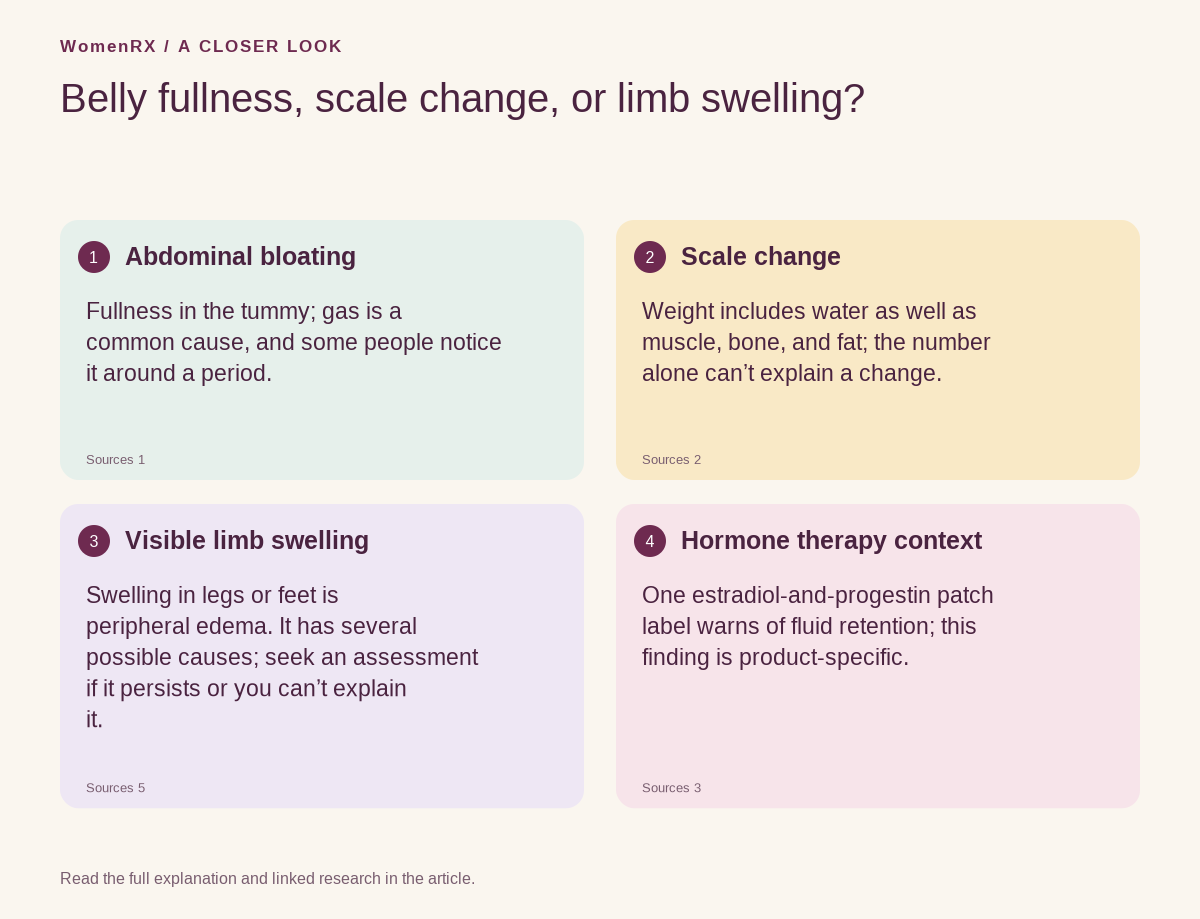
Belly fullness, scale change, or limb swelling?
Abdominal bloating: Fullness in the tummy; gas is a common cause, and some people notice it around a period.1
Scale change: Weight includes water as well as muscle, bone, and fat; the number alone can’t explain a change.2
Visible limb swelling: Swelling in legs or feet is peripheral edema. It has several possible causes; seek an assessment if it persists or you can’t explain it.5
Hormone therapy context: One estradiol-and-progestin patch label warns of fluid retention; this finding is product-specific.3
Read the figure as text
Compare location and pattern to describe what you’re noticing. These clues don’t identify a diagnosis.- Abdominal bloating: Fullness in the tummy; gas is a common cause, and some people notice it around a period.1
- Scale change: Weight includes water as well as muscle, bone, and fat; the number alone can’t explain a change.2
- Visible limb swelling: Swelling in legs or feet is peripheral edema. It has several possible causes; seek an assessment if it persists or you can’t explain it.5
- Hormone therapy context: One estradiol-and-progestin patch label warns of fluid retention; this finding is product-specific.3
More questions, answered
Does menopause itself cause leg swelling?
Menopause alone shouldn’t be assumed to explain persistent leg swelling. Peripheral edema has multiple possible causes, and a fluid-retention warning applies to one specific estradiol-and-progestin patch, not to menopause or every hormone therapy. If swelling persists or you can’t explain it, arrange a medical assessment. 3 5
Can bloating happen around a period?
Yes. Some people feel bloated around the time of their period. That timing can help describe the pattern, but bloating that keeps returning or doesn’t go away still merits attention. 1
Sources you can check
- Bloating - NHSAccessed 2026-09-25Return to first citation
- Body Weight: MedlinePlusAccessed 2026-09-25Return to first citation
- CLIMARA PRO (ESTRADIOL AND LEVONORGESTREL) PATCH [BAYER HEALTHCARE PHARMACEUTICALS INC.] | US prescribing information and patient instructionsAccessed 2026-09-25Return to first citation
- [What is established in the medical treatment of heart failure?]Soltani S, Bauersachs J. · Innere Medizin (Heidelberg, Germany) · 2025Return to first citation
- Chronic Edema Management of the Lower Extremities.Smith B, Park J, Landi JL, McConnell B, Rahman A, Omari AR, Shahab Z, Carilli A, Pearl K, Kim B, Costin JM. · Cureus · 2024Return to first citation