Hypothyroidism and Weight: What to Check First
Thyroid treatment can help correct hormone levels, but it usually isn’t a weight-loss plan on its own.
If your weight has changed or losing weight feels difficult, first review whether your thyroid treatment is working as intended, how you take it, and whether other medicines or supplements could affect absorption. Levothyroxine treatment in adults has been linked with a modest average weight decrease, not a guaranteed return to a previous weight. Healthy eating and activity can still be reasonable goals, separate from thyroid treatment. 3 4 6
Start with the thyroid question, not the scale
Weight change can have several contributors. Body weight includes water, muscle, bone, and fat, and everyday factors such as diet, stress, and sleep can also affect it. An unexpected gain or loss is worth discussing, but it doesn’t by itself show that hypothyroidism is the cause. 4
A useful first question is whether your thyroid treatment and test results are where your care plan intends them to be. Levothyroxine dosing is individualized and adjusted using clinical response and laboratory results. If you still have clinical or laboratory evidence of hypothyroidism despite an apparently adequate dose, prescribing information lists absorption problems, missed doses, drug interactions, or a combination as possible explanations. 3
That review is different from asking for more medication to lose weight. A 2026 systematic review of 23 studies involving 763 adults found that, after participants with hypothyroidism reached thyroid levels in the intended range with levothyroxine, their average weight was 1.39 kg lower than before treatment. This was a modest average change, not a promise for any one person; a separate result for women was not reported. 6
Review how you take levothyroxine
Bring your medication and supplement list to the conversation, including calcium, iron, antacids, and medicines for stomach acid. Some products can interfere with levothyroxine absorption. The US prescribing information says to separate levothyroxine from listed binding medicines such as calcium carbonate and ferrous sulfate by at least four hours. Proton pump inhibitors, sucralfate, and aluminum- or magnesium-containing antacids may also reduce absorption, so your prescriber may need to monitor thyroid function. 3
You can also review whether your routine is consistent and whether doses are sometimes missed. Don’t increase or decrease your dose for weight loss on your own. The dose is meant to be set against thyroid test results and your individual circumstances, not the scale alone. 3
Keep weight-management habits separate
If your thyroid treatment is on track, general habits may still be worth working on. A healthy dietary pattern, reducing calorie intake when appropriate, and physical activity are described as the basis for long-term weight loss. That doesn’t mean you need a strict or punishing plan: the right changes depend on your health, daily routine, and what you can sustain. 1
Try to judge progress with more than one signal. The scale can’t distinguish fat from muscle, bone, or water, and sleep and stress can influence weight too. A change in weight is one piece of information, not a full measure of health. 4
Be cautious about weight-loss supplements marketed as metabolism boosters or fat burners. The NIH Office of Dietary Supplements notes that evidence for many ingredients is limited, products may combine many ingredients, and some ingredients can interact with medicines. If you’re considering a supplement, check it against your medication list with your clinician or pharmacist. 1
Pregnancy and postpartum call for a separate plan
If you’re planning pregnancy, make thyroid status and medication planning part of that conversation. The American Thyroid Association’s pregnancy guideline addresses care before conception, during pregnancy, and postpartum, though the specific plan depends on the person and circumstances. 5
During pregnancy, levothyroxine requirements may increase, and the prescribing information calls for TSH monitoring and clinician-directed dose adjustments. For people already taking levothyroxine before pregnancy, the same information describes returning to the pre-pregnancy dose after delivery and checking TSH 4 to 8 weeks postpartum. Arrange a plan with your prescriber rather than changing the dose yourself; pregnancy and postpartum are not simply extensions of routine weight-management advice. 3
Postpartum recovery also brings its own physical demands. MedlinePlus advises following instructions about activity in the first weeks after birth. That’s a reason to make room for recovery rather than treating an early postpartum weight change as a verdict on your thyroid treatment or habits. 2
A practical review to bring along
You might organize the discussion into two parts: first, whether thyroid treatment is on track; second, what weight-related changes are reasonable for you. Useful details include when the weight changed, any recent thyroid test results, how you take levothyroxine, and medicines or supplements that might affect absorption. If the change was sudden or unintentional, mention that clearly. 3 4
Then ask what a realistic health goal looks like beyond a target number. Depending on your circumstances, that might include food choices, activity, sleep, or whether a referral for nutrition support would help. The point is to address thyroid care and weight concerns together without treating one as proof of the other. 1 4
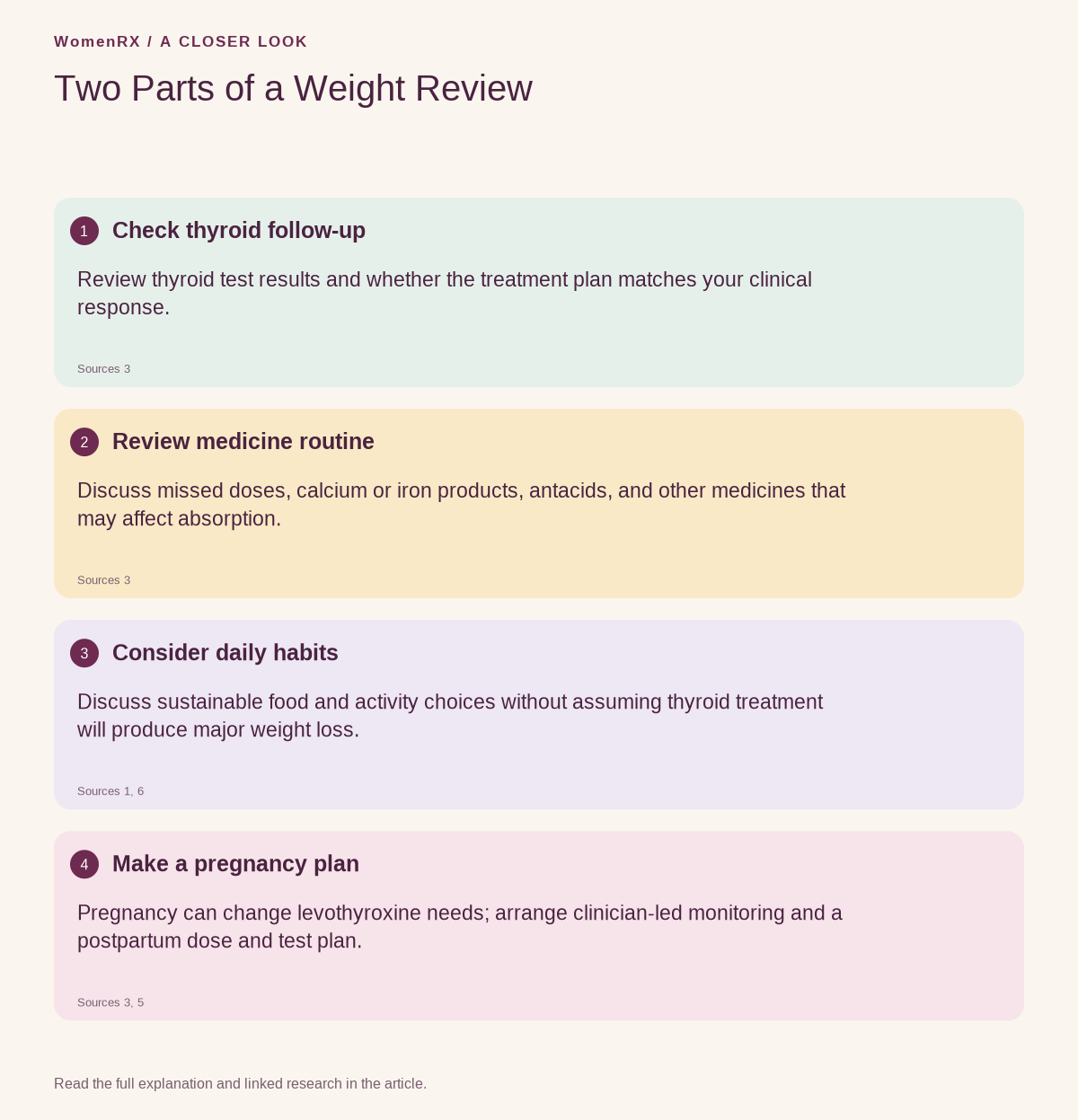
Two Parts of a Weight Review
Check thyroid follow-up: Review thyroid test results and whether the treatment plan matches your clinical response.3
Review medicine routine: Discuss missed doses, calcium or iron products, antacids, and other medicines that may affect absorption.3
Consider daily habits: Discuss sustainable food and activity choices without assuming thyroid treatment will produce major weight loss.16
Make a pregnancy plan: Pregnancy can change levothyroxine needs; arrange clinician-led monitoring and a postpartum dose and test plan.35
Read the figure as text
Separate questions about thyroid treatment from weight-management choices, with pregnancy and postpartum handled as their own care context.- Check thyroid follow-up: Review thyroid test results and whether the treatment plan matches your clinical response.3
- Review medicine routine: Discuss missed doses, calcium or iron products, antacids, and other medicines that may affect absorption.3
- Consider daily habits: Discuss sustainable food and activity choices without assuming thyroid treatment will produce major weight loss.16
- Make a pregnancy plan: Pregnancy can change levothyroxine needs; arrange clinician-led monitoring and a postpartum dose and test plan.35
More questions, answered
Should I take more levothyroxine if I’m not losing weight?
No. Levothyroxine dosing is individualized and guided by clinical response and laboratory results. If weight loss is difficult, review your thyroid results, how you take the medicine, and possible absorption interactions instead of adjusting the dose for weight. 3 6
Could a supplement affect my thyroid medicine?
Yes. The prescribing information identifies calcium carbonate and ferrous sulfate among medicines that can bind levothyroxine and recommends separating listed agents by at least four hours. Some stomach-acid medicines and antacids can also affect absorption, so include supplements and over-the-counter products in your medication review. 3
Sources you can check
- Dietary Supplements for Weight Loss - Health Professional Fact SheetAccessed 2026-09-25Return to first citation
- Postpartum Care: MedlinePlusAccessed 2026-09-25Return to first citation
- LEVOTHYROXINE SODIUM TABLET [CARDINAL HEALTH 107, LLC] | US prescribing information and patient instructionsAccessed 2026-09-25Return to first citation
- Body Weight: MedlinePlusAccessed 2026-09-25Return to first citation
- 2017 Guidelines of the American Thyroid Association for the Diagnosis and Management of Thyroid Disease During Pregnancy and the Postpartum.Alexander EK, Pearce EN, Brent GA, Brown RS, Chen H, Dosiou C, Grobman WA, Laurberg P, Lazarus JH, Mandel SJ, Peeters RP, Sullivan S. · Thyroid : official journal of the American Thyroid Association · 2017Return to first citation
- Levothyroxine therapy for euthyroidism restoration results in clinically insignificant weight and anthropometric changes: a systematic review and meta-analysis.Wolde Sellasie S, Ossola N, Piticchio T, Uccioli L, Trimboli P. · International journal of obesity (2005) · 2026Return to first citation