How Much Can Hypothyroidism Explain About Weight?
Treating an underactive thyroid can bring a modest weight change, but it usually doesn’t explain every change on the scale.
After levothyroxine restores normal thyroid function, average weight loss is modest. A review of 23 studies involving 763 adults found an average decrease of 1.39 kg, with a more consistent reduction in overt than subclinical hypothyroidism. That change doesn’t tell us how much earlier weight gain the thyroid condition caused. 3 Your symptoms, test results, medication routine, and other possible influences all matter in follow-up. 2 1
What thyroid treatment can, and can’t, change
An underactive thyroid diagnosis may seem to explain weight gain. But a diagnosis doesn’t mean that every pound gained came from the thyroid, or that treating it will return you to a previous weight. Studies of weight change after treatment don’t establish how much of an earlier gain hypothyroidism caused. 3
A 2026 systematic review pooled 23 studies of 763 adults with hypothyroidism who received levothyroxine and reached normal thyroid function. Their weight decreased by an average of 1.39 kg from before treatment (95% confidence interval: 0.23 to 2.56 kg lower). The review also found a small average decrease in body mass index. These are averages across studies, not a prediction for any one person. 3
The pattern differed by thyroid status: weight and BMI reductions were found in the overt hypothyroidism subgroup, but not in the subclinical hypothyroidism subgroup. The review also found a decrease in both fat mass and lean body mass. So a change on the scale doesn’t necessarily mean an equivalent change in body fat. 3
The practical takeaway is realistic expectations: correcting thyroid hormone levels can help address the effects of hypothyroidism, but it isn’t a dependable weight-loss treatment. US prescribing information says levothyroxine shouldn’t be used to treat obesity or for weight loss. 2
Read the scale as one clue, not the whole story
Body weight includes fat, muscle, bone, and water. Diet, family history, and other everyday factors can also contribute to changes. 1 In midlife, a thyroid diagnosis and the menopausal transition may overlap in time, but a change in weight shouldn’t automatically be assigned to either one. The findings reported in the review abstract don’t provide a separate estimate for midlife or menopausal women. 3
A useful follow-up looks at two things together: how you’re feeling and whether blood tests show that treatment is on track. Symptoms can be part of the conversation, but they don’t tell you by themselves whether your levothyroxine dose is right. Prescribing information describes dose adjustments as based on clinical response and laboratory results. 2
Questions that can make follow-up more useful
You might ask:
- Was my original diagnosis overt or subclinical hypothyroidism, and what do my recent thyroid tests show?
- Could anything in my medication or supplement routine affect how well levothyroxine is absorbed? Calcium carbonate and ferrous sulfate are among the substances identified in US prescribing information as able to reduce absorption. Mention them, along with other medicines and supplements, so your prescriber or pharmacist can advise you about your routine. 2
- If my thyroid tests are in range, what else might help explain this weight change?
- What changes in symptoms or test results would lead us to reassess treatment?
Don’t increase or decrease levothyroxine to try to change your weight. A weight change is useful context for follow-up, not a reason by itself to alter treatment. 2
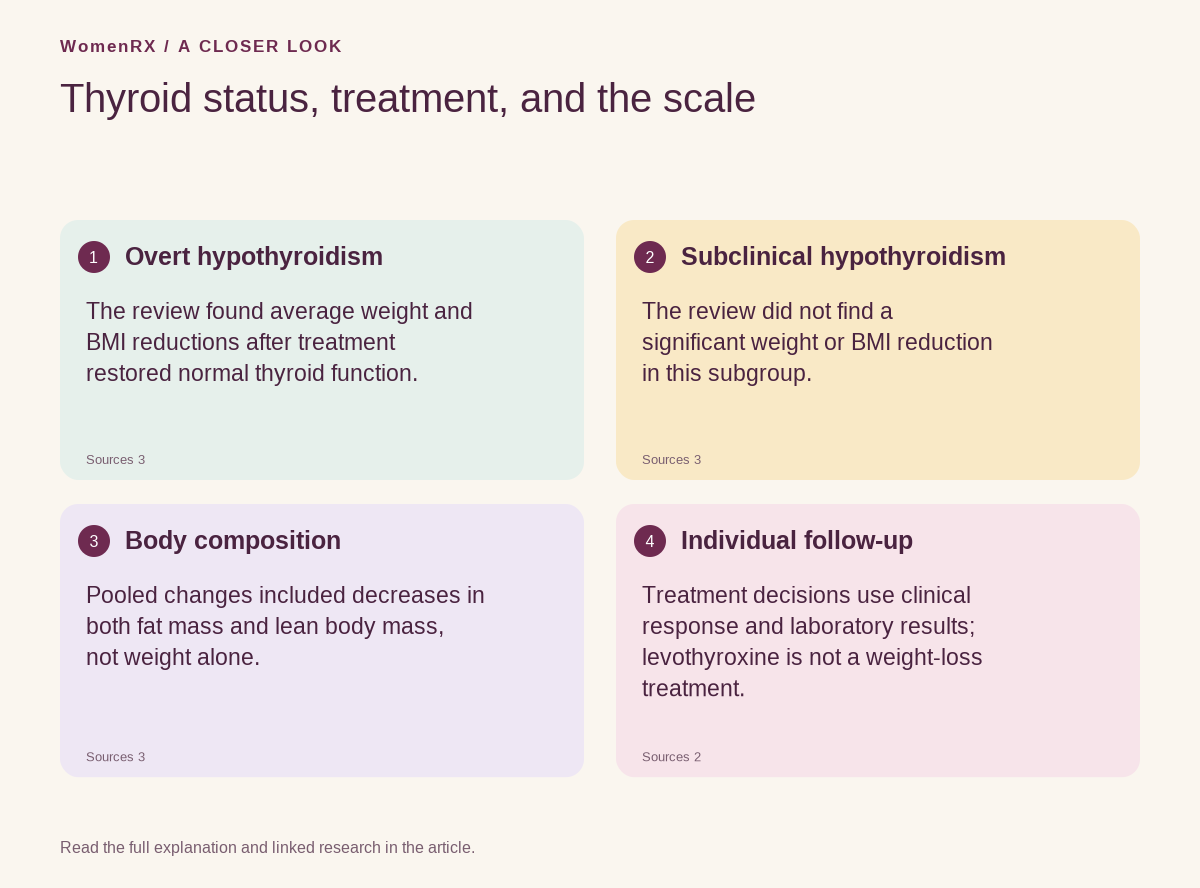
Thyroid status, treatment, and the scale
Overt hypothyroidism: The review found average weight and BMI reductions after treatment restored normal thyroid function.3
Subclinical hypothyroidism: The review did not find a significant weight or BMI reduction in this subgroup.3
Body composition: Pooled changes included decreases in both fat mass and lean body mass, not weight alone.3
Individual follow-up: Treatment decisions use clinical response and laboratory results; levothyroxine is not a weight-loss treatment.2
Read the figure as text
These findings separate the weight change observed after treatment from the limits of what it can explain for one person.- Overt hypothyroidism: The review found average weight and BMI reductions after treatment restored normal thyroid function.3
- Subclinical hypothyroidism: The review did not find a significant weight or BMI reduction in this subgroup.3
- Body composition: Pooled changes included decreases in both fat mass and lean body mass, not weight alone.3
- Individual follow-up: Treatment decisions use clinical response and laboratory results; levothyroxine is not a weight-loss treatment.2
More questions, answered
If my thyroid tests are in range, can my weight still change?
Yes. Weight reflects more than thyroid status, including water, muscle, and fat, and everyday factors can contribute. A normal test result helps assess thyroid treatment; it doesn’t explain every change on the scale. 1 2
Should I change my levothyroxine dose after gaining or losing weight?
Don’t change the dose on your own or use it for weight management. Prescribing information says dosing is individualized and adjusted using clinical response and laboratory results, so discuss a weight change alongside your test results and symptoms. 2
Sources you can check
- Body Weight: MedlinePlusAccessed 2026-09-25Return to first citation
- LEVOTHYROXINE SODIUM TABLET [CARDINAL HEALTH 107, LLC] | US prescribing information and patient instructionsAccessed 2026-09-25Return to first citation
- Levothyroxine therapy for euthyroidism restoration results in clinically insignificant weight and anthropometric changes: a systematic review and meta-analysis.Wolde Sellasie S, Ossola N, Piticchio T, Uccioli L, Trimboli P. · International journal of obesity (2005) · 2026Return to first citation