Can an Underactive Thyroid Explain Weight Gain?
Hypothyroidism can contribute to weight gain, but weight alone can’t identify the cause or predict what treatment will change.
Yes, an underactive thyroid can contribute to weight gain because too little thyroid hormone slows some body functions. But weight gain is common and doesn’t diagnose hypothyroidism. Blood tests, usually including TSH and T4, help show whether the thyroid is underactive. If results don’t indicate hypothyroidism, they don’t explain the weight change or identify another cause. Levothyroxine replaces thyroid hormone; it isn’t a general weight-loss treatment. 2 3
An underactive thyroid can be part of the explanation for weight gain, but it’s only one possibility. The useful distinction is between a thyroid problem that blood tests identify and weight change by itself, which can’t tell you whether your thyroid is involved.
What thyroid-related weight gain can tell you
The thyroid makes hormones that affect how the body uses energy. When it doesn’t make enough, some body functions slow down, and weight gain can occur. Hypothyroidism can also cause symptoms such as fatigue, but these symptoms are common and don’t necessarily point to a thyroid condition. 2
That makes weight gain a reason to consider the whole picture, not proof of a thyroid problem. A clinician can assess symptoms and health history, but hypothyroidism can’t be diagnosed from symptoms alone. Blood tests commonly check TSH and T4, a thyroid hormone. 2 3
Considering thyroid health in midlife
If you’re in midlife and noticing weight change or fatigue, it can be reasonable to ask whether thyroid testing is relevant. Those symptoms alone can’t tell you whether you have a thyroid condition; blood tests help assess thyroid function. A thyroid result doesn’t identify every possible cause of weight change. 2 3
There are other possible influences to keep in view. Body weight includes muscle, bone, fat, and water, and everyday factors such as diet can affect it. Unexpected weight gain can also sometimes point to a health problem unrelated to the thyroid. A weight change alone can’t tell you which of these is involved. 4
What a thyroid result can guide
If testing shows hypothyroidism, levothyroxine is used to replace thyroid hormone. The treatment is aimed at managing the condition, and regular blood tests help determine whether the dose is appropriate. Taking too much thyroid hormone can cause serious problems, including atrial fibrillation or osteoporosis, so increasing thyroid medicine to try to change weight isn’t a safe shortcut. 1 2
If TSH and T4 results don’t indicate an underactive thyroid, they don’t provide a thyroid explanation for the weight change. They also don’t tell you whether diet, changes in muscle, fat or water, or another health issue is responsible. That result narrows the thyroid question; it doesn’t explain the whole picture. 3 4
A result showing a milder pattern needs more context. Subclinical hypothyroidism means TSH is elevated while free T4 is normal. In a meta-analysis of adults aged 60 and older with this pattern, levothyroxine did not significantly change BMI. That finding is specific to older adults with subclinical hypothyroidism; it doesn’t settle what treatment means for every person or every degree of thyroid dysfunction. It does show why a mildly abnormal result shouldn’t be treated as a promise of weight loss. 5
A realistic expectation from treatment
If hypothyroidism is contributing to weight gain, treating it addresses the hormone deficiency and may help with related symptoms. It doesn’t follow that every pound gained came from the thyroid, or that treatment will reverse all weight changes. If weight remains difficult to manage, that alone doesn’t show that your dose is wrong; blood tests, rather than the scale alone, help guide thyroid treatment. 1 2
If you’ve had an unexpected weight change, or weight gain alongside symptoms that concern you, discussing thyroid testing is a reasonable next step. The result can help answer whether the thyroid needs treatment. It can’t, on its own, explain every influence on body weight. 2 4
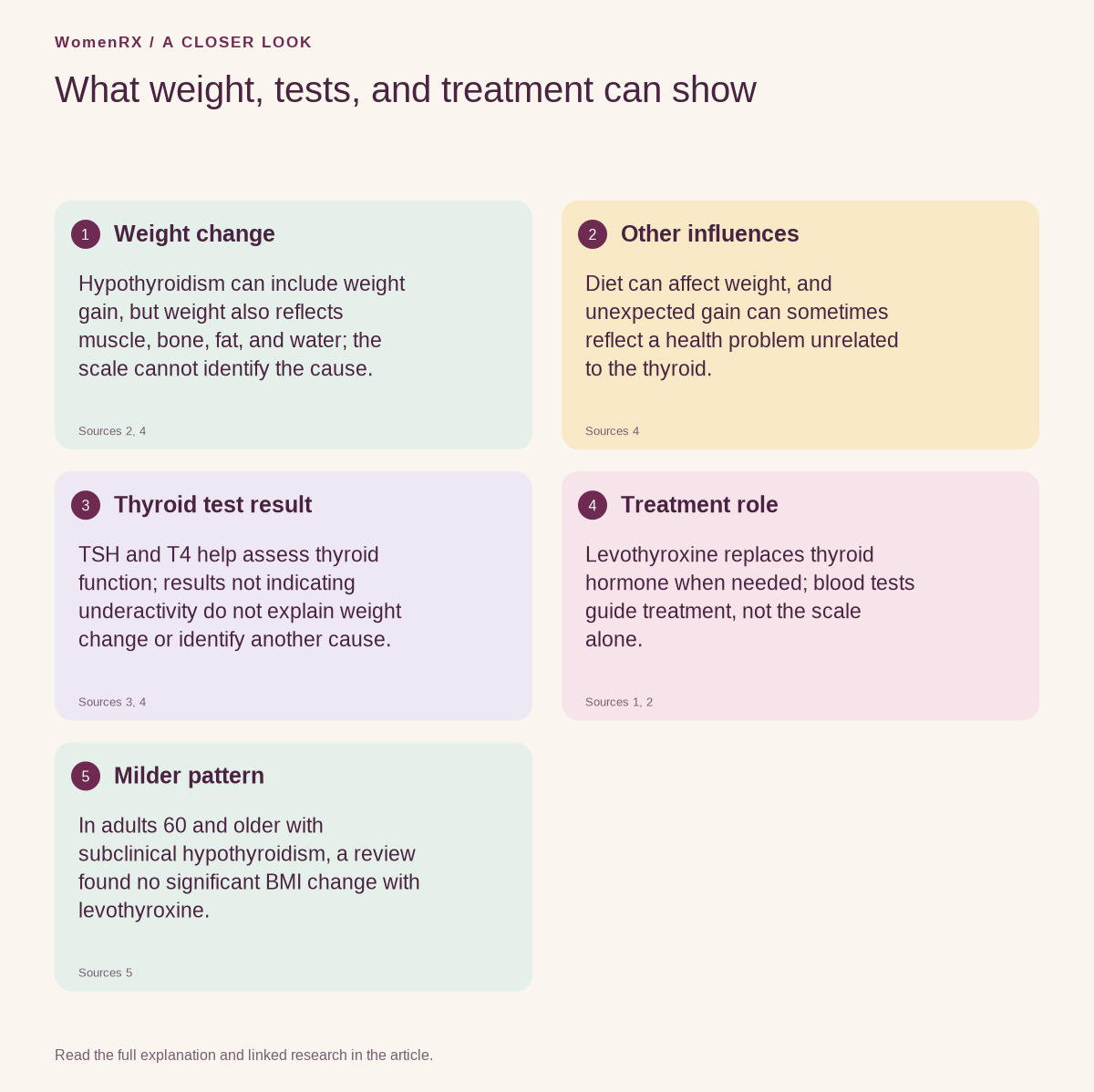
What weight, tests, and treatment can show
Weight change: Hypothyroidism can include weight gain, but weight also reflects muscle, bone, fat, and water; the scale cannot identify the cause.24
Other influences: Diet can affect weight, and unexpected gain can sometimes reflect a health problem unrelated to the thyroid.4
Thyroid test result: TSH and T4 help assess thyroid function; results not indicating underactivity do not explain weight change or identify another cause.34
Treatment role: Levothyroxine replaces thyroid hormone when needed; blood tests guide treatment, not the scale alone.12
Milder pattern: In adults 60 and older with subclinical hypothyroidism, a review found no significant BMI change with levothyroxine.5
Read the figure as text
These comparisons separate a possible thyroid contribution from other influences and show what testing and treatment can, and cannot, establish.- Weight change: Hypothyroidism can include weight gain, but weight also reflects muscle, bone, fat, and water; the scale cannot identify the cause.24
- Other influences: Diet can affect weight, and unexpected gain can sometimes reflect a health problem unrelated to the thyroid.4
- Thyroid test result: TSH and T4 help assess thyroid function; results not indicating underactivity do not explain weight change or identify another cause.34
- Treatment role: Levothyroxine replaces thyroid hormone when needed; blood tests guide treatment, not the scale alone.12
- Milder pattern: In adults 60 and older with subclinical hypothyroidism, a review found no significant BMI change with levothyroxine.5
More questions, answered
Can weight gain alone mean I have hypothyroidism?
No. Weight gain is common and can have causes other than thyroid disease. A diagnosis requires thyroid testing, rather than symptoms or weight alone. 2
Will levothyroxine make me lose weight?
Levothyroxine replaces thyroid hormone when the body isn’t making enough; it isn’t a general weight-loss treatment. How much weight changes depends on whether hypothyroidism was contributing in the first place, and treatment is guided by blood tests. 1 2
Sources you can check
- Levothyroxine: a medicine for an underactive thyroid (hypothyroidism) - NHSAccessed 2026-09-25Return to first citation
- Hypothyroidism (Underactive Thyroid) - NIDDKAccessed 2026-09-25Return to first citation
- Underactive thyroid (hypothyroidism) - NHSAccessed 2026-09-25Return to first citation
- Body Weight: MedlinePlusAccessed 2026-09-25Return to first citation
- Effect of Levothyroxine on Older Patients With Subclinical Hypothyroidism: A Systematic Review and Meta-Analysis.Zhao C, Wang Y, Xiao L, Li L. · Frontiers in endocrinology · 2022Return to first citation