Tirzepatide While Breastfeeding: What We Know
A small study measured very little tirzepatide in milk after one dose, but it did not answer whether treatment affects breastfed infants or milk production.
In a study of 11 healthy lactating adults, tirzepatide was undetectable in most milk samples after one 5 mg dose; the amount measured in the remaining samples was very low. That is evidence about milk transfer, not proof of safety during ongoing treatment. The Mounjaro prescribing information reports no available data on effects in breastfed infants or on milk production. 1
The available evidence gives one useful detail: after a single dose, very little tirzepatide was measured in breast milk. But a milk measurement alone can’t tell you whether a baby exposed through milk might have effects, or whether treatment affects milk production. The Mounjaro prescribing information says there are no available data on either outcome and advises weighing breastfeeding’s benefits against the mother’s clinical need for treatment and potential effects on the infant. 1
What the milk study measured
The study included 11 healthy lactating adults who received one 5 mg dose of tirzepatide. Of 171 breast-milk samples tested, 164 had no detectable drug at the test’s detection limit. Tirzepatide was measured in the other seven samples; the total amount detected in those samples over the 28-day sampling window was less than 0.02% of the maternal dose. The last measurable concentrations occurred five days after dosing. 1
These findings describe milk samples after one dose. They don’t establish what happens with repeated treatment, how much an infant might absorb, or whether exposure has effects. The study also couldn’t calculate total tirzepatide exposure in milk using AUC because too few concentrations were quantifiable. 1
Milk levels and infant outcomes are different evidence
The prescribing information reports no available data on effects in breastfed infants or on milk production. So, the milk study offers a limited picture of drug transfer, not findings about infant growth, development, or other health outcomes. A low or undetectable amount in some samples should not be treated as proof that ongoing use is risk-free. 1
A National Library of Medicine summary advises particular caution when nursing a newborn or preterm infant. It also describes expert recommendations to monitor infant growth and developmental milestones and the lactating parent’s nutritional status. These are cautious recommendations, not results from a study measuring outcomes in infants exposed through milk. 2
The product study does not report separate results by infant age, prematurity, or feeding pattern. If your baby is a newborn or was born preterm, those details are worth raising because expert guidance calls for particular caution, even though the available information doesn’t provide a separate risk estimate for those babies. 1 2
Weigh treatment needs alongside feeding plans
The decision is not only about whether tirzepatide can be measured in milk. The prescribing information says to consider the benefits of breastfeeding alongside the mother’s clinical need for Mounjaro and possible effects on the infant from the medicine or the underlying maternal condition. 1
If you’re considering treatment, already taking it, or deciding what to do after a dose, discuss your situation with the clinician managing your care. It may help to ask:
- What is the expected benefit of tirzepatide for my health now, and what are the implications of delaying or changing treatment?
- How does the one-dose milk study apply to the treatment plan being considered for me?
- Does my baby’s age, prematurity, or feeding situation affect how we should weigh the uncertainty?
- What changes in my baby’s growth or in milk production should prompt us to revisit the plan?
- What feeding options fit my treatment needs and preferences?
The Mounjaro Medication Guide says the medicine may pass into breast milk and advises discussing the best way to feed your baby while using it. That is product guidance to discuss, not evidence that harm to a breastfed infant has been demonstrated. 1
The practical takeaway
A single-dose study found little tirzepatide in milk, but it cannot answer whether ongoing treatment affects a breastfed infant or milk production. Use that distinction to frame a decision with your clinician: consider your treatment needs, your baby’s circumstances, and the limits of what the milk measurements can show.
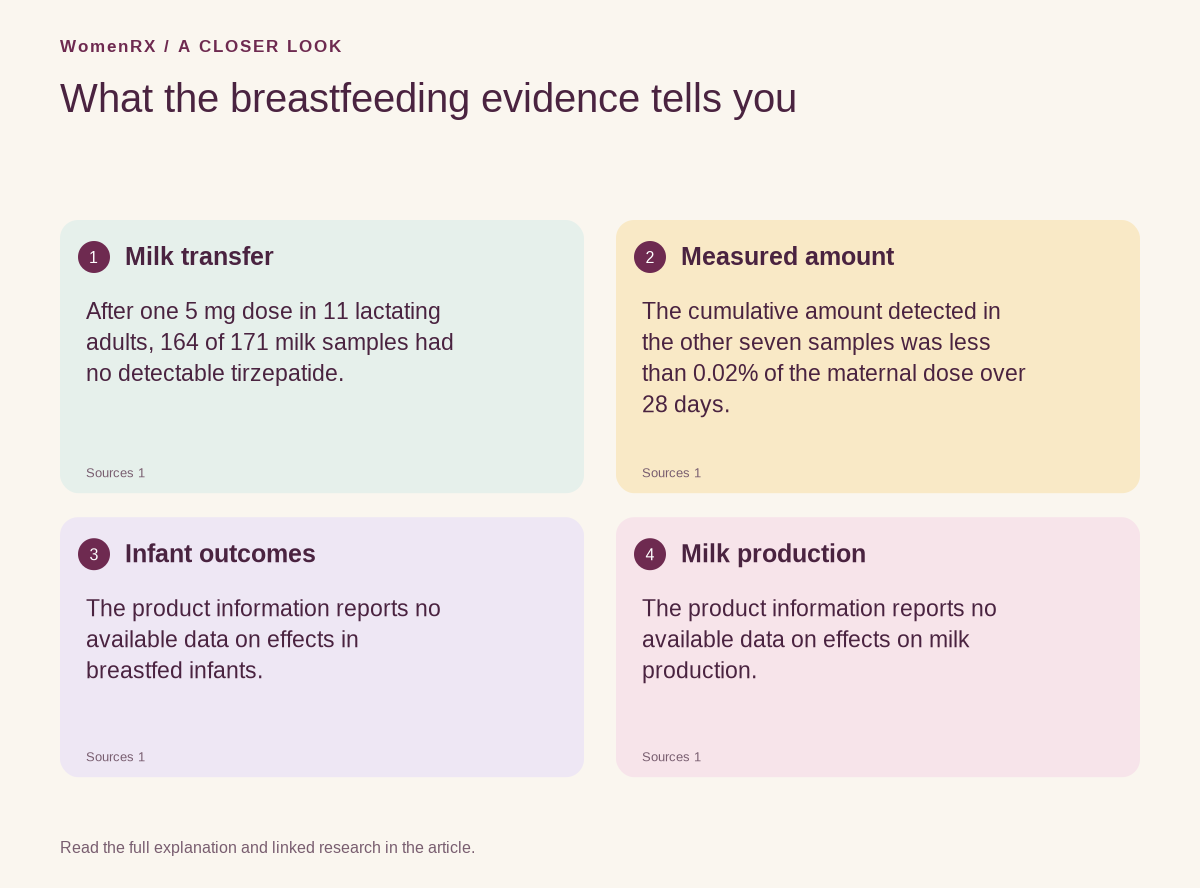
What the breastfeeding evidence tells you
Milk transfer: After one 5 mg dose in 11 lactating adults, 164 of 171 milk samples had no detectable tirzepatide.1
Measured amount: The cumulative amount detected in the other seven samples was less than 0.02% of the maternal dose over 28 days.1
Infant outcomes: The product information reports no available data on effects in breastfed infants.1
Milk production: The product information reports no available data on effects on milk production.1
Read the figure as text
The milk study addresses measured drug after one dose. Infant outcomes and milk production are separate questions.- Milk transfer: After one 5 mg dose in 11 lactating adults, 164 of 171 milk samples had no detectable tirzepatide.1
- Measured amount: The cumulative amount detected in the other seven samples was less than 0.02% of the maternal dose over 28 days.1
- Infant outcomes: The product information reports no available data on effects in breastfed infants.1
- Milk production: The product information reports no available data on effects on milk production.1
More questions, answered
Does a low amount in breast milk mean Mounjaro is safe for my baby?
No. The study measured tirzepatide in milk after one dose; the product information reports no available data on effects in breastfed infants. A low measured amount does not establish the safety of ongoing treatment. 1
Is there evidence about Mounjaro and milk supply?
The Mounjaro prescribing information reports no available data on tirzepatide’s effects on milk production. 1