Think You Have a UTI? How to Get the Right Care
Burning when you pee can be a sign of a UTI; fever, back pain, pregnancy, or certain health conditions make timely clinical advice especially important.
If you have burning when you pee, contact a clinician promptly to discuss whether you need an assessment or urine test. Fever or chills, pain in your back just under the ribs, blood in your urine, pregnancy, or diabetes are reasons to seek urgent clinical advice. Antibiotics can treat bacterial UTIs, but a clinician should decide whether they’re needed and which one is right for you. 1 2 3
Start with the symptoms and your situation
A burning or painful feeling when you pee can happen with a urinary tract infection (UTI). UTIs can affect different parts of the urinary tract, including the bladder, urethra, and kidneys. A symptom alone can’t confirm which is involved, so contact a clinician promptly to ask about an assessment and whether a urine test is appropriate. 1 2
Some people may be diagnosed based on symptoms, and a urine test isn’t always needed. Testing can help a clinician decide what’s going on and what treatment fits. 2
Know when to get urgent advice
Seek urgent clinical advice if you have a fever or chills, pain in your back just under the ribs, blood in your urine, or symptoms that are getting worse quickly. These signs can call for more urgent assessment than discomfort with urination alone. 2
Pregnancy or diabetes is also a reason to seek urgent clinical advice for possible UTI symptoms, rather than relying on self-care alone. The NHS guidance lists both as reasons for urgent advice, and MedlinePlus identifies diabetes as a UTI risk factor. 1 2
People with a catheter or spinal cord injury also have particular UTI risk factors, so new urinary symptoms are a reason to seek individualized clinical advice. 1
What can help while you arrange care
For discomfort or a high temperature, the NHS lists paracetamol as a symptom-relief option. If you use an over-the-counter medicine, follow its label and consider whether it’s suitable for you. Symptom relief doesn’t establish whether an infection is present or replace assessment when warning signs apply. 2
Cranberry products and cystitis sachets shouldn’t be treated as a cure for an infection that has already started. The NHS guidance says there’s no evidence they relieve symptoms or treat an active UTI. 2
Why antibiotics need a clinician’s direction
Antibiotics treat bacterial infections, but taking them when they aren’t needed can cause side effects and contribute to antibiotic resistance. A clinician can decide whether an antibiotic is appropriate for your symptoms and situation. Don’t take leftover antibiotics, someone else’s prescription, or medicine saved for another time. 2 3
If you are prescribed an antibiotic, follow the directions you’re given. If you have a concern about the medicine or develop a side effect, contact the clinician who prescribed it. 3
If UTIs keep coming back
Repeated episodes deserve a closer look rather than repeated self-treatment. Tell a clinician if symptoms return after treatment or you’re having UTIs repeatedly; the NHS guidance recommends assessment for recurring infections. The best next step may depend on whether these episodes are confirmed infections and on your individual health circumstances. 2 4
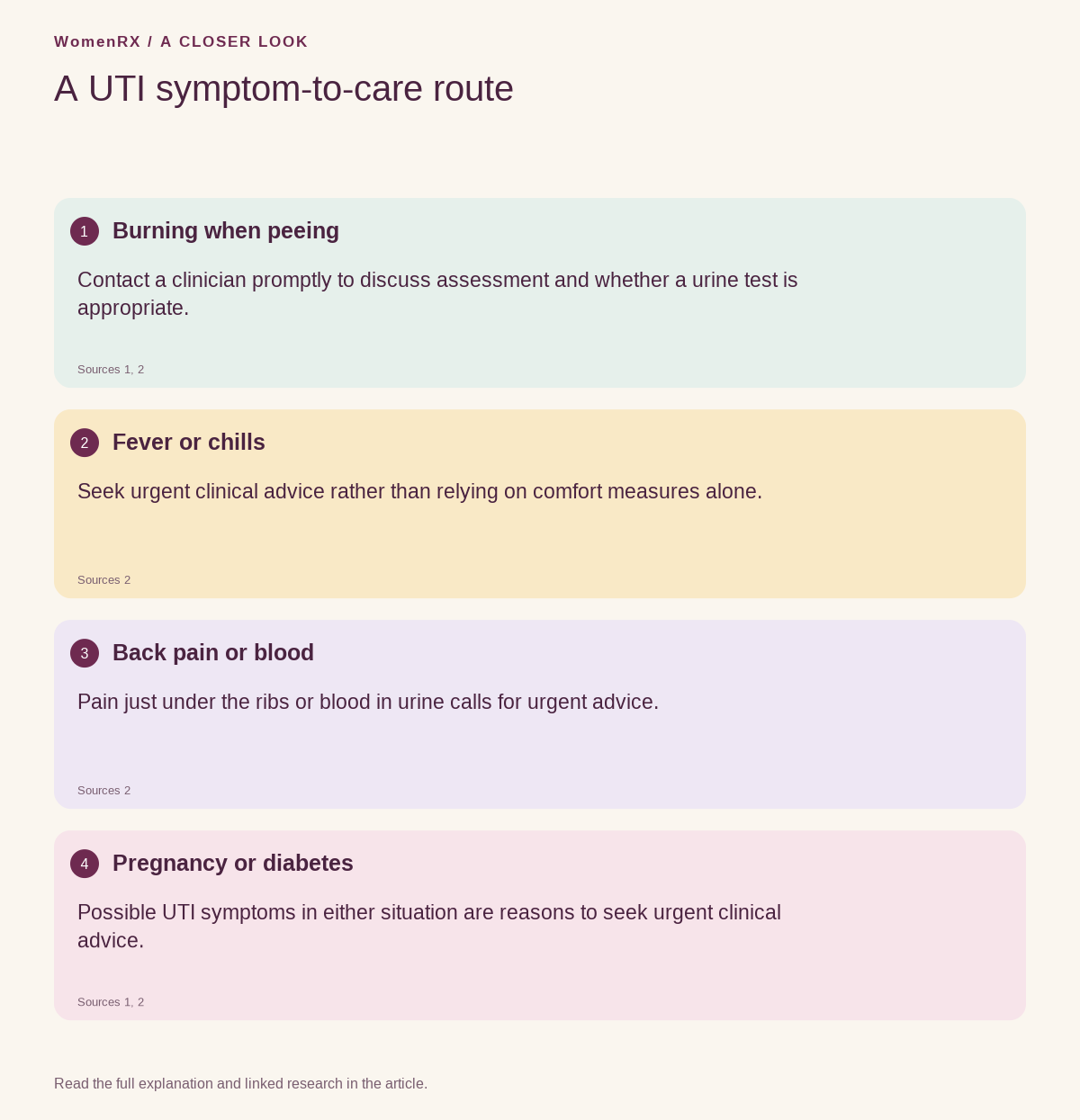
A UTI symptom-to-care route
Burning when peeing: Contact a clinician promptly to discuss assessment and whether a urine test is appropriate.12
Fever or chills: Seek urgent clinical advice rather than relying on comfort measures alone.2
Back pain or blood: Pain just under the ribs or blood in urine calls for urgent advice.2
Pregnancy or diabetes: Possible UTI symptoms in either situation are reasons to seek urgent clinical advice.12
Read the figure as text
Use symptoms and personal circumstances to choose a sensible next step; this guide does not diagnose an infection.- Burning when peeing: Contact a clinician promptly to discuss assessment and whether a urine test is appropriate.12
- Fever or chills: Seek urgent clinical advice rather than relying on comfort measures alone.2
- Back pain or blood: Pain just under the ribs or blood in urine calls for urgent advice.2
- Pregnancy or diabetes: Possible UTI symptoms in either situation are reasons to seek urgent clinical advice.12
More questions, answered
Can cranberry juice get rid of a UTI that has started?
The NHS guidance says there’s no evidence cranberry products relieve symptoms or treat an active UTI. Don’t use them in place of clinical advice when you have urinary symptoms or warning signs. 2
Should I use antibiotics left over from a previous infection?
No. Don’t save antibiotics for later or take medicine prescribed for someone else. The right decision about whether an antibiotic is needed should be made for your current symptoms and circumstances. 3
Sources you can check
- Urinary Tract Infections | UTI | UTI Symptoms | MedlinePlusAccessed 2026-09-25Return to first citation
- Urinary tract infections (UTIs) - NHSAccessed 2026-09-25Return to first citation
- Antibiotics: MedlinePlusAccessed 2026-09-25Return to first citation
- Recurrent urinary tract infection is not one disease: moving from antibiotic suppression to phenotype-guided prevention.Ahmad B, Khan K. · Annals of medicine and surgery (2012) · 2026Return to first citation