Formication: What the Sensation Means and When to Get Care
A crawling feeling is a real skin sensation, but it doesn’t by itself prove an infestation or point to one specific cause.
Formication means feeling as if something is crawling, stinging, or biting when no organism accounts for the sensation. It’s a description, not a diagnosis. Skin conditions or a true infestation, nerve problems, some medicines, and substances can all be relevant possibilities. A clinician can assess the skin and nerves and review your health and medication history to help sort them out. 4 1
What “formication” describes
Formication is the feeling that an insect or other organism is crawling, stinging, or biting on or under your skin when no organism accounts for it. The word describes a sensation; it doesn’t tell you why it’s happening. It also doesn’t, on its own, mean that you believe you’re infested. A fixed belief of infestation despite no supporting evidence is a different clinical concept, called delusional infestation. 4
The sensation can be distressing whether or not there’s anything visible on the skin. The distinction matters: a crawling feeling is not proof of infestation, but it also shouldn’t be dismissed as imaginary. A skin condition or genuine infestation can cause symptoms or visible changes and may need to be considered during an examination. 4
What may be contributing
Skin or infestation-related causes. A rash, other skin condition, or actual infestation can be part of the explanation. When someone reports crawling sensations, clinicians may need to examine the skin and consider these possibilities rather than assume the cause from the sensation alone. 4
Nerve-related sensations. Peripheral nerve problems can cause altered sensations, including pins and needles, numbness, burning, or sharp pain. Those symptoms aren’t the same thing as a diagnosis of formication, but they can help a clinician consider whether nerves are involved, especially if you also have weakness, cramps, or trouble with balance or coordination. 3
Medicines and substances. A review on delusional infestation notes that cocaine, methamphetamine, and methylphenidate can cause tactile hallucinations, and that alcohol withdrawal can be associated with formication. It also lists some medicines associated with delusional infestation. These are reasons to discuss substances and medicines openly with a clinician, not proof that a particular drug is causing your sensation. Don’t stop a prescribed medicine on your own; a clinician can help review whether it could be contributing. 4
Other causes may need checking. If a nerve problem is suspected, an assessment may include questions about symptoms and an examination of sensation, strength, and reflexes. Depending on the situation, blood tests may check for causes such as diabetes or vitamin B12 deficiency. Some people need more specialized nerve testing. 1
If you first noticed the feeling during perimenopause or after menopause, mention the timing, but don’t assume menopause explains it. Your age and medication history can help put the symptom in context; neither identifies the cause. The skin, possible nerve symptoms, and other health factors still deserve attention. 1 2 4
What to note before an assessment
A few details can make it easier to describe what’s happening. Notice where you feel it, whether it stays in one place or affects several areas, and whether it comes and goes or persists. Also note any visible skin changes and other symptoms, such as numbness, altered sensation, weakness, or balance problems. These observations don’t diagnose the cause, but they give a clinician a clearer starting point for examining the affected skin and assessing sensation or strength. 1 3 4
Bring a current medication list and be ready to mention any recent changes, as well as substance use or possible alcohol withdrawal. That information can help focus the review; it doesn’t mean you’ll be judged or that one explanation is already assumed. 4
When to get assessed
Arrange an assessment if the sensation keeps returning, persists, or is accompanied by visible skin changes, numbness, weakness, or problems with balance or coordination. A clinician can look for a skin explanation and check whether the pattern suggests a nerve issue. Early symptoms such as tingling or numbness are a reason to have possible peripheral neuropathy assessed; the work-up may include an examination and tests chosen for your situation. 2 1 3
If you can see a rash, sores, or other skin changes, mention those too rather than focusing only on the crawling feeling. If there’s no visible change, that still doesn’t establish the cause. The point of an assessment is to consider the skin, nerves, medicines, substances, and other relevant health factors together. 4
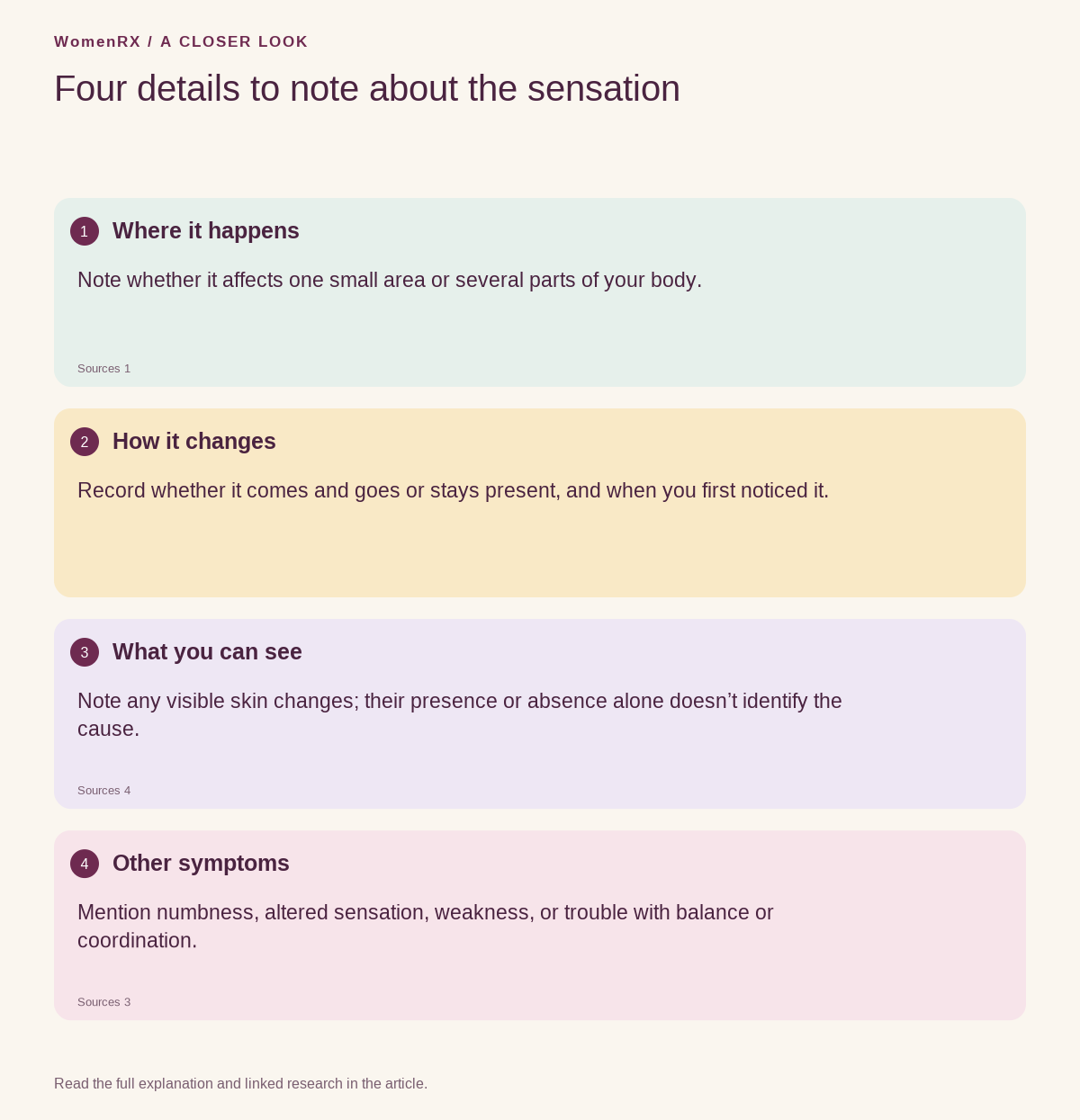
Four details to note about the sensation
Where it happens: Note whether it affects one small area or several parts of your body.1
How it changes: Record whether it comes and goes or stays present, and when you first noticed it.
What you can see: Note any visible skin changes; their presence or absence alone doesn’t identify the cause.4
Other symptoms: Mention numbness, altered sensation, weakness, or trouble with balance or coordination.3
Read the figure as text
These observations can help you describe the symptom and give a clinician a starting point for examining your skin and assessing sensation or strength.- Where it happens: Note whether it affects one small area or several parts of your body.1
- How it changes: Record whether it comes and goes or stays present, and when you first noticed it.
- What you can see: Note any visible skin changes; their presence or absence alone doesn’t identify the cause.4
- Other symptoms: Mention numbness, altered sensation, weakness, or trouble with balance or coordination.3
More questions, answered
Does formication mean I have delusional infestation?
No. Formication is a sensation. Delusional infestation refers to a fixed belief of infestation without evidence to support it. A clinician should consider skin, medical, substance-related, and other explanations before settling on that diagnosis. 4
Can a nerve problem cause crawling or tingling feelings?
Nerve problems can cause altered sensations such as pins and needles, numbness, burning, or sharp pain. Those symptoms can be useful to describe during an assessment, but they don’t identify a cause on their own. 3 1
Sources you can check
- Peripheral neuropathy - Diagnosis - NHSAccessed 2026-09-25Return to first citation
- Peripheral neuropathy - NHSAccessed 2026-09-25Return to first citation
- Peripheral neuropathy - Symptoms - NHSAccessed 2026-09-25Return to first citation
- The Diagnostic Workup, Screening, and Treatment Approaches for Patients with Delusional Infestation.Coetzee S, Mahajan C, França K. · Dermatology and therapy · 2023Return to first citation