The Low-FODMAP Diet for IBS, Without the Long-Term Restriction
A low-FODMAP diet is best treated as a short-term experiment followed by food reintroduction, not a permanent list of foods to avoid.
A low-FODMAP trial may be worth discussing if you have diagnosed IBS and simpler, balanced eating changes haven’t helped enough. It works by temporarily limiting certain fermentable carbohydrates that can contribute to gut symptoms. The plan has three parts: restriction, systematic reintroduction, and a more flexible personal eating pattern. If restriction doesn’t help, don’t keep extending it. 1 3 7
First ask whether a restrictive trial fits
IBS can involve abdominal pain, bloating, diarrhea, constipation, or a mix of bowel changes. Food may trigger symptoms, but there isn’t one diet that works for everyone. 1 2 A low-FODMAP diet is a structured option for managing diagnosed IBS, not a general solution for every digestive complaint.
It may make sense to consider if your symptoms continue despite less restrictive steps, such as eating a balanced diet and noticing whether particular foods reliably bother you. Traditional dietary advice is commonly used first; a low-FODMAP approach is more restrictive and is often considered a next step. 1 3
FODMAPs are fermentable short-chain carbohydrates. The proposed reason for limiting them is that they can increase water in the gut and gas production, which may contribute to pain, bloating, or diarrhea in some people with IBS. 5 That’s a possible symptom-management strategy, not a cure, and the response varies.
Think in three phases, not one food list
1. Restrict with a review point
The first phase limits high-FODMAP foods to see whether symptoms improve. Before starting, decide what you’ll track and when you’ll review whether it’s helping. A food-and-symptom diary can help you notice patterns. 1 A dietitian can help you make the trial less confusing and protect nutritional variety, especially if you already avoid many foods. The diet is meant to lead to reintroduction, not ongoing broad restriction. 1 4 7
If you reach your planned review and haven’t noticed a clear improvement, don’t keep extending the restriction or remove more foods. Return to a balanced eating pattern and consider other ways to manage IBS with a clinician or dietitian. There isn’t one diet that works for everyone. 1
2. Reintroduce foods systematically
If symptoms improve, begin adding foods back in a planned way rather than assuming every restricted food is a problem. One practical way to make the results easier to interpret is to try one food at a time, keep track of symptoms, and then move on to another food. The point is to learn which foods you can include and build a maintenance diet around your own response. 1 3 7
A small randomized crossover study involving nine people with IBS found that a more targeted diet limiting certain oligosaccharides produced symptom relief similar to the standard low-FODMAP diet in that selected group. Its size and specialist setting mean it can’t tell you which foods will suit you, but it illustrates why personalization matters. 5
3. Keep the foods that work for you
Use what you learned to widen your diet as much as your symptoms allow. Some people may need to limit particular foods, while others may be able to bring many back. The goal is the least restrictive pattern that feels workable and helps symptoms, rather than staying in the initial restriction phase. 3 7
Longer-term evidence is less settled than evidence for short-term symptom relief. In one follow-up trial, people who completed an initial six-week low-FODMAP intervention were followed without further dietary intervention; symptom gains in the low-FODMAP group had regressed by 12 months. The trial compared it with a microbiome-guided personalized diet, so it doesn’t establish one best maintenance plan, but it reinforces the value of thinking beyond elimination. 6
When dietitian support is especially useful
Consider working with a registered dietitian experienced in IBS if you’re unsure how to carry out the phases, already avoid many foods, or find that eating socially or getting enough variety is becoming difficult. Nutrient deficiencies are a concern with restrictive diets, and a randomized trial report specifically recommends dietitian supervision to support nutritional adequacy and sustainability. 1 4
If you’re pregnant or breastfeeding, a restrictive phase deserves individualized planning rather than trying it on your own. This is a cautious application of the general concern that restrictive diets can affect nutritional adequacy, not pregnancy-specific evidence. A randomized IBS diet study involved adults, so it doesn’t establish whether a low-FODMAP approach improves symptoms or affects nutrition during pregnancy or breastfeeding. 4 Talk it through with a registered dietitian and your pregnancy or postpartum care team before changing your diet.
If you haven’t been evaluated for your symptoms, don’t assume they’re IBS just because food seems involved. IBS symptoms can overlap with other conditions, and evaluation may include tests to rule out other causes. 2 If managing symptoms means avoiding more and more foods, that’s a reason to seek tailored advice rather than expanding the restriction list. 1
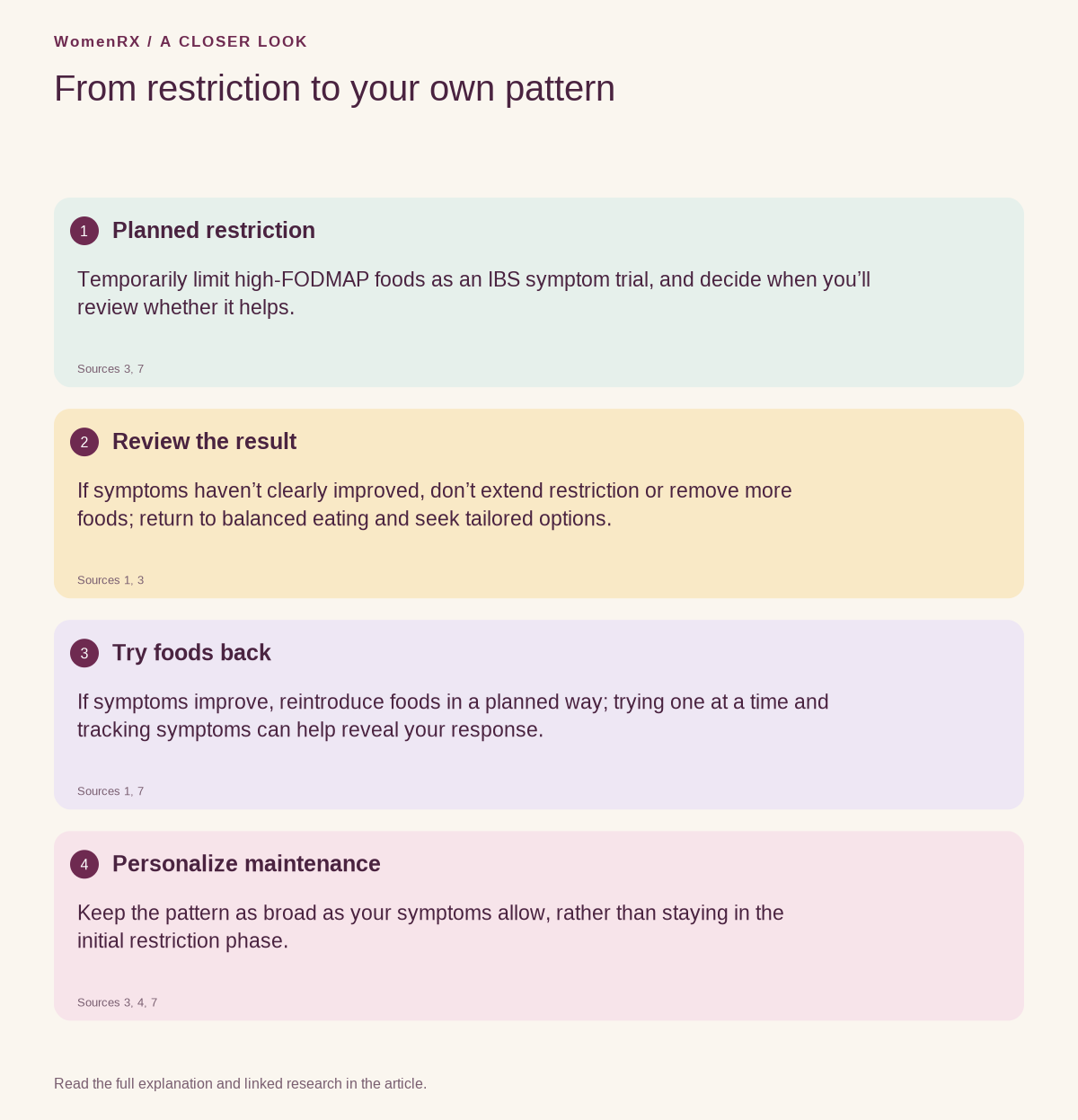
From restriction to your own pattern
Planned restriction: Temporarily limit high-FODMAP foods as an IBS symptom trial, and decide when you’ll review whether it helps.37
Review the result: If symptoms haven’t clearly improved, don’t extend restriction or remove more foods; return to balanced eating and seek tailored options.13
Try foods back: If symptoms improve, reintroduce foods in a planned way; trying one at a time and tracking symptoms can help reveal your response.17
Personalize maintenance: Keep the pattern as broad as your symptoms allow, rather than staying in the initial restriction phase.347
Read the figure as text
The diet is a sequence: test whether restriction helps, review the result, reintroduce foods, and build a more flexible pattern around your response.- Planned restriction: Temporarily limit high-FODMAP foods as an IBS symptom trial, and decide when you’ll review whether it helps.37
- Review the result: If symptoms haven’t clearly improved, don’t extend restriction or remove more foods; return to balanced eating and seek tailored options.13
- Try foods back: If symptoms improve, reintroduce foods in a planned way; trying one at a time and tracking symptoms can help reveal your response.17
- Personalize maintenance: Keep the pattern as broad as your symptoms allow, rather than staying in the initial restriction phase.347
More questions, answered
Should I keep avoiding foods if the first phase helps?
Not automatically. The next step is systematic reintroduction, so you can identify what belongs in your personal maintenance diet instead of continuing broad restriction. 7
What if I don’t feel better during the restriction phase?
Don’t keep extending the restriction or remove more foods. Return to balanced eating and consider other IBS management options with tailored advice; no single diet helps everyone. 1
Is a low-FODMAP diet for every digestive problem?
No. This evidence concerns IBS. A low-FODMAP diet shouldn’t be treated as a general diet for unexplained digestive symptoms or as a cure. 3 2
Sources you can check
- Diet, lifestyle and medicines for IBS (irritable bowel syndrome) - NHSAccessed 2026-09-25Return to first citation
- Irritable Bowel Syndrome | IBS | MedlinePlusAccessed 2026-09-25Return to first citation
- Nutritional Management of Irritable Bowel Syndrome.Colecchia L, Marasco G, Meacci D, Cremon C, Pivetti A, Manni G, Gobbato A, Xhuveli M, Di Biase AR, Colecchia A, Barbara G. · Nutrients · 2026Return to first citation
- A Randomized Controlled Trial Comparing Low-FODMAP and Gluten-Free Diets on Gastrointestinal Symptoms, Nutritional Status, and Quality of Life in Irritable Bowel Syndrome.Somtaş AE, Çapar AG, Çapar AG. · The Turkish journal of gastroenterology : the official journal of Turkish Society of Gastroenterology · 2026Return to first citation
- Modification of the Low FODMAP Diet Is Feasible in the Treatment of Irritable Bowel Syndrome: A Randomised Crossover Study.Jensen LG, Kjær M, Andersen JR. · Gastroenterology research and practice · 2025Return to first citation
- Long-term microbiome and clinical effects of a microbiome-guided personalized diet versus low-FODMAP diet in irritable bowel syndrome: A 12-month follow-up randomized controlled trial.Tunali V, Arslan NÇ, Derviş Haki̇m G, Gündoğdu A, Ermi̇ş BH, Hora M, Nalbantoğlu ÖU. · Gut microbes · 2026Return to first citation
- Internet-delivered cognitive behavioral therapy and FODMAP diet for adults with irritable bowel syndrome: A four-arm randomized controlled trial.Thuen C, Kenter RMF, Assmus J, Steinsvik EK, Vikøren LAS, Lied GA, Berentsen B. · Internet interventions · 2026Return to first citation