IBS and Weight: When Changes Need a Closer Look
IBS symptoms can change what you eat, but unexplained weight loss shouldn’t automatically be blamed on IBS.
If IBS symptoms have led you to eat less or avoid more foods, that may help explain a weight change in your situation. It doesn’t establish that IBS caused it. Unexplained or continuing weight loss needs assessment, particularly if you’re struggling to eat enough. Note your weight trend alongside changes in appetite, meals, and symptoms, and mention if you’re avoiding many foods. 1 4 5
The useful distinction is how the change happened
IBS can cause abdominal pain, bloating, diarrhea, and constipation, with symptoms that come and go. Food or drink may trigger a flare, though symptoms can also occur without an obvious trigger. 3 4
That can change eating. You might skip a meal because you’re worried about symptoms, eat smaller portions, or cut out several foods. If your weight has changed while you’ve been eating less, the change in eating is worth discussing as a possible explanation, not assuming it’s the cause. Research reviews describe links between food, symptoms, and restrictive eating in gut-brain disorders, while also emphasizing the need to avoid unnecessary dietary restriction. They do not establish that IBS-related eating changes cause weight loss. 6
So ask two questions: Was the change intentional, and does it make sense given what you’ve changed about eating? A planned change in eating may explain a weight change, but a change you didn’t intend, or one that continues without a clear explanation, deserves a closer look.
When to get weight loss checked
A small or unclear weight change is not the same as substantial unexplained weight loss. If your weight is trending down without trying, note when it began and whether it continues, and discuss it with a clinician, especially if symptoms are making it hard to eat enough. Substantial unexplained weight loss warrants prompt assessment; don’t assume it is just IBS. 4 5
Rectal bleeding or bloody diarrhea also warrants prompt assessment, even if your weight has not changed. These symptoms shouldn’t be written off as an IBS flare. 4
A clinician can review your symptoms and eating changes and decide whether you need testing for another condition. Tests may be used to rule out other causes of your symptoms. 2 4
Symptom control shouldn’t mean an ever-shrinking menu
There’s no single diet that works for everyone with IBS. If you’re avoiding more and more foods to control symptoms, ask a clinician about advice from a dietitian or specialist. Guidance recommends seeking dietetic or specialist advice when many foods need to be avoided. 1
A low-FODMAP approach can help some people with IBS symptoms, but it is complex. 6 If you’re already avoiding many foods, IBS guidance recommends seeking dietary or specialist advice. A food-and-symptom record can help make that conversation more specific: note what you ate, what symptoms followed, and any foods you’ve stopped eating. 1
If you’re pregnant or recently postpartum, include that context when you discuss food restrictions, reduced intake, or weight change. It can help keep the conversation about nutrition specific to your circumstances.
The goal isn’t to prove that a particular food is responsible for every flare. It’s to find a manageable way to eat while keeping track of symptoms and weight. If weight is changing, include appetite and meal changes in the discussion, not just the number on the scale.
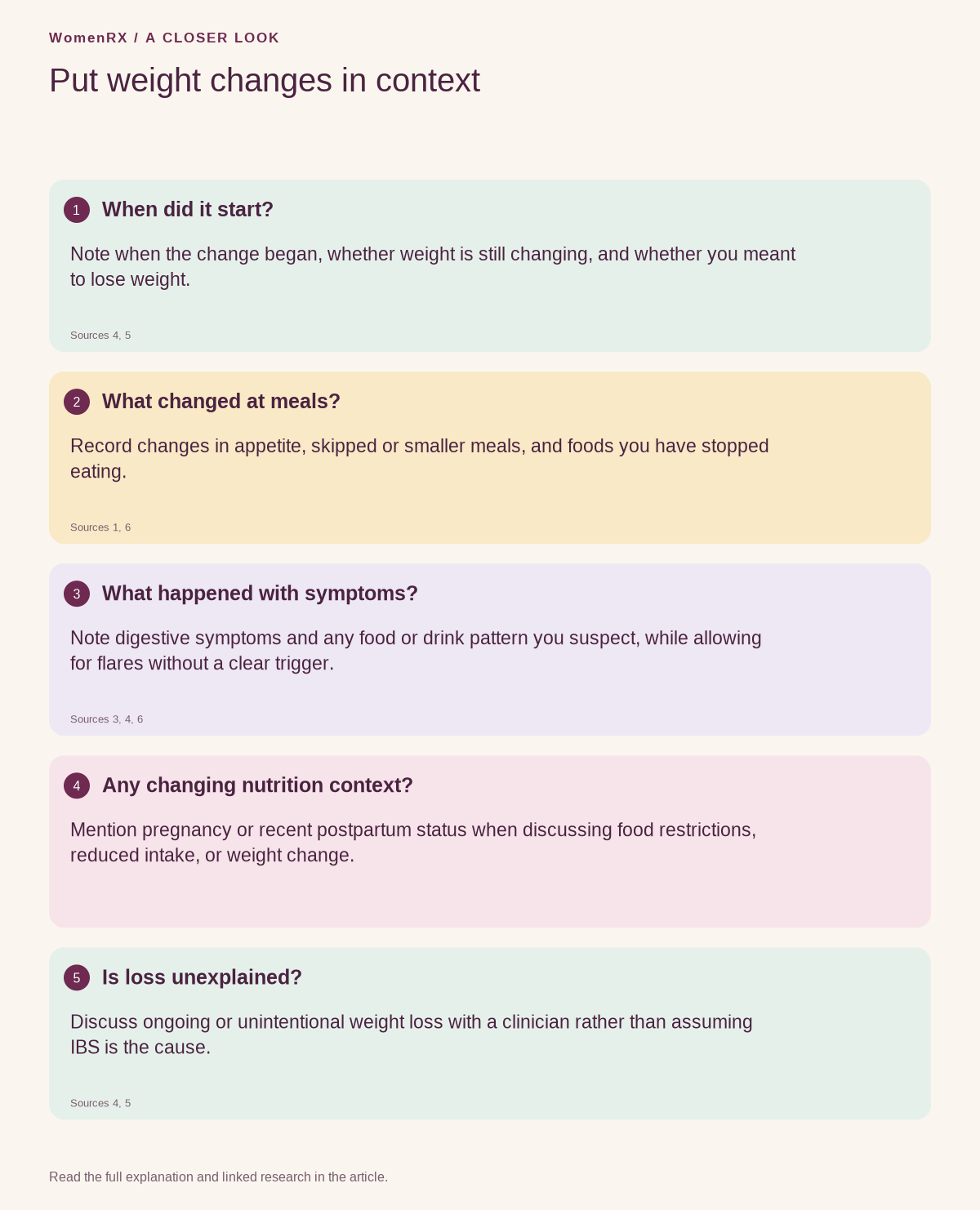
Put weight changes in context
When did it start?: Note when the change began, whether weight is still changing, and whether you meant to lose weight.45
What changed at meals?: Record changes in appetite, skipped or smaller meals, and foods you have stopped eating.16
What happened with symptoms?: Note digestive symptoms and any food or drink pattern you suspect, while allowing for flares without a clear trigger.346
Any changing nutrition context?: Mention pregnancy or recent postpartum status when discussing food restrictions, reduced intake, or weight change.
Is loss unexplained?: Discuss ongoing or unintentional weight loss with a clinician rather than assuming IBS is the cause.45
Read the figure as text
These prompts organize the details that help distinguish an intentional eating change from weight loss that needs assessment. They are not a diagnostic score.- When did it start?: Note when the change began, whether weight is still changing, and whether you meant to lose weight.45
- What changed at meals?: Record changes in appetite, skipped or smaller meals, and foods you have stopped eating.16
- What happened with symptoms?: Note digestive symptoms and any food or drink pattern you suspect, while allowing for flares without a clear trigger.346
- Any changing nutrition context?: Mention pregnancy or recent postpartum status when discussing food restrictions, reduced intake, or weight change.
- Is loss unexplained?: Discuss ongoing or unintentional weight loss with a clinician rather than assuming IBS is the cause.45
More questions, answered
Should I try a low-FODMAP diet if I’m losing weight?
Don’t start a restrictive diet as a way to explain or manage unexplained weight loss. A low-FODMAP approach can help IBS symptoms for some people, but it is complex; if you’re already avoiding many foods, ask a clinician about advice from a dietitian or specialist. 1 4 6
What details about weight and eating are useful to share?
Describe whether the change was intended, when it began, whether it is continuing, and what has changed in your appetite, meals, or avoided foods. Pairing these details with your symptom pattern can help guide a conversation about nutrition and whether further assessment is needed. 1 4 6 If you’re pregnant or recently postpartum, mention that too.
Sources you can check
- Diet, lifestyle and medicines for IBS (irritable bowel syndrome) - NHSAccessed 2026-09-25Return to first citation
- Irritable Bowel Syndrome | IBS | MedlinePlusAccessed 2026-09-25Return to first citation
- What is IBS (irritable bowel syndrome) - NHSAccessed 2026-09-25Return to first citation
- Symptoms of IBS (irritable bowel syndrome) - NHSAccessed 2026-09-25Return to first citation
- [Summary of The Dutch College of General Practitioners' 'Irritable bowel syndrome' standard].Boukes FS, van der Horst HE, Assendelft WJ, Nederlands Huisartsen Genootschap. · Nederlands tijdschrift voor geneeskunde · 2002Return to first citation
- Nutrition and Disorders of Gut-Brain Interaction.Scarpellini E, Balsiger LM, Broeders B, Houte KVD, Routhiaux K, Raymenants K, Carbone F, Tack J. · Nutrients · 2024Return to first citation