Sugar Cravings Around Menopause: What the Evidence Can Tell You
A sweet craving may reflect wanting a particular taste, feeling hungry, or simply noticing a change; by itself, it can’t identify a hormone problem.
Some women in menopause focus groups described more sugar cravings, snacking, and feeling less satisfied after eating. Others described changes in how sweet foods tasted. These are different experiences, and the study doesn’t show that hormones caused them. Notice whether you want a sweet taste, feel physically hungry, or both, then look for patterns without turning food into a set of rules. 2
A craving can mean more than one thing
Wanting chocolate or another sweet food isn’t necessarily the same as feeling hungry. You might want a particular taste, feel ready for more food, or notice both at once. That distinction can make a craving easier to respond to without treating it as a diagnosis.
In online focus groups with 40 women living in Ireland, participants described increased snacking, stronger interest in sweets, and sometimes feeling less satisfied after eating. Some also said certain sweet tastes seemed more intense. These are accounts of different experiences, not proof that one causes another or a measure of how often cravings happen among women generally. 2
If a sweet food seems especially appealing, you might ask yourself: “Am I after that sweet taste, or do I still feel hungry?” There’s no need to pick the “right” answer. The question simply helps you notice what the moment feels like. A craving for sweetness and a sense of not being satisfied could overlap, but the study doesn’t establish why either happens.
What the hormone explanation can, and can’t, say
A craving on its own can’t tell you that your hormones are “out of balance.” The focus groups gathered women’s experiences; they did not measure hormones or test whether hormone changes caused cravings. They also didn’t compare cravings across menstrual-cycle stages. So if you still have periods, noticing whether a pattern repeats around a similar time can be useful personal context, but it isn’t a hormone test. 2
The study does support a more specific point: some participants experienced changes in appetite, sweetness, or food preferences during menopause. That makes those experiences worth taking seriously without assuming there’s one explanation for everyone. 2
Sleep and stress are context, not a verdict
Women in the focus groups mentioned sleep disturbance alongside changes in eating. The study didn’t show that sleep disruption caused sugar cravings. If you notice cravings after a poor night, you can note that pattern and see whether it repeats, rather than deciding that sleep must be the cause. 2
Stress can affect the body in other ways: MedlinePlus explains that stress hormones can raise blood glucose, and that long-term stress may be accompanied by changes in eating. That general information doesn’t demonstrate that stress causes a particular sugar craving. If a craving shows up on a stressful day, it’s one piece of context, not an explanation you have to accept. 1
Try a curious, low-pressure check-in
For a few days, you could make a brief note when a craving comes up: what you want, whether you feel hungry or unsatisfied, how you slept, and whether the day feels stressful. If you still menstruate and cycle timing seems relevant, you can include that too. You don’t need to count calories, grade your choices, or avoid sweets to make the notes useful.
Look for a pattern only if one emerges. For example, if you repeatedly notice that you want something sweet and still feel hungry after a long stretch without eating, having a convenient, satisfying snack available is one practical experiment. It’s a way to see what suits you, not a proven treatment or a rule about when you should eat.
If what stands out is a change in how sweet foods taste, that’s different from feeling hungry. You can respond to the taste you want, or choose something else if you prefer. Either way, a craving doesn’t need to be explained away before you can make a choice that feels right for you.
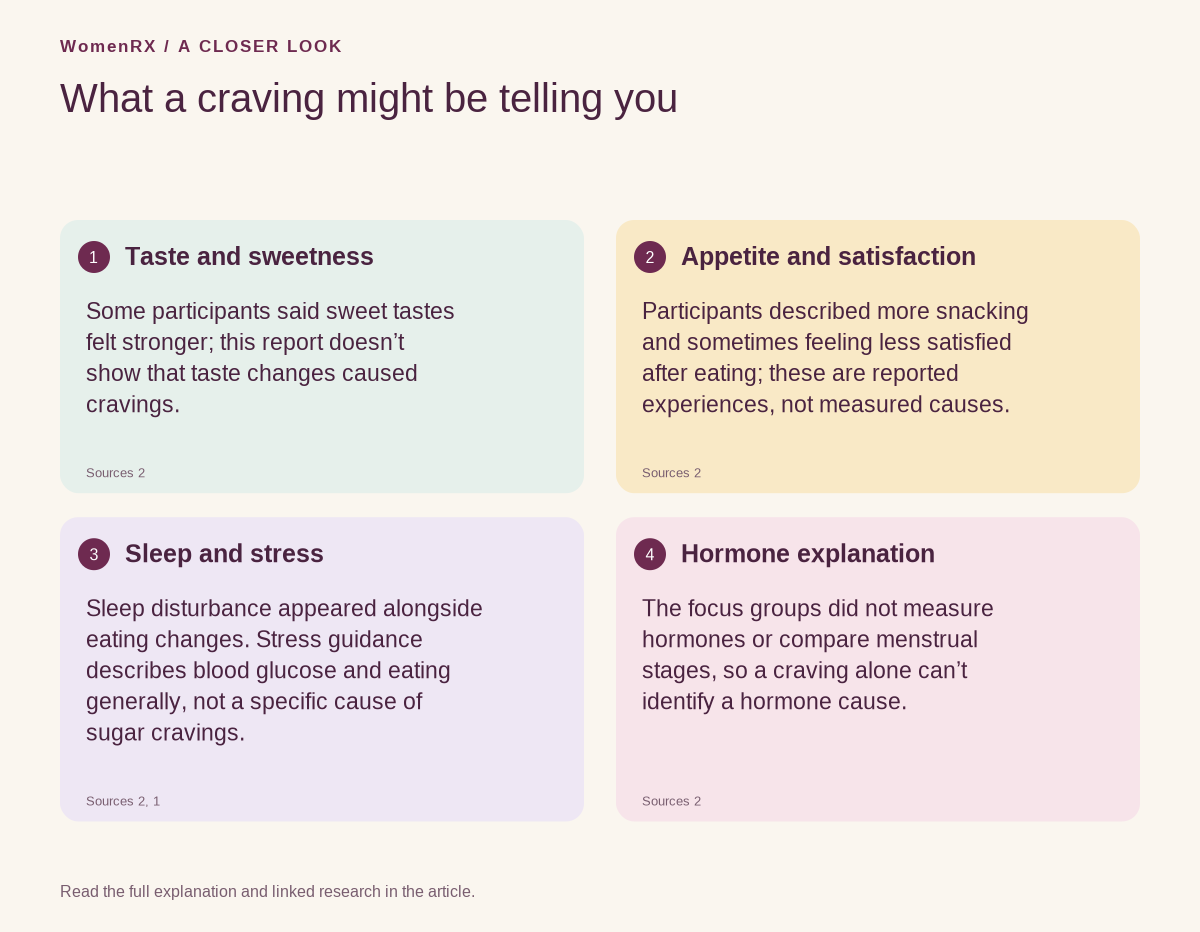
What a craving might be telling you
Taste and sweetness: Some participants said sweet tastes felt stronger; this report doesn’t show that taste changes caused cravings.2
Appetite and satisfaction: Participants described more snacking and sometimes feeling less satisfied after eating; these are reported experiences, not measured causes.2
Sleep and stress: Sleep disturbance appeared alongside eating changes. Stress guidance describes blood glucose and eating generally, not a specific cause of sugar cravings.21
Hormone explanation: The focus groups did not measure hormones or compare menstrual stages, so a craving alone can’t identify a hormone cause.2
Read the figure as text
Separate reported menopause experiences from possible context and from a hormone explanation the focus-group study did not test.- Taste and sweetness: Some participants said sweet tastes felt stronger; this report doesn’t show that taste changes caused cravings.2
- Appetite and satisfaction: Participants described more snacking and sometimes feeling less satisfied after eating; these are reported experiences, not measured causes.2
- Sleep and stress: Sleep disturbance appeared alongside eating changes. Stress guidance describes blood glucose and eating generally, not a specific cause of sugar cravings.21
- Hormone explanation: The focus groups did not measure hormones or compare menstrual stages, so a craving alone can’t identify a hormone cause.2
More questions, answered
Can cravings show that menopause hormones are changing?
Not on their own. The focus groups captured reported experiences but did not measure hormones or compare cravings across menstrual stages. A recurring personal pattern may be worth noticing, but it can’t identify a hormone cause. 2
Sources you can check
- Stress: MedlinePlusAccessed 2026-09-25Return to first citation
- From Disruption to Control: Insights from Focus Groups Exploring Nutrition and Chemosensory Changes During Menopause.O'Donovan S, Monaghan S, Murphy A, Conroy PM. · Nutrients · 2025Return to first citation