Starting an SSRI: What to Expect and What to Ask
A useful plan covers what to watch, when to check in, and what to do before changing a dose or stopping.
Starting an SSRI can mean noticing side effects before you feel mood benefits; improvement often takes several weeks, and the timing varies. Agree on a follow-up plan and track mood, daily functioning, and effects that matter to you, including sexual or menstrual changes. Ask for medicine-specific instructions for missed doses and for any future taper, rather than changing or stopping it on your own. 1 4

Think of the first weeks as information-gathering
An SSRI may be prescribed for depression or another mental health condition. The right medicine and plan depend on your situation. Your other health conditions, a close relative's response to an antidepressant, and pregnancy or breastfeeding plans can all matter. 1
Some people notice changes in sleep or appetite before their mood improves. Antidepressants often take about 4 to 8 weeks to work, so an early lack of mood improvement does not by itself show whether a medicine will help. Side effects can appear earlier: reported effects include nausea, diarrhea or constipation, headache, changes in sleep, tremor, dry mouth, and sweating. Not everyone has them, and a particular person's experience can't be predicted from the class alone. 1 4
A practical starting point is to write down what you want treatment to help with: for example, getting through work, sleeping more steadily, or finding it easier to do everyday tasks. That gives you something more useful to compare at follow-up than “better” or “worse” alone.
Make a small, useful check-in record
Once a day or a few times a week, jot down a few observations. Keep it brief enough that you'll actually use it:
- Mood and distress: Are the symptoms you hoped to change easing, staying the same, or worsening?
- Function: What feels easier or harder in sleep, work, relationships, or routine tasks?
- Side effects: What started, when it began, and whether it interferes with your day.
- Sexual function: Note changes in desire, arousal, lubrication, or orgasm if these matter to you.
This isn't a diagnostic score or a test of whether you're taking the medicine correctly. It's a way to help you and your prescriber spot a meaningful pattern and weigh symptom relief against effects that matter in your life.
Sexual effects deserve a direct conversation, not an assumption that you'll have to put up with them. A 2026 systematic review and meta-analysis of randomized trials in adults with depression found higher risk of orgasm difficulties and reduced sexual satisfaction with SSRIs compared with placebo. It did not find a significant difference in overall scores on one sexual-function measure, and these findings are not a women-specific estimate. Depression itself can also affect sexual function, so the timing and pattern are worth discussing rather than attributing every change to the medicine. 4
If your periods or other menstrual patterns change, note what changed and when, and bring it up. A change isn't necessarily caused by the SSRI, so treat it as a question to assess rather than an expected side effect.
Agree on the follow-up, not a universal calendar
Before you leave the start conversation, ask when your prescriber wants to hear from you and what to do if symptoms or side effects change before then. There isn't one follow-up schedule that fits every SSRI and every person. Some prescribing information describes different approaches for different medicines, which is another reason to get a plan for the specific prescription. 2 3
At the check-in, bring your short record and ask: Is there enough change in mood or daily functioning to continue watching? Are side effects manageable, or do they call for a different plan? If you feel worse, have an unusual change in mood or behavior, or develop a serious problem, contact your prescriber promptly. MedlinePlus specifically advises immediate medical help for thoughts of self-harm in children, teenagers, and young adults under 25 when starting an antidepressant or changing its dose. 1 For medicine-specific examples, NHS lists fast heartbeat, shaking, twitching muscles, and confusion or agitation as possible signs of serotonin syndrome with fluoxetine. It lists a swollen throat or tongue, an itchy raised rash, and difficulty breathing as signs of a severe allergic reaction with sertraline. Ask which symptoms with your prescription need urgent or emergency attention. 2 3
Get personal instructions for missed doses and stopping
Missed-dose directions can differ by medicine. For example, the NHS instructions for fluoxetine and sertraline are not identical. Check the directions for your exact prescription or ask your pharmacist or prescriber what to do. Both medicine guides say not to double a dose to make up for a missed one. 2 3
If you want to stop because you're feeling better, having side effects, or for another reason, bring that up before making a change. Stopping too quickly can cause problems, and symptoms of depression can return or worsen. Your prescriber can help plan how to come off the medicine safely. 1
Include pregnancy, feeding, and postpartum context when relevant
If you're pregnant, planning a pregnancy, breastfeeding, or recently gave birth, say so when discussing treatment. This doesn't automatically settle whether to start, continue, or switch a medicine. The decision should weigh your needs and the possible risks and benefits for the baby; medicines differ, and some can pass into breast milk. Ask what the plan means for both your mental health and your feeding or pregnancy plans. 1 2 3
Questions to take into the conversation
- What changes should I look for in mood and everyday functioning, and when should we check in?
- Which symptoms with this medicine need urgent or emergency attention? Which side effects should I report promptly, and what can we consider if one is hard to live with?
- If sexual function or my menstrual pattern changes, how should we assess it?
- What exactly should I do if I miss a dose of this medicine?
- If I want to stop or change treatment later, how will we plan that?
- If pregnancy, breastfeeding, or postpartum care applies to me, how does it affect the options?
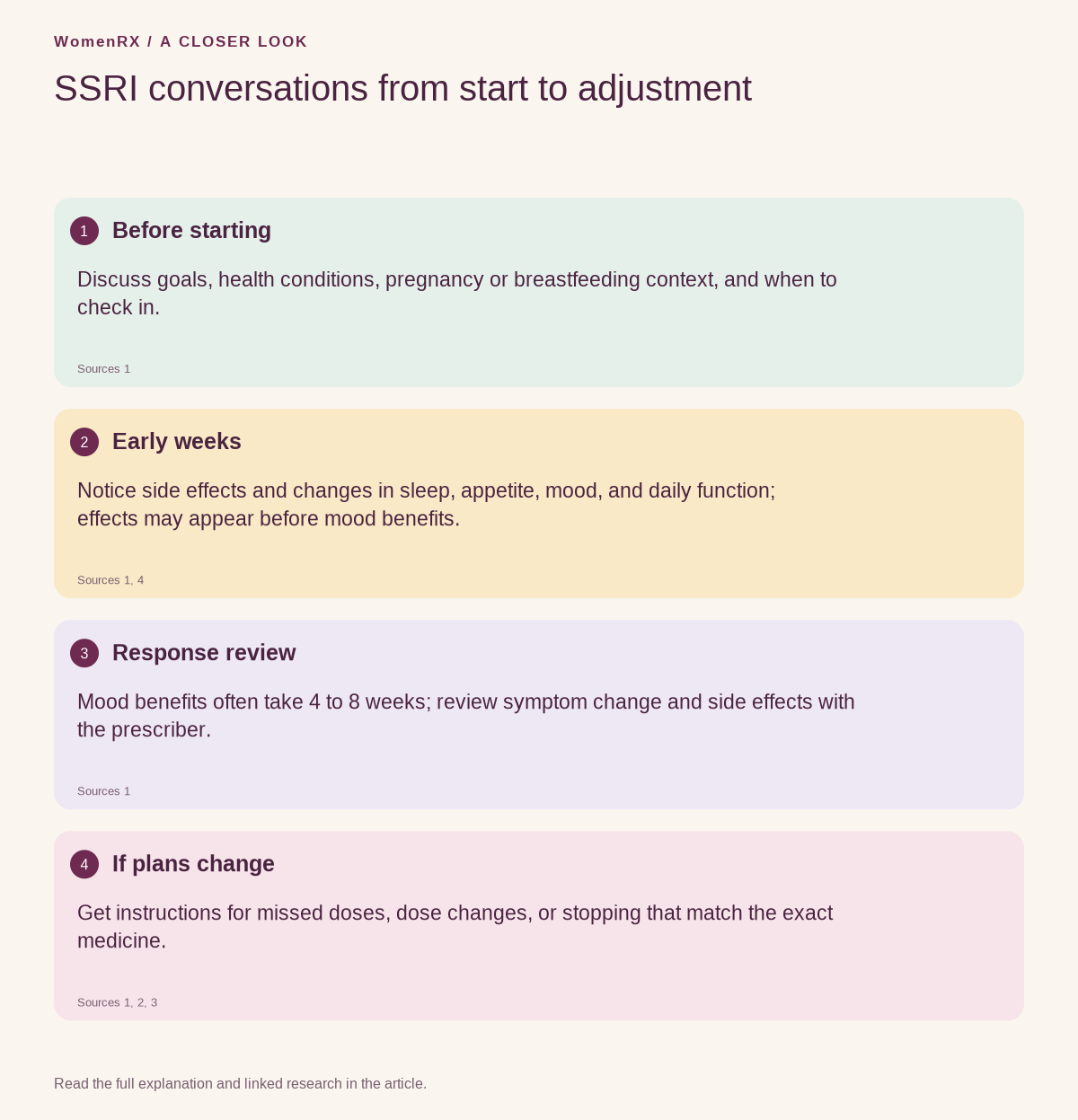
SSRI conversations from start to adjustment
Before starting: Discuss goals, health conditions, pregnancy or breastfeeding context, and when to check in.1
Early weeks: Notice side effects and changes in sleep, appetite, mood, and daily function; effects may appear before mood benefits.14
Response review: Mood benefits often take 4 to 8 weeks; review symptom change and side effects with the prescriber.1
If plans change: Get instructions for missed doses, dose changes, or stopping that match the exact medicine.123
Read the figure as text
A flexible sequence of conversations, not a fixed schedule: agree on a plan, observe what changes, review the balance, and discuss any adjustment before acting.- Before starting: Discuss goals, health conditions, pregnancy or breastfeeding context, and when to check in.1
- Early weeks: Notice side effects and changes in sleep, appetite, mood, and daily function; effects may appear before mood benefits.14
- Response review: Mood benefits often take 4 to 8 weeks; review symptom change and side effects with the prescriber.1
- If plans change: Get instructions for missed doses, dose changes, or stopping that match the exact medicine.123
More questions, answered
Does an early side effect mean an SSRI is wrong for me?
Not necessarily. Side effects can appear before mood benefits, and their impact differs from person to person. Tell your prescriber what you're experiencing and how much it affects your day; they can help weigh that against any changes in symptoms. Don't change the dose or stop on your own. 1 4
Should I stop an SSRI if I feel better?
Feeling better is a reason to discuss the next step, not to stop abruptly. Stopping too quickly can cause problems, and depression symptoms can return or worsen. Ask your prescriber for a plan before making a change. 1
Sources you can check
- Antidepressants | Depression Medicines | MedlinePlusAccessed 2026-09-25Return to first citation
- Fluoxetine: an antidepressant medicine - NHSAccessed 2026-09-25Return to first citation
- Sertraline: an antidepressant medicine - NHSAccessed 2026-09-25Return to first citation
- Sexual dysfunction associated with selective serotonin reuptake inhibitors in adults with depression: a systematic review and meta-analysis.Dagostin Ferraz S, Kuyunga L, Rech P, Rodrigues Uggioni ML, Rodrigues Candido AC, Dagostin VS, Silva FR, Colonetti T, Grande AJ, da Rosa MI. · European journal of clinical pharmacology · 2026Return to first citation