Starting a Walking Routine That Feels Sustainable
Begin with a walk you can manage, repeat it until it feels familiar, then add a little only when you’re ready.
There isn’t one starting duration or pace that fits everyone. Choose a short, comfortable walk, or split it into smaller chunks, and repeat that starting point until it feels manageable. Then add a few minutes or gently increase your pace. If a change makes walking feel like too much, hold steady or scale back. 1 Research supports walking’s health benefits, but doesn’t establish one ideal beginner schedule. 2
Walking can be a useful way to build regular physical activity without special equipment. The best first walk isn’t the longest one you can push through. It’s a manageable one you can imagine doing again. Regular exercise can support overall health, and walking is an aerobic activity that raises your breathing and heart rate. 1
Choose a starting point, not a target
If you haven’t been active recently, start slowly. Try a short, easy walk on a route you can shorten or turn back from. If a continuous walk feels inconvenient or tiring, split it into smaller chunks. Small amounts of activity can help, and your exercise time doesn’t have to happen all at once. 1
You don’t need to follow one prescribed beginner duration. A review of randomized trials in inactive, generally healthy adults found benefits for several cardiovascular risk factors, but the researchers couldn’t reliably identify the amount, frequency, or intensity of walking needed to produce those benefits. Most participants were women; the review abstract doesn’t present women-only results. 2
So use the first walk to find a workable baseline. If you finish feeling that you could comfortably do something similar again, that’s a reasonable place to begin. If you’re wiped out, shorten the next walk or break it into smaller pieces. This is a practical way to apply the guidance to start slowly, not a validated fitness test. 1
Progress by changing one thing
Once your starting walk feels familiar, you can add a few minutes or gently increase your pace. You don’t need to do both at once. If you’re building consistency, repeating the same walk may be more useful than making each outing harder. Your body adapts to the activity you practice regularly, and gradual increases can help you continue without pushing too hard all at once. 1
A flexible sequence might look like this:
- Try: Take a short, comfortable walk.
- Repeat: Keep the same route or amount until it feels manageable.
- Adjust: Add a few minutes or pick up the pace slightly, not both at once.
- Respond: Hold steady or scale back if the change feels like too much.
There’s no calendar attached to those steps. You can stay at one stage for as long as it suits you, and a shorter walk still counts as getting moving. 1
Make the walk easier to repeat
Comfort and logistics often determine whether a routine sticks. You don’t need special equipment to begin. Wear clothes suited to the weather, choose a route where you feel safe, and consider an indoor option if the weather or surroundings make an outdoor walk less workable. A walk can fit into your day in chunks rather than as one long block. 1
If time is tight, linking a short walk to something already in your day may be simpler than waiting for a perfect open hour. If you’re bored, changing the route or walking with someone may make it more appealing. Those are practical options, not requirements. The useful question is: what would make the next walk easier to do?
Pay attention to how your body responds
Some effort is part of aerobic activity: walking raises breathing and heart rate. But don’t try to force progress through symptoms that feel wrong. MedlinePlus advises stopping exercise and seeking help if you don’t feel right, or have pain, extreme shortness of breath, or dizziness. 1
If you have health concerns or have been inactive for a while, the right activity or amount may depend on your health and fitness level. MedlinePlus recommends getting help choosing an appropriate type or amount of activity when needed. 1
The aim is not to hit a prescribed pace or step count. It’s to find a version of walking that feels manageable enough to repeat, then make small adjustments when you’re ready.
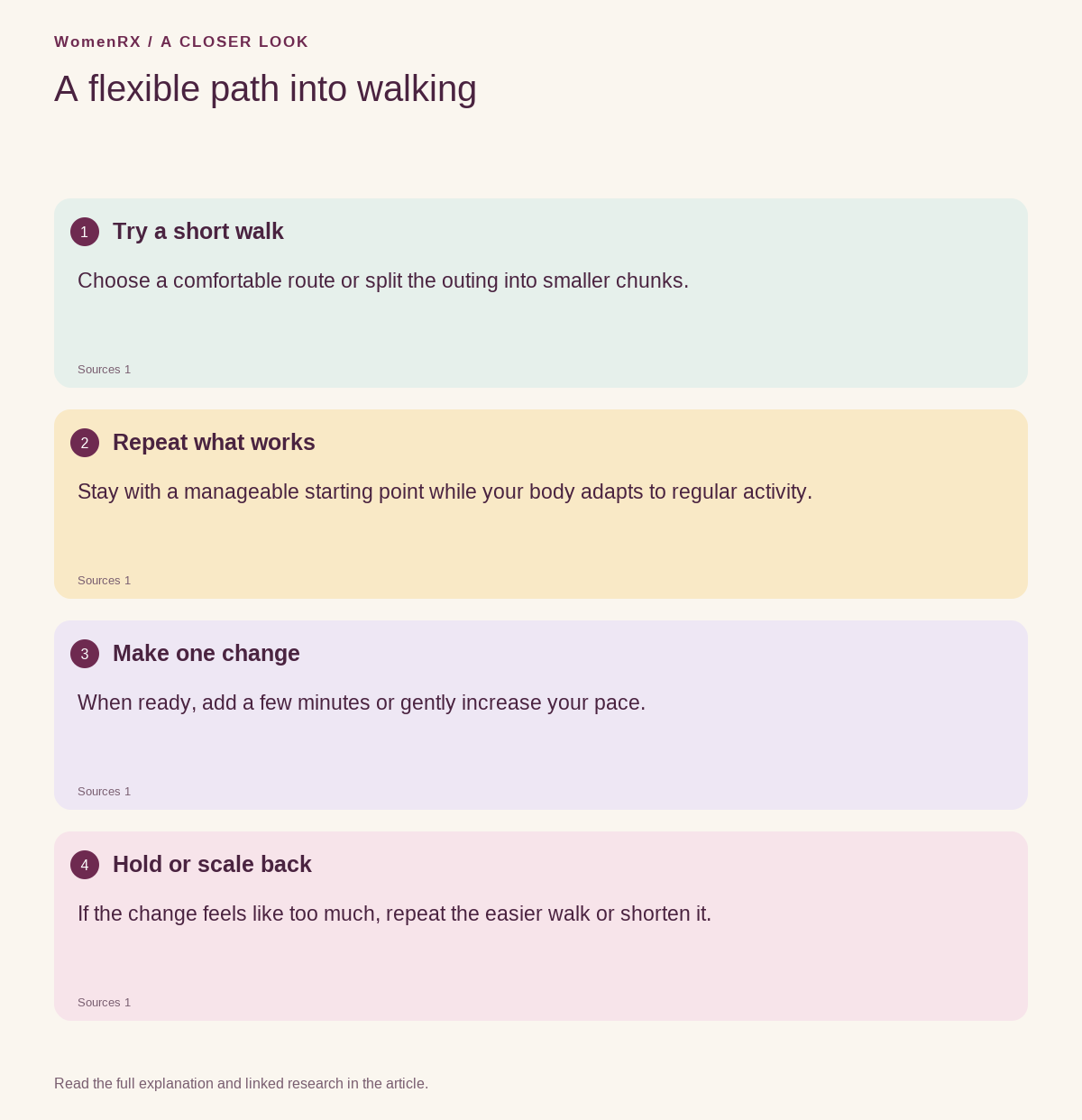
A flexible path into walking
Try a short walk: Choose a comfortable route or split the outing into smaller chunks.1
Repeat what works: Stay with a manageable starting point while your body adapts to regular activity.1
Make one change: When ready, add a few minutes or gently increase your pace.1
Hold or scale back: If the change feels like too much, repeat the easier walk or shorten it.1
Read the figure as text
This sequence shows how to begin with a manageable walk and adjust without a fixed calendar or required target.- Try a short walk: Choose a comfortable route or split the outing into smaller chunks.1
- Repeat what works: Stay with a manageable starting point while your body adapts to regular activity.1
- Make one change: When ready, add a few minutes or gently increase your pace.1
- Hold or scale back: If the change feels like too much, repeat the easier walk or shorten it.1
Sources you can check
- Exercise and Physical Fitness: MedlinePlusAccessed 2026-09-25Return to first citation
- Effects of frequency, intensity, duration and volume of walking interventions on CVD risk factors: a systematic review and meta-regression analysis of randomised controlled trials among inactive healthy adults.Oja P, Kelly P, Murtagh EM, Murphy MH, Foster C, Titze S. · British journal of sports medicine · 2018Return to first citation