Shaky After Eating? How to Check for Low Blood Sugar
A shaky spell after a meal can feel like a glucose crash, but a reading taken during symptoms helps show whether blood sugar is actually low.
Sweating or shakiness after eating doesn’t, by itself, confirm reactive hypoglycemia. The useful next step is to connect three things: when symptoms happen, what your glucose measures at that time, and whether symptoms ease as glucose rises. If episodes recur, bring that record to a clinician, especially if you take glucose-lowering medicine or have had stomach or bariatric surgery. 124
Why the timing alone doesn’t settle it
Glucose rises after you eat, and insulin helps move it into your cells. Sometimes glucose later falls too low, causing symptoms such as shakiness. But feeling shaky or sweaty after a meal doesn’t tell you what your glucose level was. The distinction matters because treatment for repeatedly documented low glucose depends on its cause. 12
For people without diabetes, MedlinePlus describes hypoglycemia as typically a blood glucose level below 55 mg/dL. For many people with diabetes, a reading below 70 mg/dL is a threshold for action, though an individual care plan may use a different number. Those aren’t interchangeable cutoffs. They’re one reason to tell a clinician whether you have diabetes and which medicines you take. 1
Catch the episode, not just the pattern
If you can measure glucose when symptoms start, write down the reading alongside the time, what and when you ate, and what you felt. Note whether you took a diabetes medicine, whether you’d been ill or unable to eat normally, and whether symptoms eased after you ate or drank carbohydrates. This is a record to help sort out the pattern, not a score that diagnoses you. Blood glucose meters and continuous glucose monitors can provide readings; clinicians can also use blood tests when evaluating low glucose. 12
For example, two episodes that both begin after lunch may lead to different conversations. A low reading taken while you’re shaking raises the question of what made glucose fall. A reading that isn’t low means the symptoms still deserve attention, but that episode hasn’t established hypoglycemia. If you couldn’t get a reading until after the spell passed or after you ate, record that timing too rather than treating the later number as a measurement of what happened during the spell. 12
You don’t need to provoke an episode with a sugary drink to find out. A review of post-meal hypoglycemia cautions that an oral glucose tolerance test can produce false-positive results in this setting. In a comparative study, control participants had more apparent reactive hypoglycemia with a liquid-glucose test than with a food-based test. Neither finding makes an ordinary meal record a diagnosis; it explains why the circumstances of a low reading matter. 23
What could change the explanation?
Start with medicines and medical history. Insulin and diabetes medicines that prompt insulin release can lower glucose. In someone without diabetes, recurrent low glucose is less common, and possible causes include certain other medicines, kidney or liver disease, hormone deficiencies, and some types of weight-loss surgery. A clinician can use the pattern and your history to decide what needs investigating. 1
Prior stomach or bariatric surgery is particularly worth mentioning. Dumping syndrome can cause symptoms soon after eating through rapid movement of food from the stomach into the small intestine. Later symptoms can involve post-meal hypoglycemia. The earlier and later patterns aren’t the same problem, even though both may make you feel unwell after food. 4
If you’re pregnant or recently gave birth, include that in the context you share when seeking care. A post-meal symptom record can still describe what happened; it shouldn’t be used to assume the cause.
What to do with a low reading
If you have symptoms and a low glucose reading, eating or drinking something containing carbohydrates can help with a mild or moderate episode. If you have diabetes, follow your existing low-glucose plan. Repeated lows call for a review of the cause rather than a one-size-fits-all rule to snack more often or cut out particular foods. Depending on the situation, care may involve changes to diabetes medicines, meals, or activity; without diabetes, treatment depends on why glucose is falling. 1
A person who passes out needs emergency help. Severe hypoglycemia can cause loss of consciousness and other serious complications, so don’t wait to complete a record before responding to a serious episode. 1
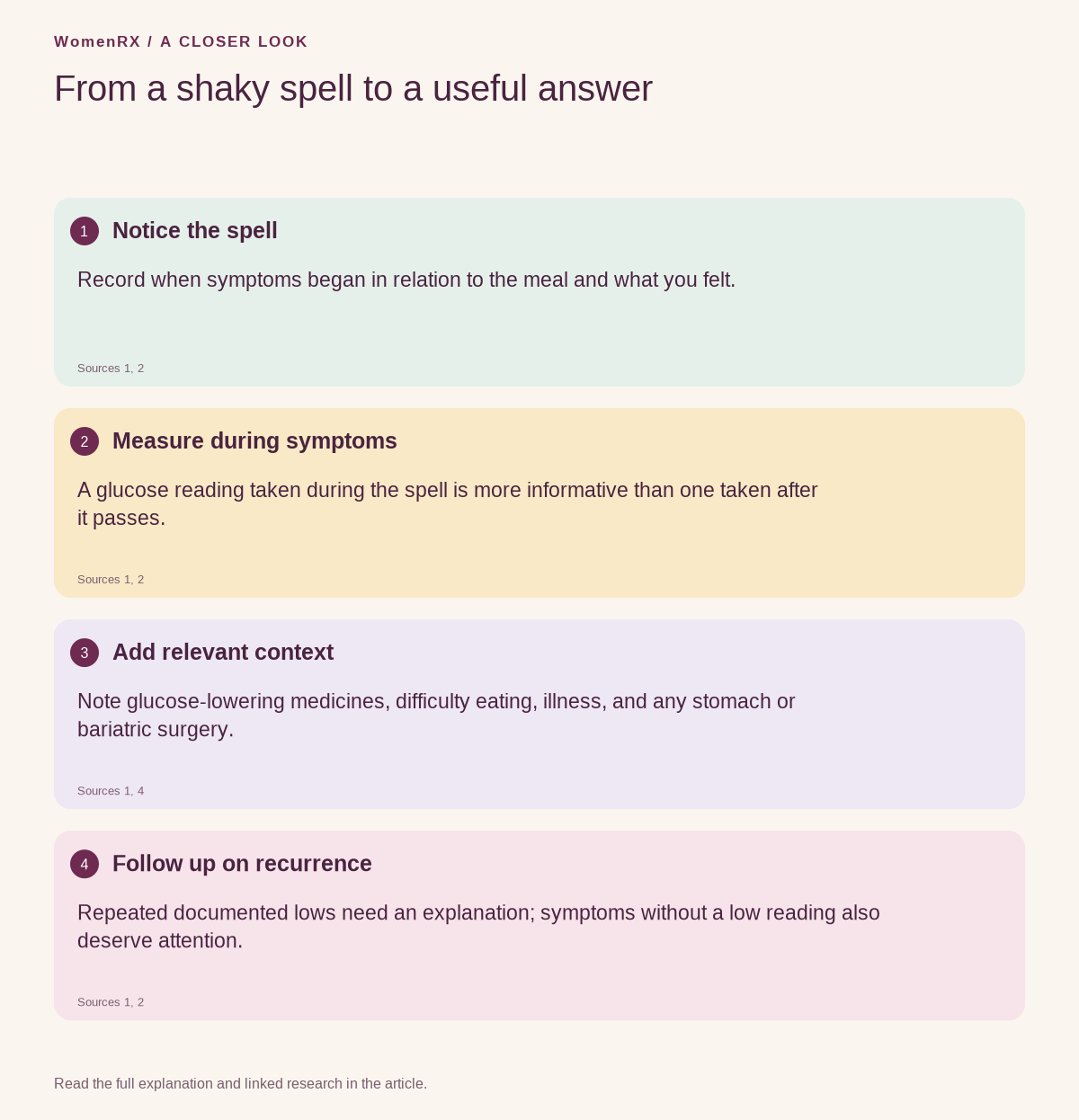
From a shaky spell to a useful answer
Notice the spell: Record when symptoms began in relation to the meal and what you felt.12
Measure during symptoms: A glucose reading taken during the spell is more informative than one taken after it passes.12
Add relevant context: Note glucose-lowering medicines, difficulty eating, illness, and any stomach or bariatric surgery.14
Follow up on recurrence: Repeated documented lows need an explanation; symptoms without a low reading also deserve attention.12
Read the figure as text
Follow the event from symptoms to a glucose reading and the context that helps explain it.- Notice the spell: Record when symptoms began in relation to the meal and what you felt.12
- Measure during symptoms: A glucose reading taken during the spell is more informative than one taken after it passes.12
- Add relevant context: Note glucose-lowering medicines, difficulty eating, illness, and any stomach or bariatric surgery.14
- Follow up on recurrence: Repeated documented lows need an explanation; symptoms without a low reading also deserve attention.12
More questions, answered
Does a low reading after a glucose drink prove reactive hypoglycemia?
Not on its own. An oral glucose tolerance test can give false-positive results when used to investigate post-meal hypoglycemia. Tell the clinician what prompted the test and whether low glucose occurred during the symptoms you experience after ordinary meals. 23
What if I feel shaky but my glucose reading isn’t low?
Record the reading and when you took it. A reading taken during symptoms that isn’t low does not confirm hypoglycemia, while one taken after the spell has passed may miss what happened earlier. Recurrent symptoms are still worth discussing, without assuming glucose is the cause. 12
Sources you can check
- Hypoglycemia: MedlinePlusAccessed 2026-09-25Return to first citation
- Postprandial reactive hypoglycemia.Brun JF, Fedou C, Mercier J. · Diabetes & metabolism · 2000Return to first citation
- Development of cookie test for the simultaneous determination of glucose intolerance, hyperinsulinemia, insulin resistance and postprandial dyslipidemia.Harano Y, Miyawaki T, Nabiki J, Shibachi M, Adachi T, Ikeda M, Ueda F, Nakano T. · Endocrine journal · 2006Return to first citation
- Pathophysiology, diagnosis and management of postoperative dumping syndrome.Tack J, Arts J, Caenepeel P, De Wulf D, Bisschops R. · Nature reviews. Gastroenterology & hepatology · 2009Return to first citation