Semaglutide vs. Tirzepatide: Side Effects Compared
One short-term real-world comparison found similar rates of reported adverse events, but it can’t show which medicine is easier for you.
A multicenter real-world study of people with obesity found at least one reported adverse event in 50.9% of semaglutide users and 51.0% of tirzepatide users over short-term follow-up. Gastrointestinal events were also reported at similar rates. Because the study was observational, these events weren’t necessarily caused by treatment, and the results don’t show that either medicine is easier for every person. 2
A direct comparison found similar reported event rates
A multicenter observational study followed 2,549 people with obesity taking semaglutide or tirzepatide in routine care. At least one adverse event was reported by 50.9% of people taking semaglutide and 51.0% taking tirzepatide. Gastrointestinal events were reported by 47.0% and 45.5%, respectively. Nausea and vomiting were the most common gastrointestinal complaints, followed by indigestion and abdominal pain. These are reported events, not proof that the medicines caused each one. 2
Those figures are close, but they aren’t proof that the medicines are interchangeable or that you’ll have the same experience on either one. Treatment wasn’t randomly assigned, and people may have differed in ways that affect which events were reported. The study assessed adverse events during follow-up visits; its weight and metabolic outcomes were assessed up to six months. 2
Dose and timing change what the numbers mean
In this study, the median time to onset of gastrointestinal symptoms was earlier in the tirzepatide group: 7 days, compared with 10 days for semaglutide. The range was wide in both groups, so those medians don’t predict when symptoms will start for an individual. 2
The median doses at which gastrointestinal events occurred were 2.5 mg for tirzepatide and 0.5 mg for semaglutide. Those figures shouldn’t be read as equivalent doses: the medicines have different dosing scales, and the study doesn’t establish a dose-for-dose comparison of tolerability. 2
The same caution applies when comparing results from different trials. Studies can involve people taking different doses for different conditions, with different follow-up periods and ways of collecting adverse-event reports. A percentage from one trial isn’t a fair direct comparison with a percentage from another unless those differences are accounted for.
Some differences appeared, but they don’t establish an overall winner
The observational study reported more musculoskeletal symptoms and allergic reactions in the tirzepatide group. Discontinuation due to adverse events was similar between groups, although discontinuations involving pancreatic events were more frequent in the semaglutide group. These are findings from one real-world study, not proof that one drug is generally safer or that the differences predict your individual risk. 2
Common stomach and bowel symptoms are one part of the safety picture; prescribing information also describes potentially serious warnings. Semaglutide prescribing information reports cases of acute kidney injury, often in people whose nausea, vomiting, or diarrhea led to dehydration. It also describes serious allergic reactions. This information does not provide a matched comparison of serious events for both medicines, so it can’t show that semaglutide has more serious adverse events than tirzepatide. 1
What the comparison says about women
The overall adverse-event figures reported here aren’t broken out by sex, so they don’t tell you whether women had different rates. These figures also aren’t pregnancy safety data. They give no basis for assuming either medicine is safer during pregnancy. 2
How to use the comparison
The grounded takeaway is that this study found similar short-term rates of reported overall and gastrointestinal adverse events, alongside differences in some specific reports. These group averages can’t predict what you’ll experience. Persistent or severe vomiting or diarrhea can lead to dehydration, and serious allergic reactions are described in semaglutide prescribing information. 1 2
Rather than choosing based on a claim that one causes fewer adverse events overall, consider which effects you most want to avoid and how they could affect your daily life. This comparison doesn’t identify a universally easier medicine.
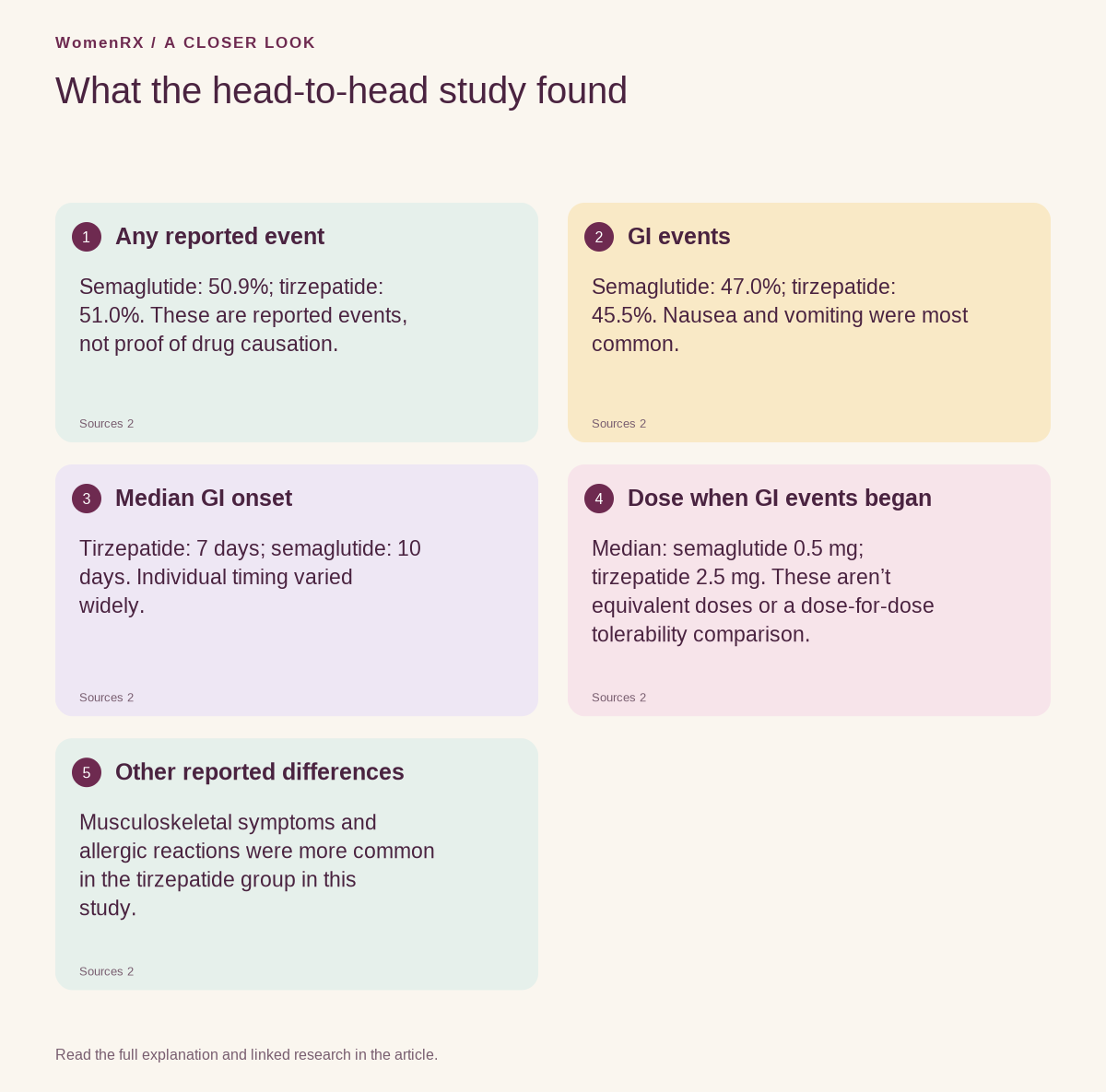
What the head-to-head study found
Any reported event: Semaglutide: 50.9%; tirzepatide: 51.0%. These are reported events, not proof of drug causation.2
GI events: Semaglutide: 47.0%; tirzepatide: 45.5%. Nausea and vomiting were most common.2
Median GI onset: Tirzepatide: 7 days; semaglutide: 10 days. Individual timing varied widely.2
Dose when GI events began: Median: semaglutide 0.5 mg; tirzepatide 2.5 mg. These aren’t equivalent doses or a dose-for-dose tolerability comparison.2
Other reported differences: Musculoskeletal symptoms and allergic reactions were more common in the tirzepatide group in this study.2
Read the figure as text
A side-by-side view of reported adverse events in one short-term observational study of people with obesity. The groups were not randomized, and the dose numbers are not equivalent across medicines.- Any reported event: Semaglutide: 50.9%; tirzepatide: 51.0%. These are reported events, not proof of drug causation.2
- GI events: Semaglutide: 47.0%; tirzepatide: 45.5%. Nausea and vomiting were most common.2
- Median GI onset: Tirzepatide: 7 days; semaglutide: 10 days. Individual timing varied widely.2
- Dose when GI events began: Median: semaglutide 0.5 mg; tirzepatide 2.5 mg. These aren’t equivalent doses or a dose-for-dose tolerability comparison.2
- Other reported differences: Musculoskeletal symptoms and allergic reactions were more common in the tirzepatide group in this study.2
More questions, answered
Does a 51% adverse-event rate mean half of people had severe problems?
No. In the real-world study, the figure meant a person had at least one reported adverse event. It doesn’t indicate that the event was severe; the most frequently reported events were gastrointestinal complaints. 2
Can these results tell me which medicine is safer during pregnancy?
No. Reported adverse-event rates among people with obesity aren’t pregnancy safety data. These results can’t establish that either medicine is safer during pregnancy. 2
Sources you can check
- WEGOVY (SEMAGLUTIDE) INJECTION, SOLUTION WEGOVY (SEMAGLUTIDE) TABLET [NOVO NORDISK PHARMACEUTICAL INDUSTRIES, LP] | US prescribing information and patient instructionsAccessed 2026-09-25Return to first citation
- Real-World Comparison of Short-Term Adverse Events, Treatment Persistence, and Efficacy of Semaglutide and Tirzepatide: A Nationwide Multicenter Study.Hepşen S, Haymana C, Ertepe Küçükgöde G, Özcan B, Özbaş B, Or Koca A, Aydoğan Bİ, Tura Bahadır Ç, Durcan E, Yumuk V, Toros B, Alphan Üç Z, Önder ÇE, Karaca Karagöz Z, Aşık M, Öztür... · Obesity facts · 2026Return to first citation