How Long Do Ozempic Side Effects Last?
Stomach symptoms often show up during dose increases, but how long they last varies, and some symptoms need attention rather than more time.
There’s no reliable end date for an Ozempic side effect. Nausea, vomiting, and diarrhea are reported most often during dose escalation, and some stomach symptoms ease with continued treatment. Symptoms that persist, keep you from drinking, or include severe abdominal pain need a different response. Ozempic’s roughly one-week drug half-life is not a countdown for when you’ll feel better.245
Why symptoms often change after a dose increase
Ozempic’s most common reported side effects include nausea, vomiting, diarrhea, abdominal pain, and constipation. In trials of the injection, most reports of nausea, vomiting, or diarrhea occurred while the dose was being increased. That makes a recent increase useful context if your stomach suddenly feels unsettled, but it doesn’t establish how many days your symptoms will last.25
Some gastrointestinal symptoms diminish with continued GLP-1 treatment. Others are disruptive enough that people stop treatment: in placebo-controlled Ozempic injection trials, 3.1% of people taking 0.5 mg and 3.8% taking 1 mg discontinued because of gastrointestinal reactions, compared with 0.4% taking placebo. Those figures describe trial groups, not the odds that your nausea will end on a particular day.24
The drug’s half-life isn’t your recovery time
Ozempic’s prescribing information describes a half-life of approximately one week. That tells you about how quickly the amount of drug in the body falls, not when a particular bout of nausea, constipation, or vomiting will stop. Symptoms can change while you’re still taking the medication, and persistent symptoms shouldn’t be dismissed just because they began after a dose increase.25
For example, mild nausea that still lets you eat and drink is different from repeated vomiting that leaves you struggling to keep up with fluids. Smaller, more frequent meals may help with nausea. If vomiting or diarrhea is causing fluid loss, pay attention to whether you can drink and whether you’re urinating normally.13
When waiting is no longer the useful plan
Contact your prescriber promptly if nausea, vomiting, or diarrhea persists or is getting in the way of drinking. Ozempic’s prescribing information warns that fluid loss from these symptoms can lead to dehydration and, in some cases, kidney injury. Dry mouth, dark urine, or urinating less often are signs of dehydration that call for prompt medical advice.12
Get urgent medical attention for severe or persistent abdominal pain, especially if it reaches through to your back. It can be a sign of pancreatitis whether or not you’re vomiting. Ozempic’s medication guidance says to stop using it and contact a clinician right away if pancreatitis is suspected. Confusion along with signs of dehydration also calls for medical help right away.23
Symptoms that linger deserve a fresh look rather than an assumption that they’re ordinary adjustment. A review of published case reports describes nausea, vomiting, early fullness, and difficulty eating in people with suspected GLP-1-related delayed stomach emptying. Presentations ranged from acute to chronic. Case reports can’t tell us how often that happens or predict who will experience it, but they reinforce why ongoing trouble eating or drinking is worth discussing.4
If pregnancy or breastfeeding is part of the picture
Nausea can have causes other than Ozempic, including pregnancy. If you’re planning a pregnancy, speak with your prescriber ahead of time: the Ozempic injection label calls for stopping it at least two months before a planned pregnancy. If you’re breastfeeding, the label says there are no human data on semaglutide in milk or its effects on a breastfed infant or milk production; treatment decisions call for weighing your needs alongside possible effects on your baby.15
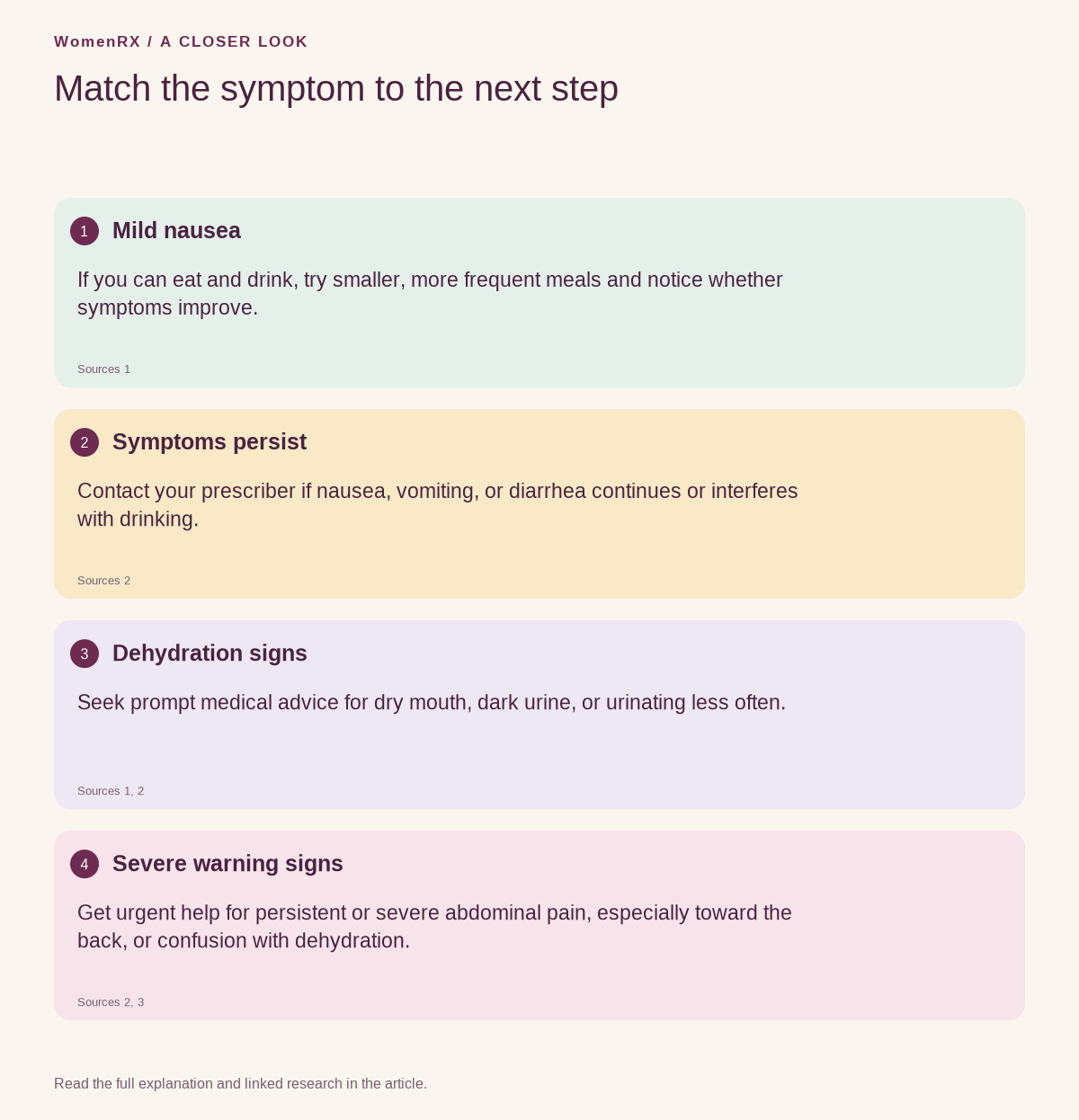
Match the symptom to the next step
Mild nausea: If you can eat and drink, try smaller, more frequent meals and notice whether symptoms improve.1
Symptoms persist: Contact your prescriber if nausea, vomiting, or diarrhea continues or interferes with drinking.2
Dehydration signs: Seek prompt medical advice for dry mouth, dark urine, or urinating less often.12
Severe warning signs: Get urgent help for persistent or severe abdominal pain, especially toward the back, or confusion with dehydration.23
Read the figure as text
Use the symptom pattern, not a calendar date, to decide what needs attention.- Mild nausea: If you can eat and drink, try smaller, more frequent meals and notice whether symptoms improve.1
- Symptoms persist: Contact your prescriber if nausea, vomiting, or diarrhea continues or interferes with drinking.2
- Dehydration signs: Seek prompt medical advice for dry mouth, dark urine, or urinating less often.12
- Severe warning signs: Get urgent help for persistent or severe abdominal pain, especially toward the back, or confusion with dehydration.23
More questions, answered
Does a new bout of nausea always mean my dose is too high?
No. Nausea has many possible causes, and its timing alone can’t identify the cause. A recent Ozempic dose increase is relevant because most nausea, vomiting, and diarrhea reports in injection trials occurred during dose escalation. If symptoms persist or interfere with drinking, contact your prescriber rather than trying to judge the cause by timing alone.12
Sources you can check
- Nausea | Vomiting | MedlinePlusAccessed 2026-09-25Return to first citation
- OZEMPIC (SEMAGLUTIDE) INJECTION, SOLUTION [A-S MEDICATION SOLUTIONS] | US prescribing information and patient instructionsAccessed 2026-09-25Return to first citation
- Dehydration: MedlinePlusAccessed 2026-09-25Return to first citation
- Gastroparesis induced by glucagon-like peptide-1 receptor agonists: A systematic review of clinical features, diagnosis, management, and outcomes.Olubodun T, Osundina MA, Soyoye DO, de Oliveira NMB, Olubodun AB, Ogundele OO. · PloS one · 2026Return to first citation
- OZEMPIC (SEMAGLUTIDE) INJECTION, SOLUTION [NOVO NORDISK PHARMACEUTICAL INDUSTRIES, LP] | US prescribing information and patient instructionsAccessed 2026-09-25Return to first citation