How Long Do Mounjaro Side Effects Usually Last?
Nausea, vomiting, and diarrhea often show up during dose increases, but studies don’t establish a dependable number of days they’ll last.
Mounjaro’s common stomach and bowel side effects were reported most often during dose escalation and were usually non-serious, mild to moderate, and described as transient in clinical-trial analyses. But those findings don’t give a reliable personal countdown: the studies don’t report a typical number of days for symptoms to last. Severe or persistent abdominal pain, or symptoms that risk dehydration, deserve prompt attention. 1 4
The pattern is clearer than the timetable
Nausea, vomiting, diarrhea, and indigestion are among the gastrointestinal effects reported with tirzepatide. In analyses of four large trials, these effects occurred more often with tirzepatide than placebo, and most were non-serious and appeared during dose escalation. Researchers described them as usually mild to moderate and transient. 4
That tells you when symptoms tend to cluster, not how long yours should last. Trial staff collected when side effects began and ended, but the published analysis doesn’t give a typical symptom duration you can use as a countdown. Symptoms can differ from person to person, and this evidence doesn’t promise that they will clear by a particular day or after a set number of doses. 4
There were also treatment discontinuations due to gastrointestinal effects: across the four trials, 1.0% to 10.5% of participants in tirzepatide groups stopped treatment for that reason. That range combines different trials, so it isn’t an individual prediction. It does show that symptoms shouldn’t be dismissed if they’re difficult to manage. 4
Symptoms aren’t a drug-clearance clock
How long a symptom lasts and how long a medicine remains in the body are different questions. The trial analysis describes the timing of reported side effects, but it doesn’t establish a typical number of days for symptoms or a timetable for how long tirzepatide remains in the body. So a side effect easing doesn’t tell you exactly how much medicine remains, and the medicine’s persistence wouldn’t tell you exactly when a symptom will stop. 4
The evidence on symptom timing also doesn’t establish that side effects last longer in women. It doesn’t answer separate questions about using tirzepatide during pregnancy or breastfeeding, or how it relates to a particular contraceptive method. If any of those apply to you, ask the prescriber or pharmacist about that specific question rather than using side-effect duration to guess.
When to get help
Contact your prescriber if symptoms are lingering, worsening, or making it hard to keep fluids down. Vomiting and diarrhea can cause fluid loss, and the Mounjaro prescribing information warns of kidney injury associated with dehydration from gastrointestinal reactions. It recommends monitoring kidney function when these reactions could lead to fluid depletion, especially during initiation and dose increases. 1 3
For severe, persistent abdominal pain, including pain that may spread to your back, the prescribing information says to stop Mounjaro and contact your healthcare provider right away. That pain may occur with or without nausea or vomiting. 1
Seek immediate medical help for confusion with possible dehydration, or for sudden, sharp abdominal pain, a stiff and tender abdomen, blood in vomit or stool, or abdominal pain with chest, neck, or shoulder pain. 2 3
Don’t change your dose or stop treatment simply because you’re trying to put a number on how long side effects “should” last. If symptoms are hard to tolerate, your prescriber can help decide what to do next. In the SURMOUNT trials, investigators could use dietary changes, symptom-relief medication, temporary interruption, or dose adjustment for intolerable symptoms; those trial procedures aren’t a reason to make a change on your own. 4
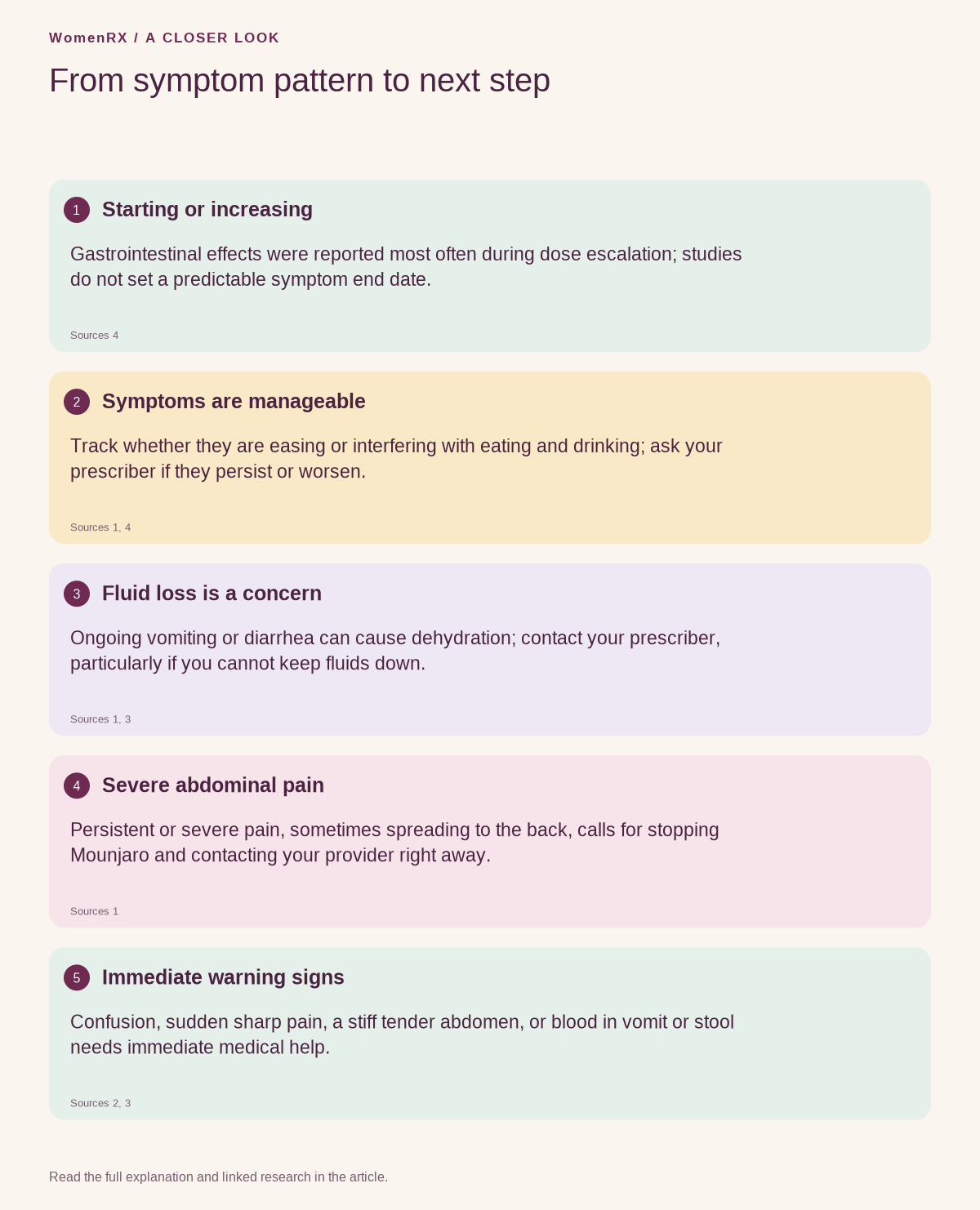
From symptom pattern to next step
Starting or increasing: Gastrointestinal effects were reported most often during dose escalation; studies do not set a predictable symptom end date.4
Symptoms are manageable: Track whether they are easing or interfering with eating and drinking; ask your prescriber if they persist or worsen.14
Fluid loss is a concern: Ongoing vomiting or diarrhea can cause dehydration; contact your prescriber, particularly if you cannot keep fluids down.13
Severe abdominal pain: Persistent or severe pain, sometimes spreading to the back, calls for stopping Mounjaro and contacting your provider right away.1
Immediate warning signs: Confusion, sudden sharp pain, a stiff tender abdomen, or blood in vomit or stool needs immediate medical help.23
Read the figure as text
A practical guide to the pattern reported in trials and the symptoms that call for prompt or immediate attention.- Starting or increasing: Gastrointestinal effects were reported most often during dose escalation; studies do not set a predictable symptom end date.4
- Symptoms are manageable: Track whether they are easing or interfering with eating and drinking; ask your prescriber if they persist or worsen.14
- Fluid loss is a concern: Ongoing vomiting or diarrhea can cause dehydration; contact your prescriber, particularly if you cannot keep fluids down.13
- Severe abdominal pain: Persistent or severe pain, sometimes spreading to the back, calls for stopping Mounjaro and contacting your provider right away.1
- Immediate warning signs: Confusion, sudden sharp pain, a stiff tender abdomen, or blood in vomit or stool needs immediate medical help.23
More questions, answered
Do side effects tend to return after a dose increase?
Gastrointestinal effects were reported most often during dose escalation in trial analyses, so an increase is a time to pay attention to how you feel. The findings don’t predict whether symptoms will return for you or how long they might last. 4
Does nausea mean Mounjaro is working?
No. In a post hoc analysis of the SURMOUNT trials, weight reduction was similar among participants reporting no nausea, nausea alone, or nausea, vomiting, or diarrhea. Nausea isn’t needed for the medication to have an effect. 4
Sources you can check
- MOUNJARO (TIRZEPATIDE) INJECTION, SOLUTION MOUNJARO KWIKPEN (TIRZEPATIDE) INJECTION, SOLUTION [ELI LILLY AND COMPANY] | US prescribing information and patient instructionsAccessed 2026-09-25Return to first citation
- Abdominal Pain | MedlinePlusAccessed 2026-09-25Return to first citation
- Dehydration: MedlinePlusAccessed 2026-09-25Return to first citation
- Gastrointestinal tolerability and weight reduction associated with tirzepatide in adults with obesity or overweight with and without type 2 diabetes in the SURMOUNT-1 to -4 trials.Rubino DM, Pedersen SD, Connery L, Cao D, Chigutsa F, Stefanski A, Fraseur Brumm J, Griffin R, Gerber C. · Diabetes, obesity & metabolism · 2025Return to first citation