Semaglutide and High Blood Pressure: What to Monitor
Semaglutide was linked with a modest average drop in systolic blood pressure in weight-loss trials, but that doesn’t tell you whether your blood-pressure medicines should change.
In three weight-loss trials, systolic blood pressure changed about 5 mm Hg more with semaglutide than placebo over 68 weeks. The average difference was similar in participants classified as having hypertension, but it can’t predict your readings or decide whether a particular medicine should change. Bring your readings and current medication list to a discussion about how they’ll be reviewed. 3
What the trial average means
An individual-patient-data analysis combined results from three randomized trials of semaglutide 2.4 mg for weight loss. The 3,136 participants did not have diabetes. Over 68 weeks, systolic blood pressure changed 4.95 mm Hg more with semaglutide than with placebo. In the analysis’s hypertension group, the difference was 4.78 mm Hg. That group included people classified by a hypertension diagnosis, blood-pressure reading, or use of blood-pressure medicine, so it wasn’t a single uniform group. These are differences between trial groups, not a prediction for any one person. 3
The analysis estimated that weight loss accounted for much of the average systolic-pressure change. That offers a plausible link between weight loss and lower readings, but it doesn’t mean semaglutide should replace treatment for hypertension. 3
The result was less certain for participants classified as having apparent resistant hypertension: the estimated difference was 3.16 mm Hg, with a confidence interval that included no difference. The analysis therefore doesn’t establish a reliable blood-pressure effect for this subgroup. 3
A lower reading isn’t a medication plan
In the trials, the average intensity of blood-pressure treatment decreased more in the semaglutide group than in the placebo group. That’s a finding across trial participants, not a recommendation to reduce or stop a medicine when your readings or weight change. 3
Blood-pressure medicines work in different ways, and some people need more than one kind. A change in readings is a reason to review your plan, not to assume that a particular prescription is no longer needed. 2
Bring the names and current instructions for all your blood-pressure medicines to the discussion. Ask who will review your readings and make any medication decisions. The trial average doesn’t tell you whether semaglutide is suitable alongside your specific medicines or whether any of them should change. 23
Make monitoring a shared plan
High blood pressure often has no symptoms, so feeling well doesn’t show whether it’s controlled. Diagnosis generally uses more than one reading taken at separate appointments. If you already check at home, bring the readings you have and note when they were taken. 1
It may help to agree on three practical details:
- Which readings to share: Ask what readings would be useful and whether to bring a series rather than relying on one number.
- Who will review them: Clarify which care team member should receive the readings, especially if more than one prescriber is involved.
- What happens if they change: Ask when readings should be reviewed and who will decide whether treatment needs adjusting.
These details help turn a change in blood pressure into a considered treatment decision, rather than a reason to alter a prescription on your own.
What the results say about women
The reported overall and hypertension-group averages don’t tell us whether the blood-pressure change differs for women. They support discussing a possible average reduction, not assuming every woman will have one. Pregnancy and postpartum hypertension weren’t the question addressed by these weight-loss trial results. 3
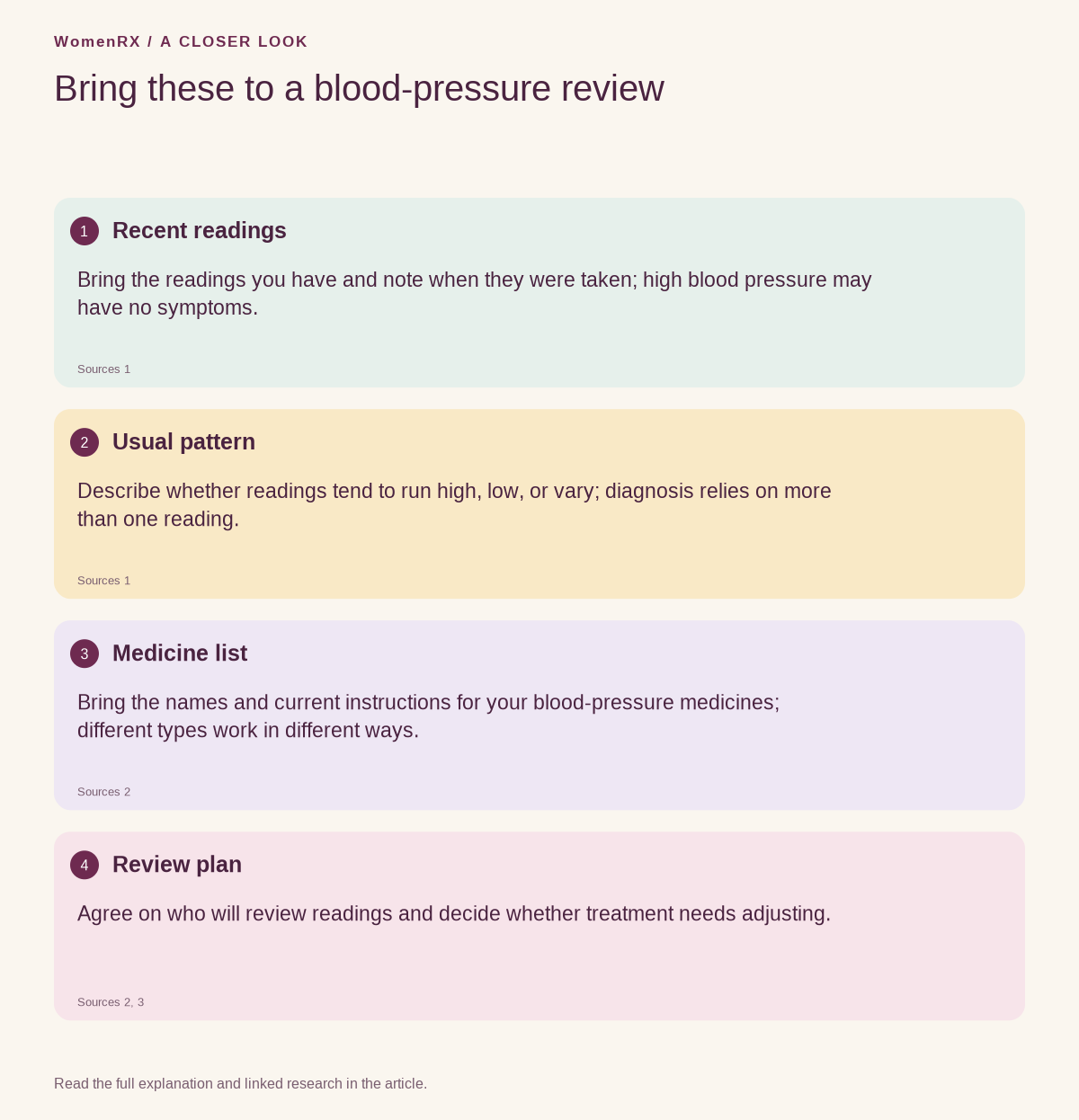
Bring these to a blood-pressure review
Recent readings: Bring the readings you have and note when they were taken; high blood pressure may have no symptoms.1
Usual pattern: Describe whether readings tend to run high, low, or vary; diagnosis relies on more than one reading.1
Medicine list: Bring the names and current instructions for your blood-pressure medicines; different types work in different ways.2
Review plan: Agree on who will review readings and decide whether treatment needs adjusting.23
Read the figure as text
These prompts help organize your readings and medication questions without treating a trial average as an individual prescription decision.- Recent readings: Bring the readings you have and note when they were taken; high blood pressure may have no symptoms.1
- Usual pattern: Describe whether readings tend to run high, low, or vary; diagnosis relies on more than one reading.1
- Medicine list: Bring the names and current instructions for your blood-pressure medicines; different types work in different ways.2
- Review plan: Agree on who will review readings and decide whether treatment needs adjusting.23
Sources you can check
- High Blood Pressure | Hypertension | MedlinePlusAccessed 2026-09-25Return to first citation
- Blood Pressure Medicines | MedlinePlusAccessed 2026-09-25Return to first citation
- Semaglutide and blood pressure: an individual patient data meta-analysis.Kennedy C, Hayes P, Cicero AFG, Dobner S, Le Roux CW, McEvoy JW, Zgaga L, Hennessy M. · European heart journal · 2024Return to first citation