Ozempic and High Blood Pressure: What to Review
Semaglutide may lower average blood pressure in some adults with obesity, but that doesn’t tell you whether your own blood-pressure treatment needs to change.
High blood pressure calls for a careful medication review, not an assumption that Ozempic will replace blood-pressure treatment. In weight-loss trials, semaglutide lowered average systolic pressure compared with placebo, including among participants with hypertension, but those results don’t predict your individual response or establish an effect for every Ozempic regimen. Keep taking medicines as prescribed and review your readings and symptoms with the prescriber. If a reading is higher than 180 systolic and higher than 120 diastolic, seek medical care right away. 15

What the blood-pressure research can tell you
Semaglutide has lowered average blood pressure in clinical trials, but the finding needs context. An analysis combined individual data from three randomized trials of semaglutide for weight management in adults without diabetes. Over 68 weeks, systolic blood pressure fell about 4.95 mmHg more with semaglutide than with placebo across the full study population. In the group classified as having hypertension, the difference was 4.78 mmHg. 5
That’s a group average, not a prediction for you. The trials used semaglutide 2.4 mg for weight management, so their results shouldn’t be treated as a direct estimate of what will happen with Ozempic. The analysis also found that weight loss explained a substantial part of the blood-pressure change, and the intensity of participants’ blood-pressure treatment decreased more in the semaglutide group than in the placebo group. The researchers noted that medication changes could also contribute to the result. 5
A separate analysis of 32 randomized trials involving people treated for type 2 diabetes or obesity found no statistically significant association between semaglutide and hypertension- or hypotension-related adverse events. Those event findings don’t mean that an individual’s pressure cannot shift; they answer a different question from measuring average blood-pressure change. 4
What to bring into a medication review
A useful review connects your blood-pressure pattern to your full medication list and how you’ve been feeling. Bring recent readings, if you have them, and note when you took them. Include the names of your blood-pressure medicines and any recent changes. In the clinical trials, researchers tracked blood-pressure readings and recorded participants’ medications and changes to treatment. 5
Also mention fainting or symptoms that seem to happen when you stand up. Blood-pressure medicines can contribute to orthostatic or other low blood pressure in some people, and fainting is one concern discussed in reviews of blood-pressure changes. That does not show that semaglutide caused a symptom, but it gives your prescriber relevant context for reviewing both high and low readings. 3
Don’t stop, reduce, or replace a blood-pressure medicine based on a general trial result. The study findings describe average changes under trial conditions; they aren’t a personal medication plan. High blood pressure often has no noticeable symptoms, so readings matter even when you feel fine. 15
Ask about the specific medicines, not just the combination
The research summarized here doesn’t establish a specific interaction between semaglutide and any particular blood-pressure medicine. That means a review should look at your actual prescriptions rather than assume all blood-pressure drugs have the same effect. Ask whether your readings or symptoms suggest a change is needed, and who should make that decision.
If you have diabetes and also use insulin or a sulfonylurea, mention those medicines too. US prescribing information for oral semaglutide products warns that combining semaglutide with insulin or a sulfonylurea can increase the risk of low blood sugar. That is a separate issue from blood pressure, and this labeling is not the product-specific prescribing information for Ozempic injection. 2
A short record that makes follow-up clearer
For a few days before a review, if you already check your pressure at home, write down each reading with the date and time. Add the names of your medicines, any recent changes, and any fainting or other symptoms you notice. This isn’t a diagnostic checklist. It’s a way to help your prescriber see whether readings or symptoms changed alongside treatment. High blood pressure is usually confirmed through readings, rather than symptoms alone. 1
If a reading is higher than 180 systolic and higher than 120 diastolic, seek medical care right away rather than waiting for a routine review. For readings below that threshold, include them in your record and discuss persistent or concerning patterns with your prescriber. 1
If you’re pregnant or recently postpartum and managing high blood pressure, say so when discussing treatment. The trials summarized here don’t establish how their findings apply to pregnancy or postpartum hypertension.
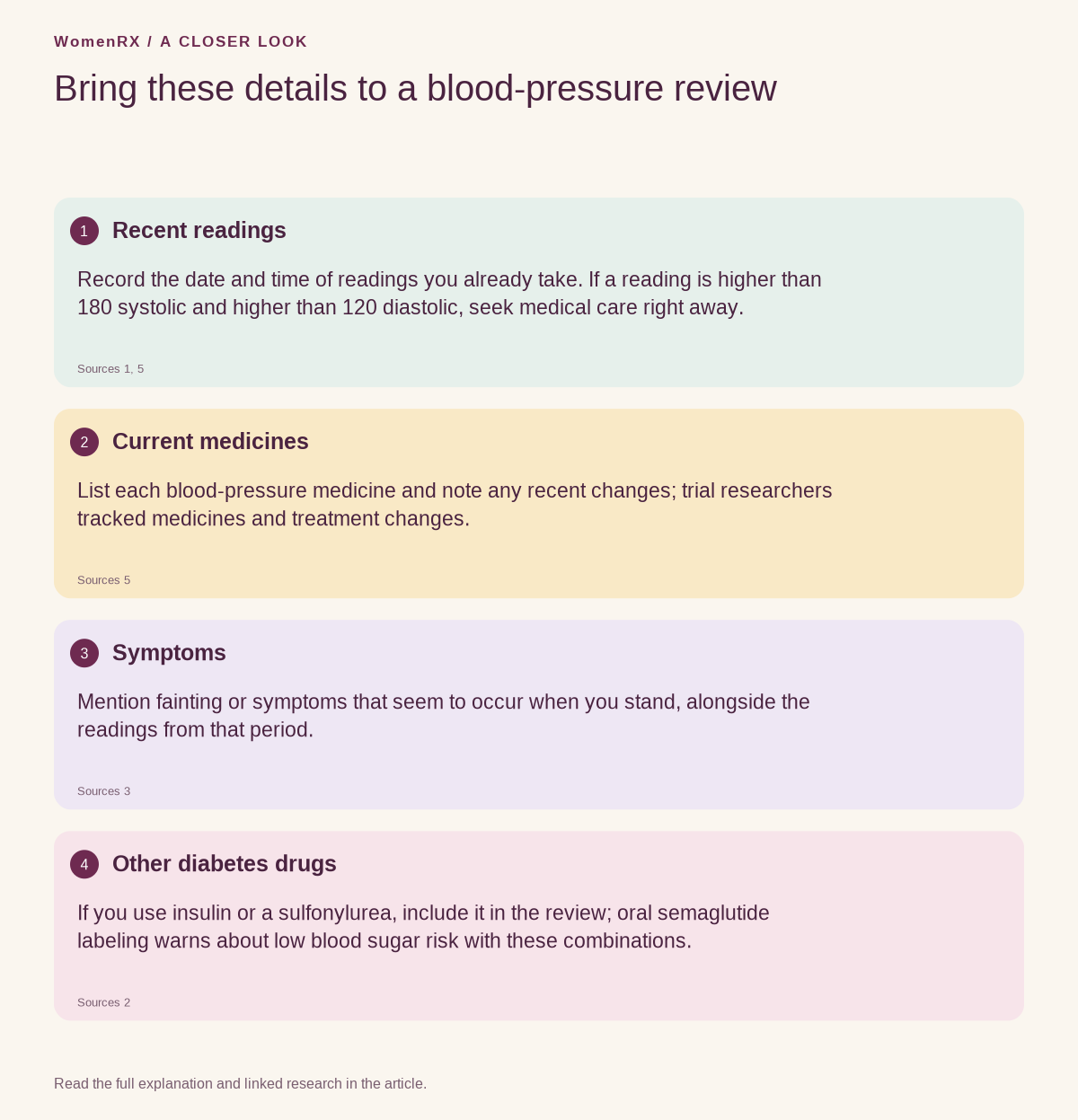
Bring these details to a blood-pressure review
Recent readings: Record the date and time of readings you already take. If a reading is higher than 180 systolic and higher than 120 diastolic, seek medical care right away.15
Current medicines: List each blood-pressure medicine and note any recent changes; trial researchers tracked medicines and treatment changes.5
Symptoms: Mention fainting or symptoms that seem to occur when you stand, alongside the readings from that period.3
Other diabetes drugs: If you use insulin or a sulfonylurea, include it in the review; oral semaglutide labeling warns about low blood sugar risk with these combinations.2
Read the figure as text
These notes help connect your readings and symptoms with your current treatment; they are not a diagnostic score or a medication-change plan.- Recent readings: Record the date and time of readings you already take. If a reading is higher than 180 systolic and higher than 120 diastolic, seek medical care right away.15
- Current medicines: List each blood-pressure medicine and note any recent changes; trial researchers tracked medicines and treatment changes.5
- Symptoms: Mention fainting or symptoms that seem to occur when you stand, alongside the readings from that period.3
- Other diabetes drugs: If you use insulin or a sulfonylurea, include it in the review; oral semaglutide labeling warns about low blood sugar risk with these combinations.2
More questions, answered
Can semaglutide replace my blood-pressure medicine?
The trial findings don’t establish that it can. Although the weight-management trials recorded lower blood-pressure treatment intensity in the semaglutide group, that was a group-level result, not an instruction for an individual to stop or reduce medicine. 5
Should I be concerned about a lower reading?
A single lower reading doesn’t by itself show whether your treatment should change. Share the reading and any fainting or standing-related symptoms with your prescriber; low blood pressure and fainting are relevant concerns when reviewing blood-pressure treatment. If a reading is higher than 180 systolic and higher than 120 diastolic, seek medical care right away rather than waiting for routine follow-up. 13
Sources you can check
- High Blood Pressure | Hypertension | MedlinePlusAccessed 2026-09-25Return to first citation
- OZEMPIC (ORAL SEMAGLUTIDE) TABLET RYBELSUS (ORAL SEMAGLUTIDE) TABLET [NOVO NORDISK PHARMACEUTICAL INDUSTRIES, LP] | US prescribing information and patient instructionsAccessed 2026-09-25Return to first citation
- Hypertension, hypotension and syncope.Rivasi G, Fedorowski A. · Minerva medica · 2022Return to first citation
- Effect of tirzepatide and semaglutide on blood pressure: A systematic review and meta-analysis.Chen QX, Zhou XY, Wu Q, Xie JJ, Xu Y, Teng FY, Guo M. · Endocrine · 2026Return to first citation
- Semaglutide and blood pressure: an individual patient data meta-analysis.Kennedy C, Hayes P, Cicero AFG, Dobner S, Le Roux CW, McEvoy JW, Zgaga L, Hennessy M. · European heart journal · 2024Return to first citation