Scalp Symptoms and Hair Loss: When to Look Closer
Hair loss with ongoing scalp itching, scaling, redness, soreness, or burning deserves a closer look because scalp conditions and hair-loss disorders can overlap.
If hair loss comes with persistent itching, scaling, redness, tenderness, or burning, don’t rely on a growth product alone. A clinician can examine the scalp and distinguish scaling conditions from hair loss linked to tension or from inflammatory disorders that may scar. 1 2 4 6 Note where and when the loss began, what the scalp feels and looks like, and how you style your hair.
Start with the pattern and the scalp
Hair coming out is not one single problem. Pay attention to whether it’s shedding across the scalp, forming a patch, breaking near the hairline, or thinning at the temples. Also notice whether the skin is flaky or greasy, red, itchy, tender, or burning. These details help distinguish possibilities, but no single symptom or pattern confirms a diagnosis.
Scalp scaling can occur with dandruff or seborrheic dermatitis. Ketoconazole is an antifungal medicine used for these conditions, but a scaly scalp alongside hair loss doesn’t by itself show that a yeast-related condition is causing the loss. Treatment depends on what’s actually affecting the scalp and hair. 2
Hair loss at the temples can have more than one explanation, too. In an observational study of 86 adults with bitemporal hair loss, researchers recorded several accompanying hair disorders, including pattern hair loss, seborrheic dermatitis, shedding, and traction alopecia. The group included women and men, and the findings don’t mean that a particular scalp symptom or hairline pattern identifies the cause. 5
When pulling from hairstyles may matter
Repeated tension from tight braids, extensions, weaves, or ponytails can contribute to traction alopecia. It can affect people of any background, though the condition is reported more often among women of African descent in association with high-tension hairstyling practices. Early clues can include thinning where the hair is pulled, broken hairs, or scalp discomfort. If tension continues, hair loss can progress to scarring and become permanent. 3 4
If a style hurts, stings, or makes the scalp feel persistently tender, ease the tension rather than treating discomfort as something you need to tolerate. Reducing tension is part of managing traction alopecia, but a clinician needs to assess whether that’s what’s causing your hair loss. 4
Why pain or burning changes the next step
Some inflammatory hair-loss disorders can cause itching, burning, or tenderness along with hair loss. Lichen planopilaris is one example: it can cause scarring, which typically makes the lost hair permanent. Its treatment aims to ease symptoms and prevent further loss, although evidence for available treatments is limited. A scalp assessment by a clinician is a sensible next step when hair loss comes with ongoing discomfort. The clinician can consider whether dermatology review is needed. 1 6
A scaly, itchy scalp can also need assessment, but it doesn’t automatically mean a scarring condition. The useful distinction is not “itch means danger”; it’s whether hair loss is happening in the same area, whether the discomfort persists, and whether the hairline is changing. 2 6
Make the assessment more useful
Before a visit, jot down when you first noticed the loss and whether it is spreading, shedding, or breaking. Take clear photos of the same areas over time, if you can. Note any itching, flaking, redness, soreness, burning, or tenderness, and whether symptoms are in the thinning area. Write down hairstyles or hair practices that place tension on your hair, along with any recent changes in how you treat or style it. Redness is worth showing during a scalp examination, but its appearance alone won’t tell you what’s causing the hair loss.
Seek a scalp assessment rather than routine growth advice if scalp symptoms persist alongside hair loss, if the hairline is receding where styles pull, or if a tender or burning area is thinning. A clinician can examine the scalp and hair and decide whether further assessment, dermatology review, or treatment fits the pattern. Don’t assume that treating dandruff, or using a general hair-growth product, will address every cause of hair loss. 1 4 6
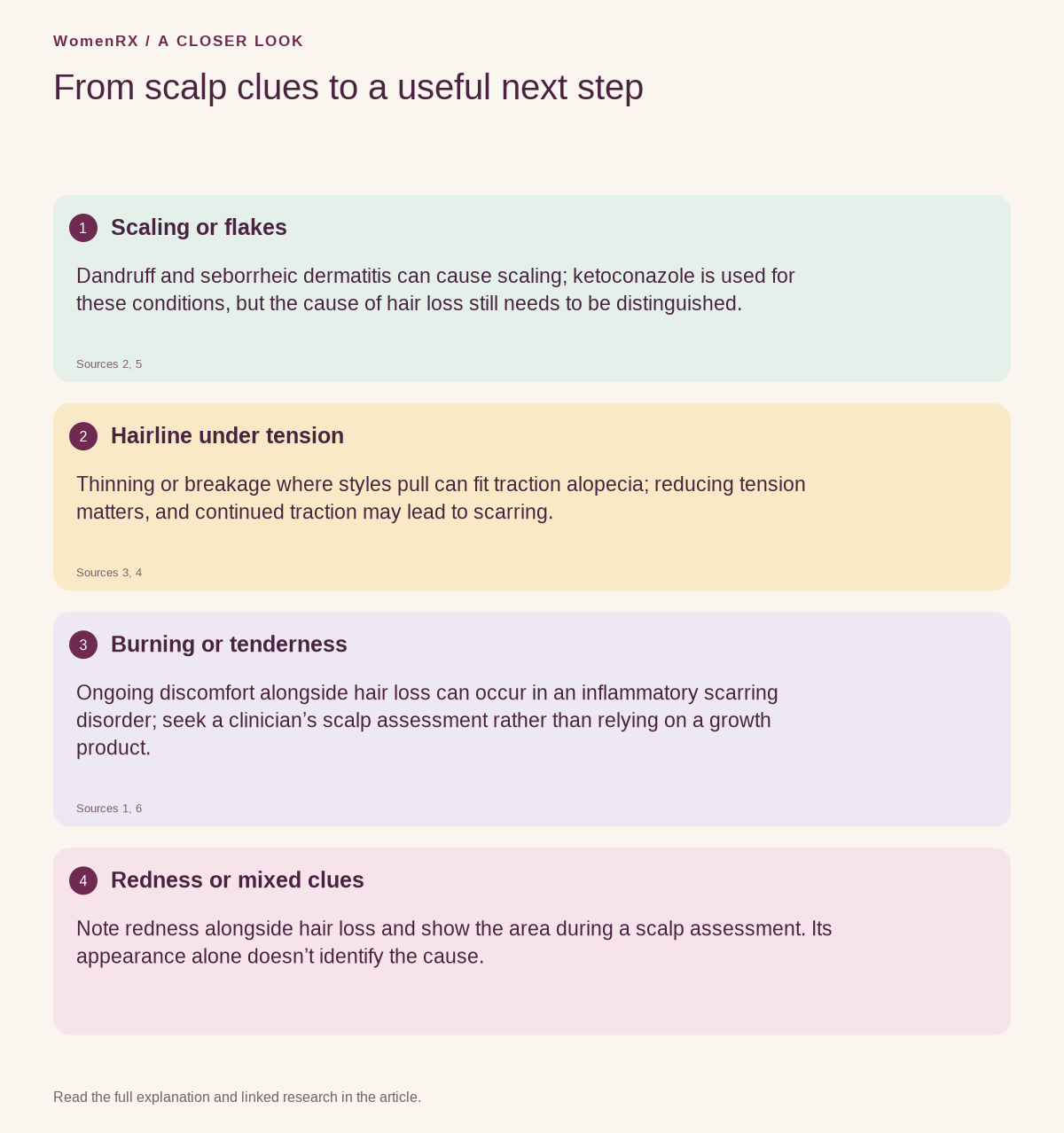
From scalp clues to a useful next step
Scaling or flakes: Dandruff and seborrheic dermatitis can cause scaling; ketoconazole is used for these conditions, but the cause of hair loss still needs to be distinguished.25
Hairline under tension: Thinning or breakage where styles pull can fit traction alopecia; reducing tension matters, and continued traction may lead to scarring.34
Burning or tenderness: Ongoing discomfort alongside hair loss can occur in an inflammatory scarring disorder; seek a clinician’s scalp assessment rather than relying on a growth product.16
Redness or mixed clues: Note redness alongside hair loss and show the area during a scalp assessment. Its appearance alone doesn’t identify the cause.
Read the figure as text
Use the pattern and accompanying scalp symptoms to decide whether ordinary hair-growth advice is enough or whether the scalp itself should be assessed.- Scaling or flakes: Dandruff and seborrheic dermatitis can cause scaling; ketoconazole is used for these conditions, but the cause of hair loss still needs to be distinguished.25
- Hairline under tension: Thinning or breakage where styles pull can fit traction alopecia; reducing tension matters, and continued traction may lead to scarring.34
- Burning or tenderness: Ongoing discomfort alongside hair loss can occur in an inflammatory scarring disorder; seek a clinician’s scalp assessment rather than relying on a growth product.16
- Redness or mixed clues: Note redness alongside hair loss and show the area during a scalp assessment. Its appearance alone doesn’t identify the cause.
More questions, answered
Does an itchy, flaky, or red scalp explain hair loss?
Not necessarily. Dandruff and seborrheic dermatitis can cause scalp scaling, but scaling alone doesn’t establish why hair is thinning. Redness is another change to show during a scalp examination, not a diagnosis on its own. Hair loss can have overlapping causes, so the pattern and scalp examination matter. 1 2 5
Can a tight hairstyle cause permanent hair loss?
Prolonged pulling can cause traction alopecia. Reducing tension is part of management; if traction continues, the loss can progress to scarring and become permanent. 3 4
Sources you can check
- Hair loss - NHSAccessed 2026-09-25Return to first citation
- About ketoconazole - NHSAccessed 2026-09-25Return to first citation
- Feasibility of a culturally tailored traction alopecia prevention curriculum in a diverse urban middle school: a pilot study.Afolabi A, Ha EK, Fawole O, Hoffman B, Pugliano-Mauro M. · International journal of women's dermatology · 2026Return to first citation
- Traction AlopeciaSyed HA, Kaliyadan F. · 2026Return to first citation
- Investigation of Hair Diseases Accompanying Bitemporal Alopecia: An Observational Cross-Sectional Study.Menteşoğlu D, Soran G, Sali N, Akçam A, Erol ŞN, Kartal SP. · Journal of clinical practice and research · 2026Return to first citation
- A Practical Approach to the Diagnosis and Management of Classic Lichen Planopilaris.Svigos K, Yin L, Fried L, Lo Sicco K, Shapiro J. · American journal of clinical dermatology · 2021Return to first citation