Sardines: Nutrition, Bones, and How to Compare Cans
A drained can of bone-in sardines can provide protein and calcium, but its sodium and other nutrients depend on the product you choose.
Sardines provide protein and the omega-3 fats EPA and DHA. A USDA reference for one drained 3.75-ounce can of Atlantic sardines in oil with bones lists 22.6 g of protein and 282 mg of sodium. Bone-in sardines also contribute calcium, while a boneless can needs its own label check. Sardines are among the FDA’s lower-mercury fish choices. 1 5 2 6
Canned sardines can be a convenient seafood choice. The details that matter most are easy to miss: whether the bones are included, what the nutrition label says for the specific can, and what you’re hoping the food will do for your bones.
Bone-in or boneless: the calcium distinction
The soft bones in canned sardines are edible, and sardines with bones are a recognized calcium source. NIH lists 325 mg of calcium in a 3-ounce serving of canned sardines in oil with bones. That’s a contribution to your overall calcium intake. The number alone doesn’t show whether eating sardines prevents or treats osteoporosis. 2 3
If you prefer boneless sardines, choose them for taste or texture. Don’t apply the bone-in calcium figure to a boneless can; check that product’s calcium listing if calcium is a reason you’re buying it.
Calcium needs differ by age. NIH lists a recommended daily allowance of 1,000 mg for women ages 19-50 and 1,200 mg for women over 50. A serving of bone-in sardines can contribute to that total alongside other foods, but one serving doesn’t tell you whether your overall intake is adequate. 2
That age difference makes the calcium listing especially useful to notice later in life. It doesn’t turn a can of sardines into an osteoporosis treatment plan.
Omega-3s: useful numbers, with a product caveat
Sardines are a fatty fish and contain the long-chain omega-3 fats EPA and DHA. One NIH table gives 0.74 g EPA and 0.45 g DHA in 3 ounces of drained canned sardines in tomato sauce. That’s a figure for that preparation, not a guarantee for every can. 1
The calcium figure above is for sardines in oil with bones; the omega-3 figure is for sardines in tomato sauce, drained. They don’t describe one matched product or tell you which can has more of both nutrients. 1 2
Protein and sodium: a reference point, then the label
For a concrete reference, USDA food-composition data lists 22.6 g of protein and 282 mg of sodium in the drained edible solids of one 3.75-ounce can of Atlantic sardines packed in oil with bones. The drained portion weighs 92 g. Those figures describe a reference food, not every brand or every way of packing sardines. 5
For a useful comparison between cans, read protein grams per serving and the serving size together. If you’ll eat the whole can, check whether the can contains more than one labeled serving. Do the same with sodium, particularly if you’re choosing between cans labeled salted and unsalted. Compare the amounts on their Nutrition Facts panels rather than assuming the wording on the front tells the whole story. General healthy-eating advice includes limiting salt. 4
Simple ways to serve sardines
Sardines are one fatty-fish option among the seafoods that provide EPA and DHA. They don’t have to be your only fish choice: fish guidance places them within a varied eating pattern, and the FDA lists sardines among its lower-mercury “Best Choices.” If you’re pregnant or breastfeeding, FDA guidance calls for two to three weekly servings of varied fish from that list. 1 6 7
You don’t need a special recipe to use them. For example, you might mash sardines into a sandwich or serve them with vegetables and grains.
At the store, let your priority guide the choice: look for edible bones and check calcium if that nutrient matters to you; choose a texture and preparation you’ll enjoy; then compare serving sizes, protein and sodium on the cans you’re considering.
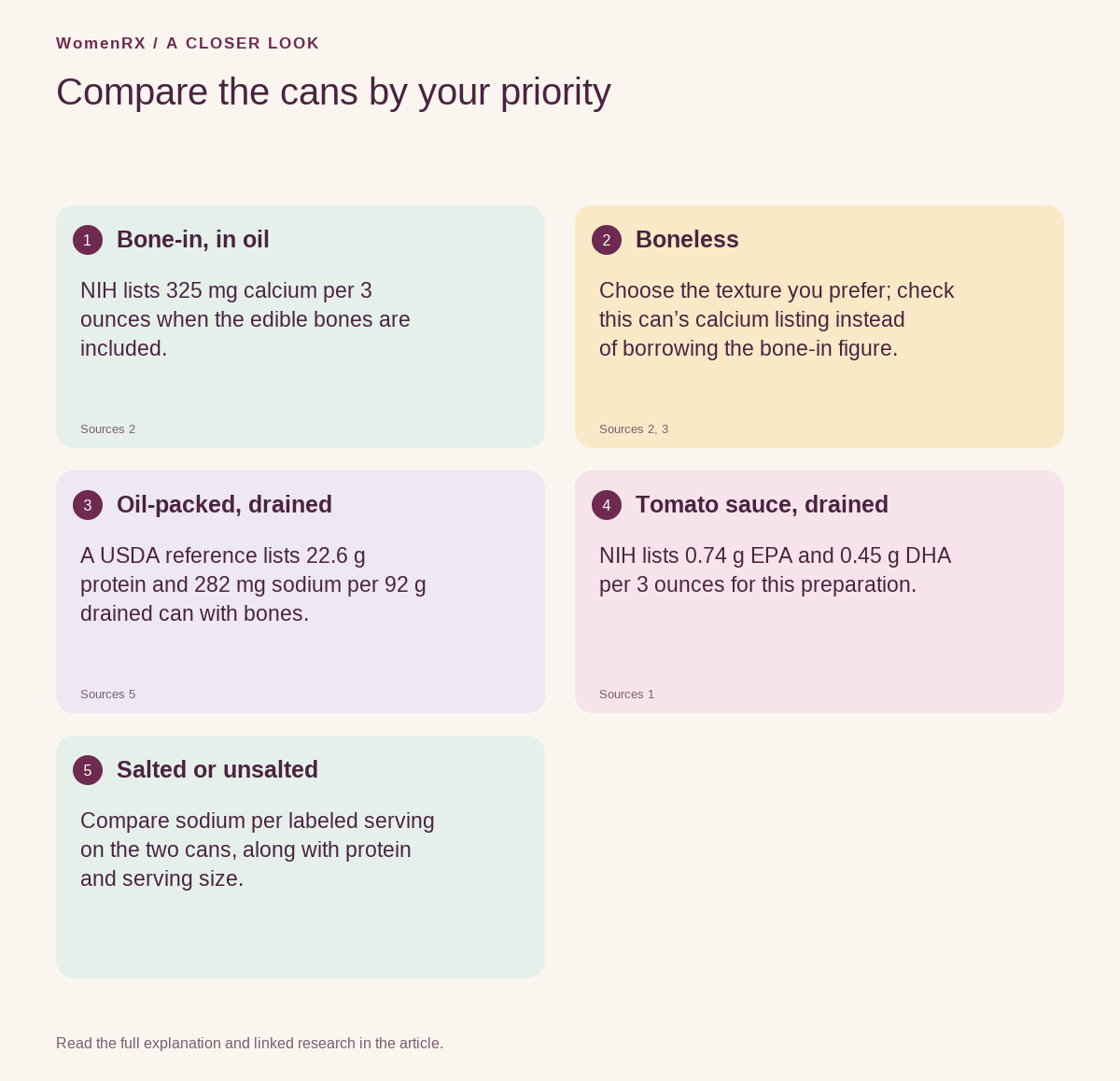
Compare the cans by your priority
Bone-in, in oil: NIH lists 325 mg calcium per 3 ounces when the edible bones are included.2
Boneless: Choose the texture you prefer; check this can’s calcium listing instead of borrowing the bone-in figure.23
Oil-packed, drained: A USDA reference lists 22.6 g protein and 282 mg sodium per 92 g drained can with bones.5
Tomato sauce, drained: NIH lists 0.74 g EPA and 0.45 g DHA per 3 ounces for this preparation.1
Salted or unsalted: Compare sodium per labeled serving on the two cans, along with protein and serving size.
Read the figure as text
These reference figures describe particular preparations. Use the labels on the cans you’re considering to compare products directly.- Bone-in, in oil: NIH lists 325 mg calcium per 3 ounces when the edible bones are included.2
- Boneless: Choose the texture you prefer; check this can’s calcium listing instead of borrowing the bone-in figure.23
- Oil-packed, drained: A USDA reference lists 22.6 g protein and 282 mg sodium per 92 g drained can with bones.5
- Tomato sauce, drained: NIH lists 0.74 g EPA and 0.45 g DHA per 3 ounces for this preparation.1
- Salted or unsalted: Compare sodium per labeled serving on the two cans, along with protein and serving size.
More questions, answered
Do canned sardine bones need to be removed?
No. The soft bones in canned sardines are edible. If you prefer boneless sardines, check that can’s calcium listing rather than using the figure for sardines with bones. 3 2
Sources you can check
- Omega-3 Fatty Acids - Health Professional Fact SheetAccessed 2026-09-25Return to first citation
- Calcium - Health Professional Fact SheetAccessed 2026-09-25Return to first citation
- Calcium | MedlinePlusAccessed 2026-09-25Return to first citation
- Nutrition: MedlinePlusAccessed 2026-09-25Return to first citation
- USDA SR Legacy: Fish, sardine, Atlantic, canned in oil, drained solids with bone (FDC 175139)Accessed 2026-09-25Return to first citation
- Advice about Eating Fish | FDAAccessed 2026-09-25Return to first citation
- Selecting and Serving Fresh and Frozen Seafood Safely | FDAAccessed 2026-09-25Return to first citation