Saffron Supplements: Side Effects and Pregnancy Cautions
A pinch of saffron in food isn’t the same as taking a concentrated extract, especially when you’re pregnant, breastfeeding, or using medication.
Saffron used as a spice is different from a capsule or extract; food use doesn’t establish that a concentrated product is safe. Human studies most often report digestive side effects, usually mild. If you’re pregnant, check before taking an herbal supplement. If you’re breastfeeding or take medication, ask about the specific product rather than relying on its history as a spice. 1 2 3 4
Spice and supplement are different choices
Saffron is the dried stigma of Crocus sativus, used both as a spice and in concentrated powders or extracts. A small amount used to flavor food is not equivalent to a supplement designed to deliver a concentrated preparation. One review describes moderate saffron consumption as generally regarded as safe, without defining a safe culinary amount. 4 A human safety review examines medicinal preparations, including stigma powder and extracts; food use doesn’t show that those products have the same safety profile. 3
That distinction matters most when the stakes are higher. A supplement may use a different preparation and amount from food, and the evidence on medicinal use includes varied products and study populations. You can’t use culinary experience as proof that a concentrated product is safe for you. 3
What side effects have been reported?
A systematic review of human studies of saffron preparations found that gastrointestinal problems were the most frequently reported side effects. They were usually minor and self-limiting. Across the included trials, adverse events were reported in some studies, but the varied preparations, populations, and study durations make a single overall estimate a poor guide to what any one person will experience. 3
The review also flags possible significant adverse events with higher-dose or prolonged medicinal use, while noting gaps in dose-response and interaction evidence. That’s a reason not to assume that a product is harmless because it’s sold as a supplement, or to increase use based on results from a study of a different extract. 3
Pregnancy: don’t extend food use to capsules
General pregnancy guidance includes herbs and supplements among products to check before taking, because some can harm a developing fetus. That guidance is not a saffron-specific finding, but it supports a cautious choice: don’t start a saffron capsule or extract during pregnancy without first checking with your prenatal care team. 1
If you’ve already taken some, write down the product name and what you took, then share that information with your prenatal care team. Don’t stop a prescribed medicine or replace it with saffron on your own; decisions about medicines in pregnancy should weigh the risks of treatment against the risks of leaving a health condition untreated. 1
Breastfeeding and medication questions
Some medicines can pass into breast milk and cause harm, so breastfeeding guidance recommends checking with a care provider when you have a concern. That is general guidance, not a finding that saffron passes into breast milk. Ask about the exact saffron product rather than assuming that a food-use amount answers the supplement question. 2
For medication interactions, the human safety review specifically identifies a lack of reliable interaction data, including for anticoagulants. It does not establish a particular saffron-drug interaction, so it would be misleading to name one as proven. If you take prescription medicines, bring the product label or ingredient list to a pharmacist or prescriber for a product-specific review before starting. 3
Distinguish a seasoning from a concentrated extract
If you’re using saffron only as a food seasoning, that’s a different exposure from taking an extract. If you’re considering a capsule, first consider why you want it, whether you’re pregnant or breastfeeding, and what medicines you take. General pregnancy guidance calls for checking before taking herbs or supplements, and the saffron interaction evidence is limited. A pharmacist or prescriber can review the actual product and your medication list rather than relying on a general claim about saffron. 1 3
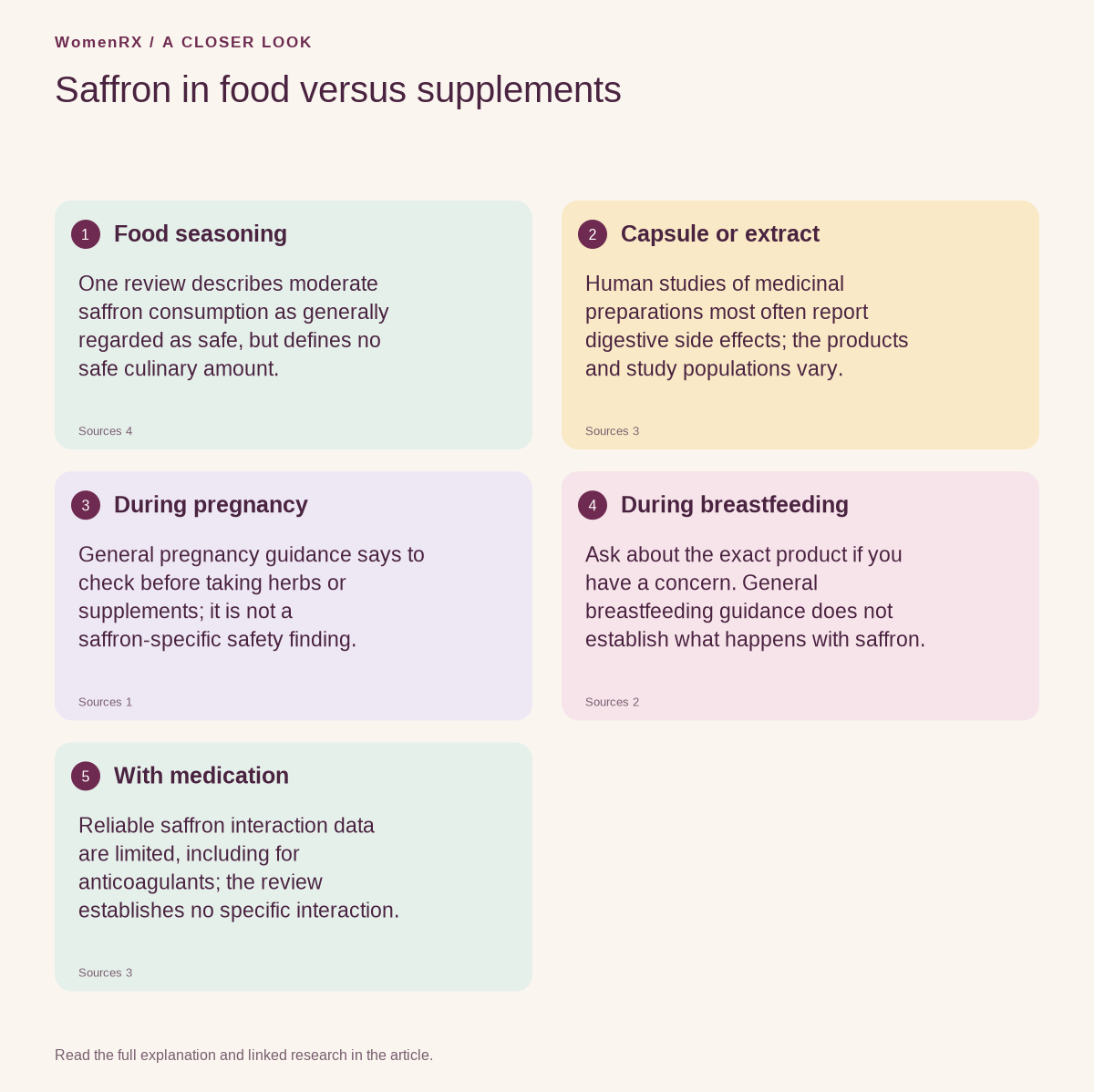
Saffron in food versus supplements
Food seasoning: One review describes moderate saffron consumption as generally regarded as safe, but defines no safe culinary amount.4
Capsule or extract: Human studies of medicinal preparations most often report digestive side effects; the products and study populations vary.3
During pregnancy: General pregnancy guidance says to check before taking herbs or supplements; it is not a saffron-specific safety finding.1
During breastfeeding: Ask about the exact product if you have a concern. General breastfeeding guidance does not establish what happens with saffron.2
With medication: Reliable saffron interaction data are limited, including for anticoagulants; the review establishes no specific interaction.3
Read the figure as text
The preparation changes the safety question. Experience with saffron in food cannot answer whether a concentrated product is appropriate for you.- Food seasoning: One review describes moderate saffron consumption as generally regarded as safe, but defines no safe culinary amount.4
- Capsule or extract: Human studies of medicinal preparations most often report digestive side effects; the products and study populations vary.3
- During pregnancy: General pregnancy guidance says to check before taking herbs or supplements; it is not a saffron-specific safety finding.1
- During breastfeeding: Ask about the exact product if you have a concern. General breastfeeding guidance does not establish what happens with saffron.2
- With medication: Reliable saffron interaction data are limited, including for anticoagulants; the review establishes no specific interaction.3
More questions, answered
Does saffron in food mean a saffron supplement is safe?
No. Culinary use and concentrated extracts are different exposures. Food use doesn’t establish that a supplement is safe during pregnancy, breastfeeding, or alongside medication. 3 4
Are saffron supplement interactions with blood thinners proven?
The human safety review notes that reliable interaction data, particularly involving anticoagulants, are lacking. It does not establish a specific interaction, so have a pharmacist or prescriber review your product and medicines rather than assuming either safety or harm. 3
Sources you can check
- Pregnancy and Medicines | MedlinePlusAccessed 2026-09-25Return to first citation
- Breastfeeding | Benefits of Breastfeeding | MedlinePlusAccessed 2026-09-25Return to first citation
- Adverse Events of Saffron (Crocus sativus L.): Systematic Review of Current Evidence.Hasheminasab FS, Hajimonfarednejad M, Najibi SM, Hashempur MH. · Health science reports · 2026Return to first citation
- Functional, Nutraceutical and Health Endorsing Perspectives of Saffron.Tufail T, Ain HBU, Ikram A, Arshad MT, Abdullahi MA. · Food science & nutrition · 2025Return to first citation