Reformer Pilates, Weight Loss, and Menopause: What’s Known
One small trial tested reformer Pilates in women with overweight or obesity, but its reported results don’t establish how much weight participants lost or whether it helps menopause symptoms.
Reformer Pilates may be worth trying if you enjoy it and want a structured way to build strength, but evidence for weight loss is limited. One small trial in women with overweight or obesity reported body-composition and strength improvements after eight weeks; its abstract doesn’t give a quantified weight change or a menopause-stage analysis. Broader guidance doesn’t recommend exercise as a treatment for hot flashes. 2 3
What the reformer-specific study found
The most directly relevant trial randomized 47 women ages 30 to 60 with overweight or obesity to a control group or an eight-week reformer Pilates program held three times a week. The researchers measured body composition, strength, muscular endurance, sleep quality, and anxiety and depression symptoms. They reported statistically significant differences in body composition, strength, endurance, and anxiety and depression measures in the exercise group. Sleep quality did not differ significantly between groups. 2
That’s a promising but narrow result. The study was small and short, and its participants were not described as perimenopausal or postmenopausal. The abstract reports a body-composition finding but doesn’t provide a quantified weight change. The reported results also don’t establish that reformer Pilates produces more weight loss than another type of Pilates or exercise. The study did not compare reformer classes with mat Pilates. 2
Menopause symptoms are a separate question
A trial in women ages 30 to 60 isn’t automatically a menopause study. The study summary doesn’t provide a menopause-stage analysis or report whether the program eased menopause symptoms. 2
For hot flashes and night sweats, the North American Menopause Society’s 2023 position statement does not recommend exercise as a treatment, based on the evidence it reviewed. That guidance addresses exercise broadly, not reformer Pilates alone. It doesn’t mean you shouldn’t exercise for other reasons; it means Pilates shouldn’t be presented as a proven hot-flash remedy. 3
Is a reformer class worth trying for your goals?
It may be a good fit if the spring-based equipment, instructor guidance, or class structure makes movement appealing and helps you keep showing up. The study offers some support for possible strength and body-composition benefits in women with overweight or obesity, but it doesn’t establish a specific amount of weight loss. 2
If weight loss is your main goal, think of Pilates as one possible part of a broader approach rather than a stand-alone solution. MedlinePlus explains that weight loss requires using more energy than you take in, and that exercise works alongside eating habits in weight management. 1 Pilates can still be worthwhile for strength or enjoyment even if the scale changes little.
Reformer classes require access to the equipment, often through a studio or gym; mat Pilates doesn’t require a reformer. That practical difference may affect what’s sustainable for you, but this trial doesn’t show that the machine format is more effective. There’s no reformer-versus-mat comparison in the trial, and no direct basis for paying more on the assumption that the reformer leads to better weight or menopause outcomes. 2
A useful decision is to ask what you want most from the classes: a routine you enjoy, strength work, or weight change. If you’re choosing between reformer and mat Pilates, decide based on access, cost, comfort, and whether you’ll keep doing it. The current reformer study gives a reason for interest, not a guarantee.
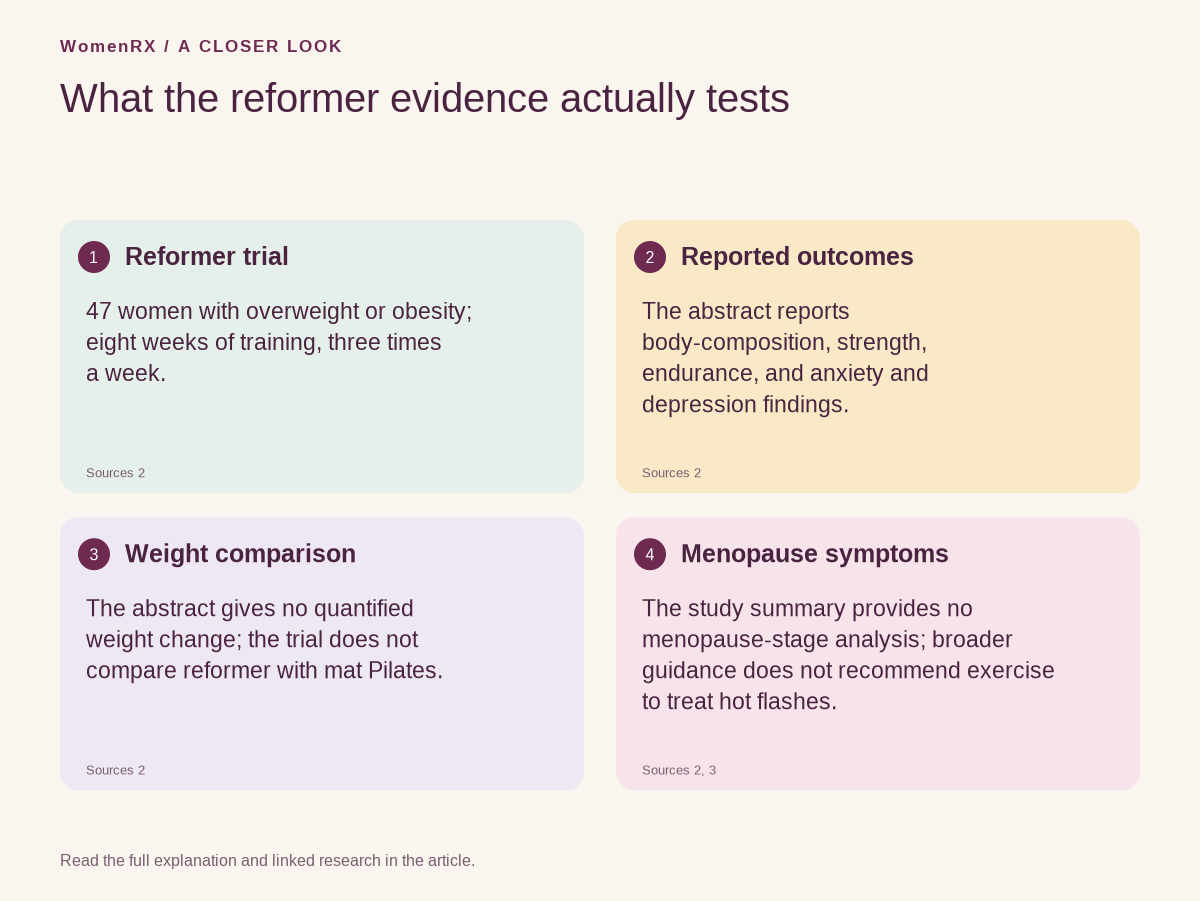
What the reformer evidence actually tests
Reformer trial: 47 women with overweight or obesity; eight weeks of training, three times a week.2
Reported outcomes: The abstract reports body-composition, strength, endurance, and anxiety and depression findings.2
Weight comparison: The abstract gives no quantified weight change; the trial does not compare reformer with mat Pilates.2
Menopause symptoms: The study summary provides no menopause-stage analysis; broader guidance does not recommend exercise to treat hot flashes.23
Read the figure as text
The findings distinguish a small reformer-specific trial from broader exercise and menopause guidance.- Reformer trial: 47 women with overweight or obesity; eight weeks of training, three times a week.2
- Reported outcomes: The abstract reports body-composition, strength, endurance, and anxiety and depression findings.2
- Weight comparison: The abstract gives no quantified weight change; the trial does not compare reformer with mat Pilates.2
- Menopause symptoms: The study summary provides no menopause-stage analysis; broader guidance does not recommend exercise to treat hot flashes.23
More questions, answered
Does reformer Pilates work better than mat Pilates for weight loss?
The reformer trial did not compare reformer with mat Pilates, so it can’t establish which format is better for weight loss. Its abstract reports body-composition findings but doesn’t give a quantified weight change or show an advantage over mat Pilates. 2
Can Pilates reduce hot flashes?
The reformer study summary doesn’t report whether participants’ hot flashes changed. The North American Menopause Society’s 2023 statement does not recommend exercise broadly as a treatment for vasomotor symptoms such as hot flashes and night sweats. 2 3
Sources you can check
- Benefits of Exercise: MedlinePlusAccessed 2026-09-25Return to first citation
- Effects of reformer pilates on body composition, strength, and psychosomatic factors in overweight and obese women A randomized controlled trial.Gökalp Ö, Kirmizigil B. · Scientific reports · 2025Return to first citation
- The 2023 nonhormone therapy position statement of The North American Menopause Society.Menopause (New York, N.Y.) · 2023Return to first citation