Quinoa’s Protein: What a Cooked Serving Really Provides
Quinoa brings some protein to a grain-style meal, but cooked portions tell a different story from numbers quoted for dry seeds.
A half cup of cooked quinoa provides about 4.1 grams of protein, compared with about 2.2 grams in a half cup of cooked white rice. 9 It works as a side or bowl base, while beans or lentils can add more protein. 3 To prepare dry quinoa, one recipe uses two parts water to one part quinoa, followed by simmering and a covered rest. 11
Start with the cooked portion
If you’re deciding what to put beside vegetables, beans, fish, or another main dish, the cooked number is the useful one. A half cup of cooked quinoa weighs about 92.5 grams and supplies an estimated 4.1 grams of protein, 19.7 grams of carbohydrate, 2.6 grams of fiber, and 111 calories. These are reference food-composition values, not a promise about every brand or recipe. 7
You may see a much larger protein figure for quinoa expressed per 100 grams of dry seed. That isn’t the same serving as 100 grams of cooked quinoa: dry and cooked figures use different food states and amounts. Quinoa varieties can also differ in their measured composition. When comparing packages or food tables, check both the amount and whether the entry says dry or cooked. A packaged food’s Nutrition Facts panel reports nutrients per labeled serving, which may not match the amount you put on your plate. 672
What its protein quality does, and doesn’t, tell you
Quinoa contains all the essential amino acids, including lysine, an amino acid that tends to be limited in many cereal grains. That’s a meaningful distinction in its protein profile. But an amino-acid profile and the amount of protein in a typical cooked portion answer different questions. A half cup of quinoa can contribute to your day’s protein without replacing other protein foods. 657
For example, if quinoa is the base of a bowl, adding lentils or tofu gives the meal another protein source. Beans, lentils, and soy foods are recognized protein foods; you don’t need every food in the bowl to supply every amino acid on its own. Variety across the day matters. 83
Choosing between quinoa, grains, and pulses
On a matched household measure, a half cup of cooked quinoa provides about 4.1 grams of protein; a half cup of cooked, unenriched medium-grain white rice provides about 2.2 grams. Those are estimates from separate reference food records, not a claim that quinoa is healthier than rice in every meal. They do show why it helps to compare cooked with cooked rather than setting a dry-seed number beside a serving of rice on your plate. 9
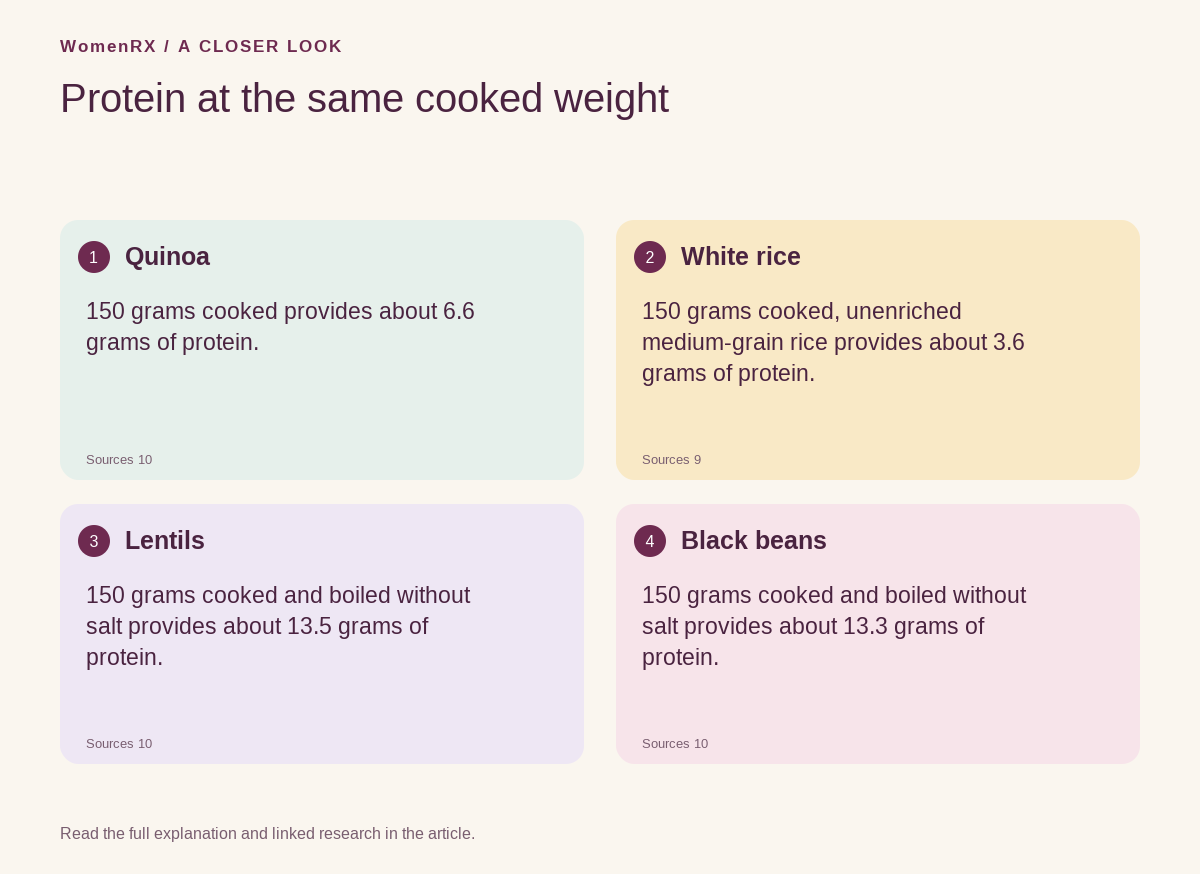
For a comparison that includes pulses, use the same weight of each cooked food. An illustrative 150 grams of cooked quinoa provides about 6.6 grams of protein, versus about 13.5 grams from cooked lentils or 13.3 grams from cooked black beans. The same weight of the cooked white rice described above provides about 3.6 grams. These are generic reference estimates, not suggested serving sizes or measurements of particular brands. 109
Quinoa works much like a grain in a meal: it can be a base or side, even though it’s classified as a pseudocereal rather than a cereal grain. Pulses such as beans and lentils play a different role when you’re building a meal: they’re commonly used as plant protein foods. You can choose quinoa with pulses rather than treating the two as competing options. If your main aim is protein, look at the protein in the whole meal, not the reputation of its grain or grain alternative. 538
Preparing it and deciding when it fits
For a straightforward stovetop method, one quinoa recipe uses one cup of dry quinoa and two cups of water or stock. Bring the liquid to a boil, add the quinoa, then cover and simmer until the liquid is absorbed, about 12 minutes. Fluff it and let it stand covered for another 15 minutes. Check your package, too, since its directions may differ. Once cooked, use quinoa as a side or bowl base. 11
For example, add beans or lentils if you want another plant protein in the meal. When comparing what you’ve served with nutrition information, use a cooked-quinoa entry rather than a dry-seed figure. 37
Quinoa is naturally gluten-free, so it can add variety if you avoid gluten. If you have celiac disease, check the ingredients of packaged quinoa mixes and other prepared products rather than assuming a grain-like product is gluten-free. Wheat, barley, and rye contain gluten. 651
Pregnancy doesn’t change quinoa into a special protein source. Its cooked-portion numbers still describe a food that contributes some protein and carbohydrate; they don’t establish a pregnancy-specific benefit. The useful choice is the one that fits the rest of what you eat, your preferences, and any need to avoid gluten. 74
Protein at the same cooked weight
Quinoa: 150 grams cooked provides about 6.6 grams of protein.10
White rice: 150 grams cooked, unenriched medium-grain rice provides about 3.6 grams of protein.9
Lentils: 150 grams cooked and boiled without salt provides about 13.5 grams of protein.10
Black beans: 150 grams cooked and boiled without salt provides about 13.3 grams of protein.10
Read the figure as text
An illustrative 150 grams of each cooked food puts quinoa, rice, and pulses on the same weight basis. It isn’t a suggested serving size.- Quinoa: 150 grams cooked provides about 6.6 grams of protein.10
- White rice: 150 grams cooked, unenriched medium-grain rice provides about 3.6 grams of protein.9
- Lentils: 150 grams cooked and boiled without salt provides about 13.5 grams of protein.10
- Black beans: 150 grams cooked and boiled without salt provides about 13.3 grams of protein.10
More questions, answered
Why does dry quinoa look much higher in protein?
Dry-seed figures and cooked-portion figures use different bases, so they aren’t interchangeable. For a meal comparison, use cooked entries with the same portion size; for a package comparison, check the serving size on each Nutrition Facts panel. 672
Sources you can check
- Celiac Disease | MedlinePlusAccessed 2026-09-25Return to first citation
- Food Labeling: MedlinePlusAccessed 2026-09-25Return to first citation
- Dietary Proteins: MedlinePlusAccessed 2026-09-25Return to first citation
- Nutrition: MedlinePlusAccessed 2026-09-25Return to first citation
- The gluten-free diet: safety and nutritional quality.Saturni L, Ferretti G, Bacchetti T. · Nutrients · 2010Return to first citation
- Comparative Nutritional and Physicochemical Profiling of Five Quinoa (Chenopodium quinoa Willd.) Varieties Cultivated in Burkina Faso.Biego EWW, Istrati DI, Vizireanu C, Dao A, Constantin OE, Pricop EM, Garnai MC, Nikiema PA, Sawadogo-Lingani H. · Life (Basel, Switzerland) · 2026Return to first citation
- USDA SR Legacy: Quinoa, cooked (FDC 168917)Accessed 2026-09-25Return to first citation
- MedlinePlus: Protein in diet, including tofu and other plant sourcesAccessed 2026-09-25Return to first citation
- USDA SR Legacy reference composition: quinoaAccessed 2026-09-25Return to first citation
- USDA SRLegacy: quinoa and matched reference-food preparationsAccessed 2026-09-25Return to first citation
- Basic Preparation Instructions for… | Bob's Red Mill Natural FoodsAccessed 2026-09-25Return to first citation