How Much Protein Is in Cooked Chicken Breast?
A cooked portion of roasted chicken breast provides about 31 grams of protein per 100 grams, so the weight on your plate matters more than the size of the breast.
A 3-ounce (85-gram) portion of cooked, roasted chicken breast provides about 26 grams of protein; 4 ounces (113 grams) provides about 35 grams. These estimates are for meat only, weighed after cooking. If you weighed the chicken raw, use a raw-food entry instead of applying the cooked estimate to that weight. 4
Start with the cooked weight
If you're looking at a chicken breast on your plate, its size alone won't tell you how much protein you're getting. The useful number is its cooked, edible weight. USDA food-composition data list 31 grams of protein per 100 grams of roasted chicken breast, meat only. That works out to approximately 18 grams for 2 ounces (57 grams), 26 grams for 3 ounces (85 grams), and 35 grams for 4 ounces (113 grams). These are estimates for portions, not measurements of the particular chicken you cooked. 4
No scale? The same USDA entry lists one cup of chopped roasted breast as 140 grams, with 43.4 grams of protein. That's a useful reference if you're serving chopped chicken, but a cup isn't the same portion as 4 ounces: the listed cup weighs about 5 ounces. For the closest estimate, weigh the meat you actually eat, without bones or scraps. 4
Raw weight and cooked weight answer different questions
A recipe may call for a raw chicken breast by weight, while your lunch contains a smaller-looking cooked piece. Don't multiply the raw weight by the roasted-chicken figure of 31 grams per 100 grams. That figure describes cooked meat. Cooking changes the meat's weight, so raw and cooked weights aren't interchangeable in a food-composition calculation. If you weigh before cooking, look for a matching raw chicken-breast entry; if you weigh afterward, use a cooked entry that matches the preparation as closely as you can. 4
There's no need to guess a fixed conversion from raw to cooked ounces for this meal. For example, if you roast several breasts for the week, you can weigh your cooked serving when you portion it out. That gives you a more useful protein estimate than trying to reconstruct each piece's raw weight.
Make it a meal, not just a protein number
Chicken can do the protein work in a meal, but the roasted breast in this USDA entry contains no fiber. 4 For variety, you could serve sliced chicken with beans, vegetables, and a whole grain rather than asking a larger piece of chicken to do everything. You can also get dietary protein from foods other than chicken, including dairy, nuts, grains, and beans. 1
Preparation matters when you use the estimate. The USDA figure is for roasted breast meat only. If your serving includes skin, breading, sauce, or other ingredients, the figure describes the chicken meat, not the entire dish. You can still estimate the meat's protein from its cooked weight and consider the other ingredients separately. 4
What the portion does, and doesn't, tell you
A 3- or 4-ounce serving tells you roughly how much protein that chicken contributes. It doesn't tell you how much protein you need across a whole day. Needs vary with age, health, and physical activity, and protein can come from several foods. 1
If you're pregnant, breastfeeding, or getting older, the chicken's protein estimate stays the same, but it isn't a daily protein goal. Nutritional requirements change during pregnancy, and protein needs depend on factors including age, health, and activity. 21 For later life, age is one factor in protein needs. A Korean survey found protein intake below Korean reference values was more common among women and the oldest age group, but that finding cannot set an individual target. 13 Count the chicken as one protein source alongside the other foods you eat over the day. 1
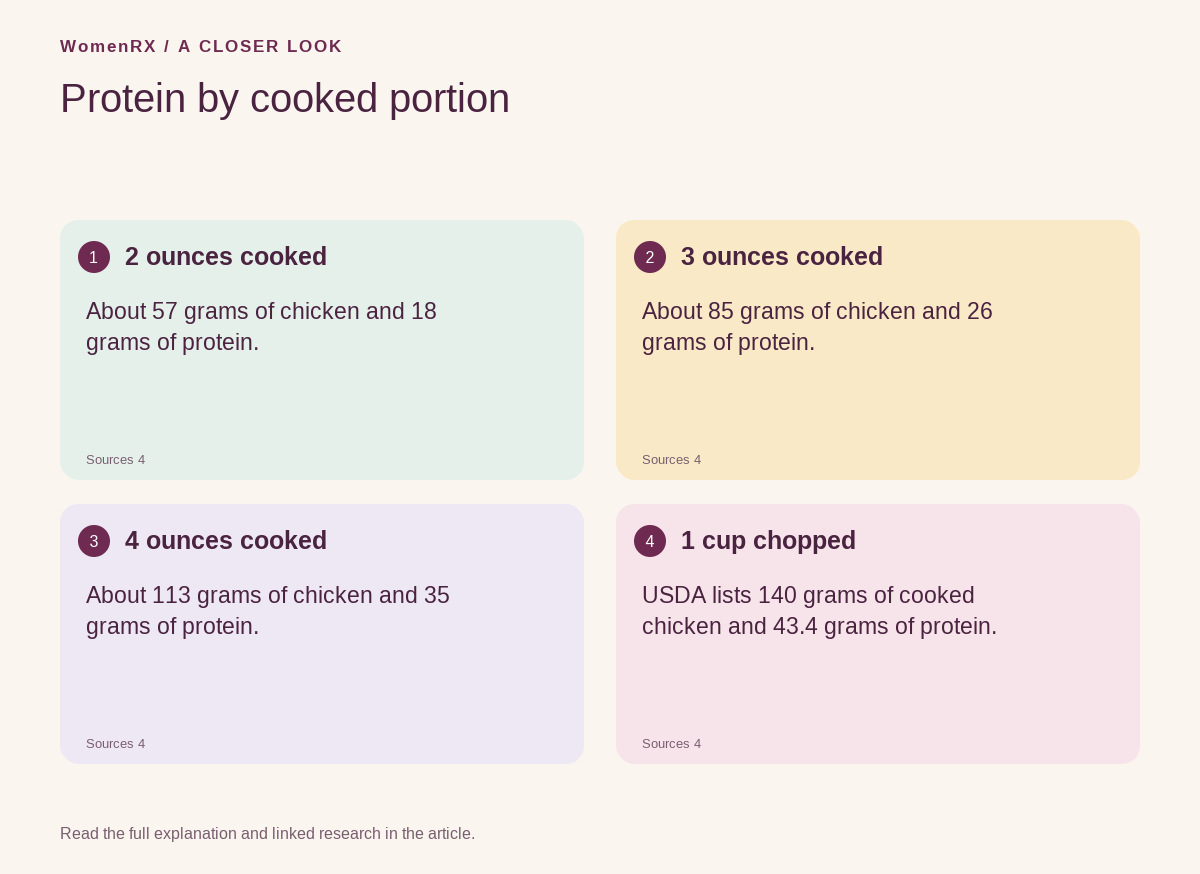
Protein by cooked portion
2 ounces cooked: About 57 grams of chicken and 18 grams of protein.4
3 ounces cooked: About 85 grams of chicken and 26 grams of protein.4
4 ounces cooked: About 113 grams of chicken and 35 grams of protein.4
1 cup chopped: USDA lists 140 grams of cooked chicken and 43.4 grams of protein.4
Read the figure as text
Compare portions of roasted chicken breast meat only, weighed after cooking. Three ounces of the chicken contributes about 26 grams of protein. 4 Plate idea: serve it with beans, vegetables, and a whole grain.Sources you can check
- Dietary Proteins: MedlinePlusAccessed 2026-09-25Return to first citation
- Dietary Supplements and Life Stages: Pregnancy - Health Professional Fact SheetAccessed 2026-09-25Return to first citation
- Does Protein Intake Affect Metabolic Risk Factors among Older Adults in Korea?Oh C, No J. · Journal of obesity & metabolic syndrome · 2017Return to first citation
- USDA SR Legacy: Chicken, broilers or fryers, breast, meat only, cooked, roasted (FDC 171477)Accessed 2026-09-25Return to first citation