How Chicken Breast Fits Into a Weight-Management Meal
Chicken breast can be one flexible protein choice, but the whole meal and cooking method matter more than the ingredient alone.
Chicken breast can be the protein in a varied meal, but general weight-management guidance doesn’t establish a special weight-loss effect for it. For a chicken-and-rice meal, put vegetables and rice on the plate, then slice the breast and, as one example, serve half of that piece. Save the rest for another meal, or serve a smaller amount if the plate already has beans. Half a breast is an illustration, not a universal serving or weight-loss target. Pair it with vegetables and a whole grain, and consider baking or grilling instead of frying. Meat isn’t required for adequate protein. 12
Think of chicken as one option, not the strategy
Chicken breast can make a convenient main dish, but general weight-management guidance doesn’t establish that eating it produces weight loss on its own. That guidance emphasizes a healthy eating pattern, rather than a single food, and includes a mix of produce, lean protein, and whole grains. 13
The cited weight-management guidance supports varied eating; it does not evaluate either a higher-protein eating pattern or chicken breast as a weight-loss intervention. 13 Protein is needed to build and maintain body tissues, and needs vary with age, sex, health, and physical activity. A portion or protein target that suits one woman may not suit another, including at a different adult age or activity level. 2
Choose a portion by building the whole meal
Here’s a flexible meal-planning example: for a chicken-and-rice dinner, put vegetables and brown rice on the plate first. Slice the breast, serve half of that piece, and save the rest for another meal. If the meal already includes beans, serve a smaller amount of chicken. Half a breast is an illustration, not a universal serving or weight-loss target. Revisit the amount when your activity level or the other protein foods you eat change, rather than treating the whole breast as a fixed portion.
For example, you might serve baked chicken with roasted vegetables and brown rice, or add grilled chicken to a meal with vegetables and a whole-grain side. The vegetables, whole grain, and protein illustrate the varied eating recommended in the guidance. 1
If you don’t eat meat, you can build the same kind of varied meal around plant protein instead. Chicken doesn’t have to be the only protein in a meal, either. 12
Use preparation to shape the meal
Baked, grilled, steamed, stewed, and broiled are practical choices to consider more often than fried chicken. MedlinePlus recommends these methods instead of frying to reduce calories and saturated fat. 1
Choose a method you like, then consider what else will go on the plate. You can use the same non-fried methods for a meal with or without chicken.
If chicken isn’t for you
You don’t need to eat meat to get dietary protein. MedlinePlus lists tofu, tempeh, edamame, nuts, seeds, beans, and lentils as plant-based protein choices. Dairy, nuts, and some grains and beans are also protein sources. 12
For example, try a bowl with vegetables, a whole grain, and beans or tofu. Or use edamame or lentils as the protein component in a meal you’d otherwise make with chicken. The useful comparison is not chicken versus a perfect substitute; it’s whether the meal works for your preferences and fits into a varied eating pattern.
A simple decision to take to the kitchen
If you enjoy chicken, choose a preparation you like from the non-fried options and add vegetables and another meal component that works for you. Let the size of the breast and the other foods on your plate guide how much you serve. If you don’t eat chicken, choose another protein source. Either way, there’s no reason to treat chicken breast as necessary for weight management, or to assume that more protein is automatically better for every woman.
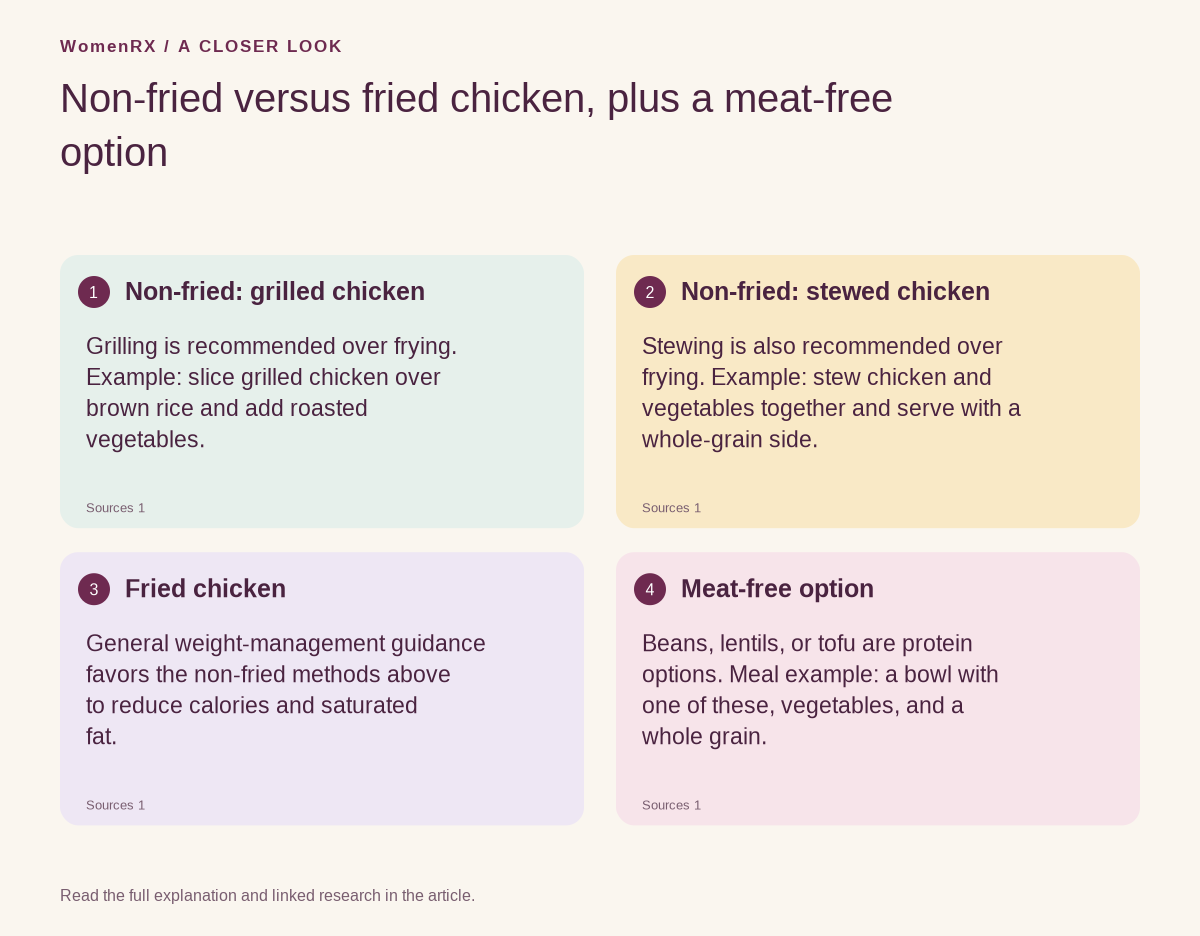
Non-fried versus fried chicken, plus a meat-free option
Non-fried: grilled chicken: Grilling is recommended over frying. Example: slice grilled chicken over brown rice and add roasted vegetables.1
Non-fried: stewed chicken: Stewing is also recommended over frying. Example: stew chicken and vegetables together and serve with a whole-grain side.1
Fried chicken: General weight-management guidance favors the non-fried methods above to reduce calories and saturated fat.1
Meat-free option: Beans, lentils, or tofu are protein options. Meal example: a bowl with one of these, vegetables, and a whole grain.1
Read the figure as text
Guidance recommends baking, grilling, steaming, stewing, or broiling instead of frying. The meal combinations are examples, not comparisons of those non-fried methods. 1- Non-fried: grilled chicken: Grilling is recommended over frying. Example: slice grilled chicken over brown rice and add roasted vegetables.1
- Non-fried: stewed chicken: Stewing is also recommended over frying. Example: stew chicken and vegetables together and serve with a whole-grain side.1
- Fried chicken: General weight-management guidance favors the non-fried methods above to reduce calories and saturated fat.1
- Meat-free option: Beans, lentils, or tofu are protein options. Meal example: a bowl with one of these, vegetables, and a whole grain.1
More questions, answered
Do I need to eat chicken to get enough protein?
No. Protein comes from animal and plant foods. Options include tofu, tempeh, edamame, nuts, seeds, beans, lentils, dairy, and some grains. Which choices work for you can depend on your diet and individual needs. 12
Is there one chicken portion that’s right for women?
No single portion fits everyone. For example, put vegetables and a whole grain on your plate, then slice the breast and serve half of that piece. Save the rest, or serve a smaller amount if the meal includes beans. Half a breast is an illustration, not a universal serving or weight-loss target. Adjust this approach as your activity or other protein foods change; protein needs vary with age, health, and activity. 2
Sources you can check
- MedlinePlus: Managing weight with healthy eatingAccessed 2026-09-25Return to first citation
- Dietary Proteins: MedlinePlusAccessed 2026-09-25Return to first citation
- Obesity: MedlinePlusAccessed 2026-09-25Return to first citation