How to Use Cauliflower in a Balanced Weight-Management Meal
Cauliflower can add vegetables to a meal or replace some grain, while weight management depends on the broader eating pattern.
Use cauliflower as a vegetable side, mix it with rice, or replace some or all of a grain depending on what you want from the meal. Cauliflower rice isn’t the same kind of food as rice or another whole grain, so if you replace the grain, keep the rest of the meal satisfying with a protein food and other foods you enjoy. A balanced eating pattern matters more than one ingredient.2
Cauliflower can be a useful part of a weight-management meal. Its practical value is that it gives you another vegetable option and lets you adjust a meal to your appetite and preferences. Healthy eating patterns make room for vegetables, whole grains, and protein foods rather than relying on one ingredient to do all the work.2
Choose the role that suits the meal
Serve it as a side when you want to keep rice, potatoes, or another grain in the meal. Roasted or steamed florets can add variety without making you give up a familiar starch. Pair them with the rest of your meal, such as beans, fish, poultry, or another protein food.2
Use it as a partial substitute when you like the texture of cauliflower rice but still want some grain. For example, mix cauliflower rice with cooked rice, or serve both together. That’s a flexible way to change the balance of the plate without treating cauliflower as a nutritional stand-in for every grain serving.
Replace the grain entirely if you prefer, but think about what else will make the meal satisfying. Add a protein food and, if you want one, another source of carbohydrate such as beans or whole grains. A varied eating pattern includes foods that supply different nutrients; cauliflower alone isn’t a complete meal.2
Why cauliflower rice and rice aren’t interchangeable
Cauliflower is a vegetable; rice and other grains are a different food group. Replacing one with the other changes the mix of foods in the meal, so a cauliflower-rice serving shouldn’t automatically be counted as equivalent to a grain serving. General healthy-eating guidance includes both vegetables and whole-grain products.2 This distinction follows food-group guidance; it isn’t a direct comparison of the nutrition or weight-management effects of particular servings of cauliflower rice and rice.
Vegetables can contribute dietary fiber. Fiber adds bulk to the diet and can help you feel full, though that general benefit doesn’t tell us exactly how filling a particular cauliflower dish will be.1 If cauliflower rice alone leaves you hungry, add back a grain, beans, or another satisfying part of the meal instead of assuming you need to eat less.
Preparation can change the meal
Florets, cauliflower rice, and mixed dishes are all reasonable options. The added ingredients matter too: in a study of traditional Sri Lankan recipes, cooking with coconut milk, coconut scraps, or coconut oil increased the fat content of prepared foods, including cauliflower milk curry.3 That study was about particular recipes, not every way of cooking cauliflower. The practical point is simply to consider the oil, sauces, and toppings alongside the vegetable when building your meal.
There’s no need to choose one preparation every time. Keep the grain when you want it, substitute part of it when that suits you, or serve cauliflower as an additional vegetable. The best option is one that fits your appetite and helps you put together a varied meal you’ll enjoy.2
These are general meal-building suggestions, not evidence that cauliflower has a special weight-management effect in women.
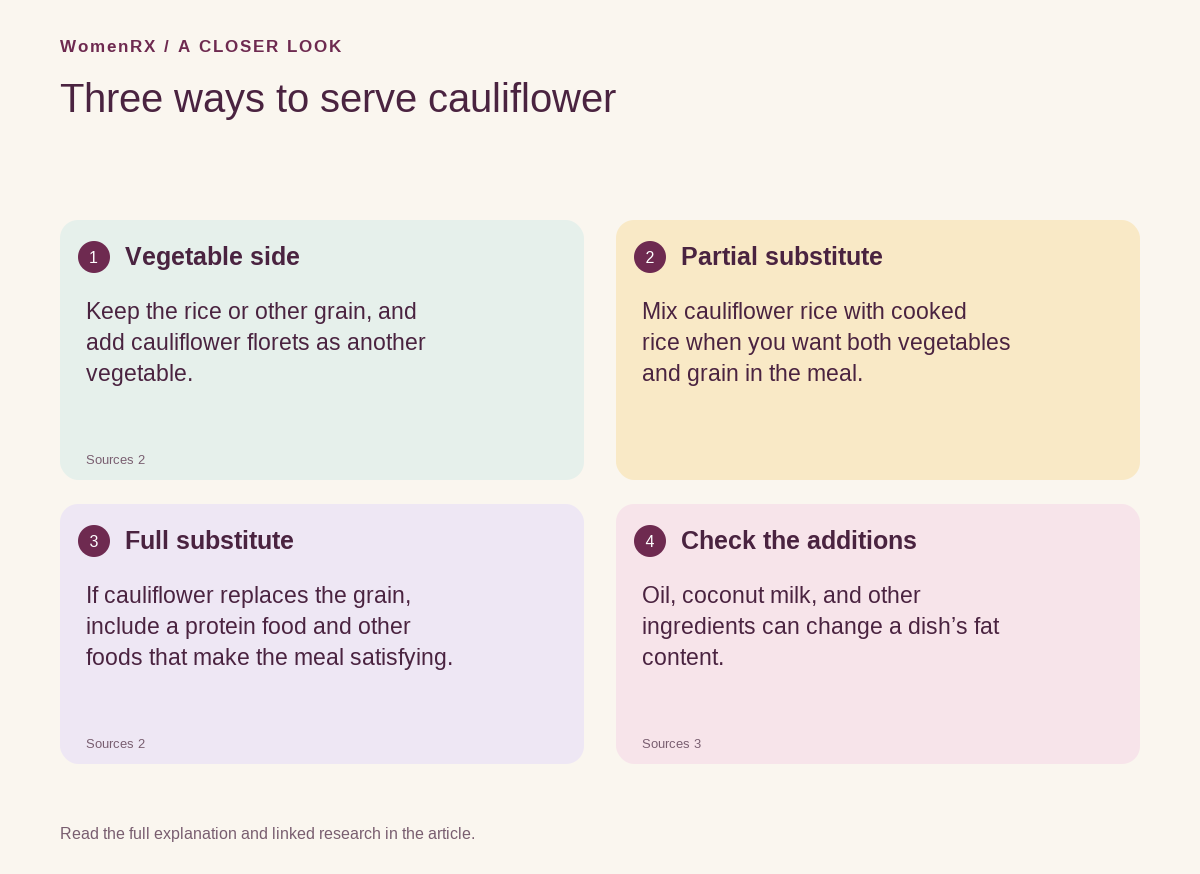
Three ways to serve cauliflower
Vegetable side: Keep the rice or other grain, and add cauliflower florets as another vegetable.2
Partial substitute: Mix cauliflower rice with cooked rice when you want both vegetables and grain in the meal.
Full substitute: If cauliflower replaces the grain, include a protein food and other foods that make the meal satisfying.2
Check the additions: Oil, coconut milk, and other ingredients can change a dish’s fat content.3
Read the figure as text
Choose cauliflower as a side, a partial grain substitute, or a replacement, then consider what else makes the meal work for you.- Vegetable side: Keep the rice or other grain, and add cauliflower florets as another vegetable.2
- Partial substitute: Mix cauliflower rice with cooked rice when you want both vegetables and grain in the meal.
- Full substitute: If cauliflower replaces the grain, include a protein food and other foods that make the meal satisfying.2
- Check the additions: Oil, coconut milk, and other ingredients can change a dish’s fat content.3
Sources you can check
- Dietary Fiber: MedlinePlusAccessed 2026-09-25Return to first citation
- Nutrition: MedlinePlusAccessed 2026-09-25Return to first citation
- Effect of Common Culinary Methods Practiced in Sri Lanka on the Nutrient Composition of Commonly Consumed Vegetables and Other Foods.Dewangani HGN, Jayawardena BM, Chandrasekara NV, Wijayagunaratne HDSP. · International journal of food science · 2021Return to first citation