Do Chickpeas Count as a High-Protein Food?
A half-cup of cooked chickpeas brings protein and a substantial amount of fiber to a meal, but it isn’t a concentrated protein serving.
Chickpeas count as a protein-containing food: a half-cup of boiled chickpeas has about 7.3 grams of protein and 6.2 grams of fiber. That makes them useful for building a meal, especially when you want both nutrients, but “high-protein” can overstate what that serving provides. If legumes leave you bloated, start with a smaller amount and increase gradually.41
What a half-cup actually brings to the plate
A half-cup of boiled chickpeas without salt, about 82 grams, provides an estimated 7.3 grams of protein and 6.2 grams of fiber. It also contains about 22.5 grams of carbohydrate. Those numbers describe cooked chickpeas, not the same volume of dry chickpeas or chickpea flour.4
So, are they high-protein? It depends on what you mean. Chickpeas contribute meaningful protein, but a half-cup is better understood as a combination of protein, fiber, and carbohydrate than as a concentrated protein portion. That distinction helps when you’re deciding what else a meal needs. A bowl of chickpeas and vegetables, for example, could include yogurt on the side if you want another protein source. A chickpea-and-grain bowl uses chickpeas as one part of a varied plant-based meal. These are meal ideas, not required pairings.42
What a bigger chickpea portion changes
Chickpeas belong to the pulse family, alongside dry beans, peas, and lentils. As a group, pulses offer both protein and fiber. That makes them useful in a different way from meat or dairy, which provide protein but not the dietary fiber found in plants.312
For a practical yardstick, a full cup of boiled chickpeas, about 164 grams, provides an estimated 14.5 grams of protein and 12.5 grams of fiber, along with about 45 grams of carbohydrate. Doubling the chickpea portion increases both protein and fiber, but it also means eating a larger portion of food. It doesn’t turn chickpeas into a concentrated protein food or tell you that they match a serving of lentils, meat, or dairy gram for gram.4
There’s also a difference in protein makeup. Animal proteins supply all the amino acids the body can’t make; most plant proteins do not supply them in the same balance. You can get the amino acids you need by eating a variety of plant protein foods across the day. You don’t have to make every chickpea dish imitate an animal-protein serving to make it worthwhile.2
Fiber is part of the reason to choose them
If you’re choosing chickpeas for a filling lunch, their fiber matters alongside their protein. Fiber can add bulk to a meal and help you feel full sooner. Research on pulses has found some short-term satiety effects, but results depend partly on what the pulse meal is compared with. Trials reviewed in 2010 generally found weight-loss benefits when pulses were included alongside energy restriction, not a reliable weight-loss effect from adding pulses alone. That’s a reason to enjoy chickpeas as food, rather than expect them to control appetite or weight by themselves.13
You can use that protein-and-fiber combination in ordinary ways: add chickpeas to a salad, make them part of a grain bowl, or blend them into a dip for vegetables. The useful question is what the whole meal provides, not whether chickpeas earn a protein label on their own.42
If chickpeas make you feel gassy
A generous helping of chickpeas may be uncomfortable if you’re not used to much fiber. Increasing fiber too quickly can cause gas, bloating, and cramps. Try a smaller amount in a meal and build up gradually as you find what feels comfortable. You can still get protein and fiber from other foods while you work out whether chickpeas suit you.12
Chickpeas’ basic nutritional value isn’t a women-only benefit. Protein needs vary with factors including age, health, and activity, so the right role for chickpeas may differ from one woman to another. The half-cup nutrition estimate doesn’t establish a special effect during pregnancy, postpartum, perimenopause, or postmenopause.24
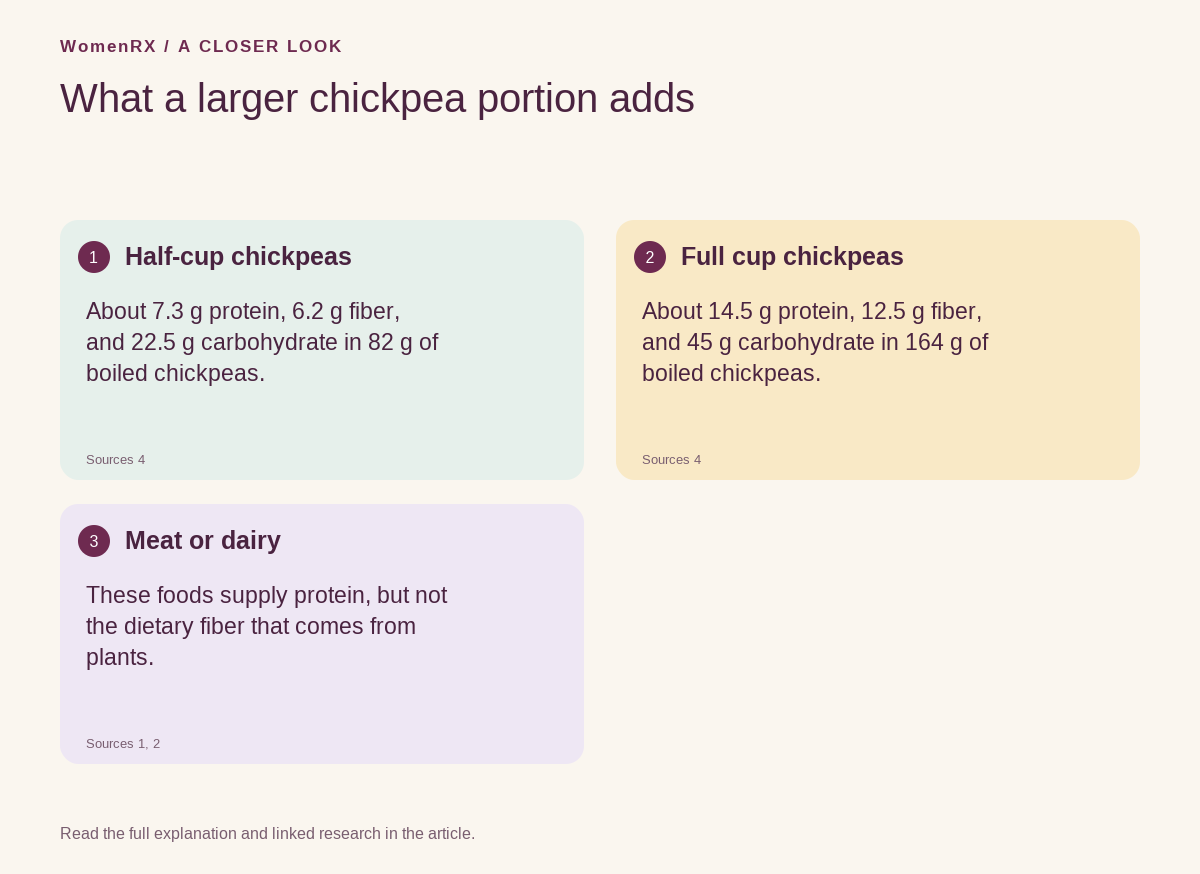
What a larger chickpea portion adds
Half-cup chickpeas: About 7.3 g protein, 6.2 g fiber, and 22.5 g carbohydrate in 82 g of boiled chickpeas.4
Full cup chickpeas: About 14.5 g protein, 12.5 g fiber, and 45 g carbohydrate in 164 g of boiled chickpeas.4
Meat or dairy: These foods supply protein, but not the dietary fiber that comes from plants.12
Read the figure as text
Compare two cooked chickpea portions, then see why their fiber makes them different from animal-source protein foods.- Half-cup chickpeas: About 7.3 g protein, 6.2 g fiber, and 22.5 g carbohydrate in 82 g of boiled chickpeas.4
- Full cup chickpeas: About 14.5 g protein, 12.5 g fiber, and 45 g carbohydrate in 164 g of boiled chickpeas.4
- Meat or dairy: These foods supply protein, but not the dietary fiber that comes from plants.12
Sources you can check
- Dietary Fiber: MedlinePlusAccessed 2026-09-25Return to first citation
- Dietary Proteins: MedlinePlusAccessed 2026-09-25Return to first citation
- Pulse consumption, satiety, and weight management.McCrory MA, Hamaker BR, Lovejoy JC, Eichelsdoerfer PE. · Advances in nutrition (Bethesda, Md.) · 2010Return to first citation
- USDA SR Legacy: Chickpeas (garbanzo beans, bengal gram), mature seeds, cooked, boiled, without salt (FDC 173757)Accessed 2026-09-25Return to first citation