30 High-Protein Breakfast Ideas for Different Mornings
Choose from no-cook bowls, overnight oats, and savory plates, with measured portions and an estimated protein total for each.
For a no-cook option, try a strawberry-cocoa yogurt bowl, estimated at 19 g of protein. If you can prepare food ahead, strawberry overnight oats offer about 23 g; a chicken-and-black-bean bowl offers about 31 g when its ingredients are already cooked. The 30 measured ideas below include plant-only adaptations. There’s also a pantry option if you don’t have cooking or refrigeration access. 564
Pick a breakfast that fits the morning
Protein can come from dairy and eggs or from foods such as beans, lentils, soy, nuts, and grains. You don’t need animal foods to get the protein you need, and essential amino acids don’t have to appear at every meal; their balance over the whole day matters. 2
Choose by what your morning allows. The yogurt and cottage cheese bowls need no cooking, but they do need refrigerated dairy. The oat jars need a refrigerator overnight. The savory plates come together from ingredients cooked and safely stored ahead. For another no-cook option, try the bread-and-peanut-butter combination after the numbered ideas, following the storage directions on the products you use.
Each combination below makes one serving. Ingredient amounts are edible weights, and every protein figure is an estimate for the complete combination listed. Eggs are already hard-boiled; chicken is already roasted; quinoa, beans, and lentils are already cooked. That makes the savory options assembly meals, not promises that you can cook everything from scratch in a few minutes.
No-cook yogurt bowls
Spoon plain nonfat Greek yogurt into a bowl, then add the measured toppings. Slice or chop fruit as needed. Each bowl uses 170 g yogurt. 5
- Strawberry cocoa: 170 g yogurt + 100 g strawberries + 5 g unsweetened cocoa powder. About 19 g protein.
- Banana peanut butter: 170 g yogurt + 63 g banana + 16 g peanut butter. Slice the banana and add the peanut butter. About 22 g.
- Blueberry walnut: 170 g yogurt + 74 g blueberries + 14 g walnuts. About 20 g.
- Apple walnut: 170 g yogurt + 91 g apple + 14 g walnuts. Chop the apple. About 20 g.
- Banana cocoa: 170 g yogurt + 63 g banana + 5 g unsweetened cocoa powder. About 19 g. 5
Overnight oat and yogurt jars
For each jar, stir 40 g dry oats, 170 g plain nonfat Greek yogurt, and 80 g potable water together in a clean covered container. Refrigerate overnight; add the measured toppings when you’re ready to eat. Use rolled oats intended for this preparation. 5
- Strawberry oats: Add 100 g strawberries. About 23 g protein.
- Blueberry oats: Add 74 g blueberries. About 23 g.
- Banana peanut oats: Add 63 g banana and 8 g peanut butter. About 25 g.
- Apple walnut oats: Add 91 g apple and 10 g walnuts. About 24 g.
- Cocoa banana oats: Add 5 g unsweetened cocoa powder and 63 g banana. About 24 g. 5
Egg and quinoa plates from prepared ingredients
Start each plate with 100 g peeled, hard-boiled egg and 100 g cooked quinoa. Wash and chop the produce; add the other ingredients listed. You can assemble these cold from safely stored cooked foods. The chicken variation calls for already roasted chicken, not raw poultry. 5
- Tomato cucumber: Add 100 g tomato and 75 g cucumber. About 18 g protein.
- Black bean tomato: Add 60 g cooked black beans and 100 g tomato. About 23 g.
- Lentil cucumber: Add 60 g cooked lentils and 75 g cucumber. About 23 g.
- Apple walnut side: Add 91 g apple and 10 g walnuts alongside the eggs and quinoa. About 19 g.
- Chicken tomato: Add 40 g cooked, roasted chicken breast and 100 g tomato. About 30 g. 5
No-cook cottage cheese bowls
Use 170 g low-fat, 1% milkfat cottage cheese as the base for each bowl. Wash and cut the produce; chop nuts if you prefer. The bread in option 19 is served alongside. 6
- Strawberry walnut: Add 100 g strawberries and 14 g walnuts. About 24 g protein.
- Blueberry banana: Add 74 g blueberries and 63 g banana. About 22 g.
- Apple peanut butter: Add 91 g apple and 8 g peanut butter. About 23 g.
- Cucumber tomato bread: Add 75 g cucumber and 100 g tomato; serve with 28 g whole-wheat bread. About 26 g.
- Banana cocoa cottage cheese: Add 63 g banana and 5 g unsweetened cocoa powder. About 23 g. 6
Savory chicken bowls, ready to assemble
Each bowl starts with 60 g already roasted chicken breast and 100 g cooked quinoa. Slice the chicken, wash and chop the produce, and use already cooked beans or lentils where listed. Serve cold from safely stored ingredients. 6
- Chicken cucumber tomato: Add 75 g cucumber and 100 g tomato. About 24 g protein.
- Chicken black beans: Add 80 g cooked black beans and 100 g tomato. About 31 g.
- Chicken lentils: Add 80 g cooked lentils and 75 g cucumber. About 31 g.
- Chicken egg bowl: Add 50 g hard-boiled egg and 100 g tomato. About 30 g.
- Chicken apple walnut: Add 91 g apple and 10 g walnuts. About 25 g. 6
Lentil plates for a larger savory breakfast
Use 150 g cooked lentils and 50 g peeled, hard-boiled egg for each plate. Arrange the measured additions alongside them. These work when the lentils and egg are ready before breakfast; use already cooked chicken and beans where included. 6
- Lentil tomato bread: Add 100 g tomato and 28 g whole-wheat bread. About 24 g protein.
- Lentil cucumber quinoa: Add 75 g cucumber and 75 g cooked quinoa. About 24 g.
- Lentil black bean tomato: Add 75 g cooked black beans and 100 g tomato. About 27 g.
- Lentil chicken cucumber: Add 40 g cooked, roasted chicken breast and 75 g cucumber. About 33 g.
- Lentil walnut tomato: Add 14 g walnuts and 100 g tomato. About 23 g. 6
For a plant-only plate, leave the egg out of option 27 or 28. Keep the other measured ingredients the same: 150 g cooked lentils + 75 g cucumber + 75 g cooked quinoa provides about 17 g protein; 150 g cooked lentils + 75 g cooked black beans + 100 g tomato provides about 21 g. Those are new estimates for the egg-free plates, not the protein totals shown for options 27 and 28 above. 6
Without cooking: Spread 48 g peanut butter over 56 g whole-wheat bread and eat it with 118 g banana. That complete serving provides about 19 g protein, calculated from the same food-composition values as the numbered ideas. It needs no cooked ingredients or refrigerated dairy. Check the storage directions on the foods you buy, and use their labels to adjust the estimate if their protein amounts differ. 456
Use the estimates without turning them into a rule
The figures come from historical USDA food-composition values: for each ingredient, its protein per 100 g was multiplied by the edible weight listed here; the results were added and then rounded to whole grams. For example, the strawberry-cocoa bowl adds the calculated protein from 170 g yogurt, 100 g strawberries, and 5 g cocoa. The plant-only estimates use the same method with the egg removed. Water in the oat jars adds no protein. A different brand or portion will change the total, so use the package label when it’s more relevant to what you actually buy. 56
You can also choose a smaller start without changing the published estimates: for example, make the measured yogurt bowl, eat the amount that appeals now, and save the rest safely for later. The listed protein total describes the whole serving, not the portion you ate first. Smaller meals and foods such as yogurt or smoothies are suggested options when appetite is low during GLP-1 treatment, though research hasn’t established one best dietary approach alongside those medications. 31
The listed protein amounts describe complete servings, not personal targets. Protein supports growth during pregnancy. 2 Breastfeeding generally increases calorie needs; CDC notes that the amount also depends on age, activity and feeding pattern. 11 In older adulthood, some people need more protein even while needing fewer calories. 10 Keep those daily needs in view when deciding how a breakfast fits the rest of your meals.
If you’re preparing the cooked ingredients ahead, refrigerate leftovers within two hours of cooking and keep cold perishable foods cold when taking breakfast with you. During pregnancy, choose dairy made with pasteurized milk and eggs cooked until the whites and yolks are firm. 897
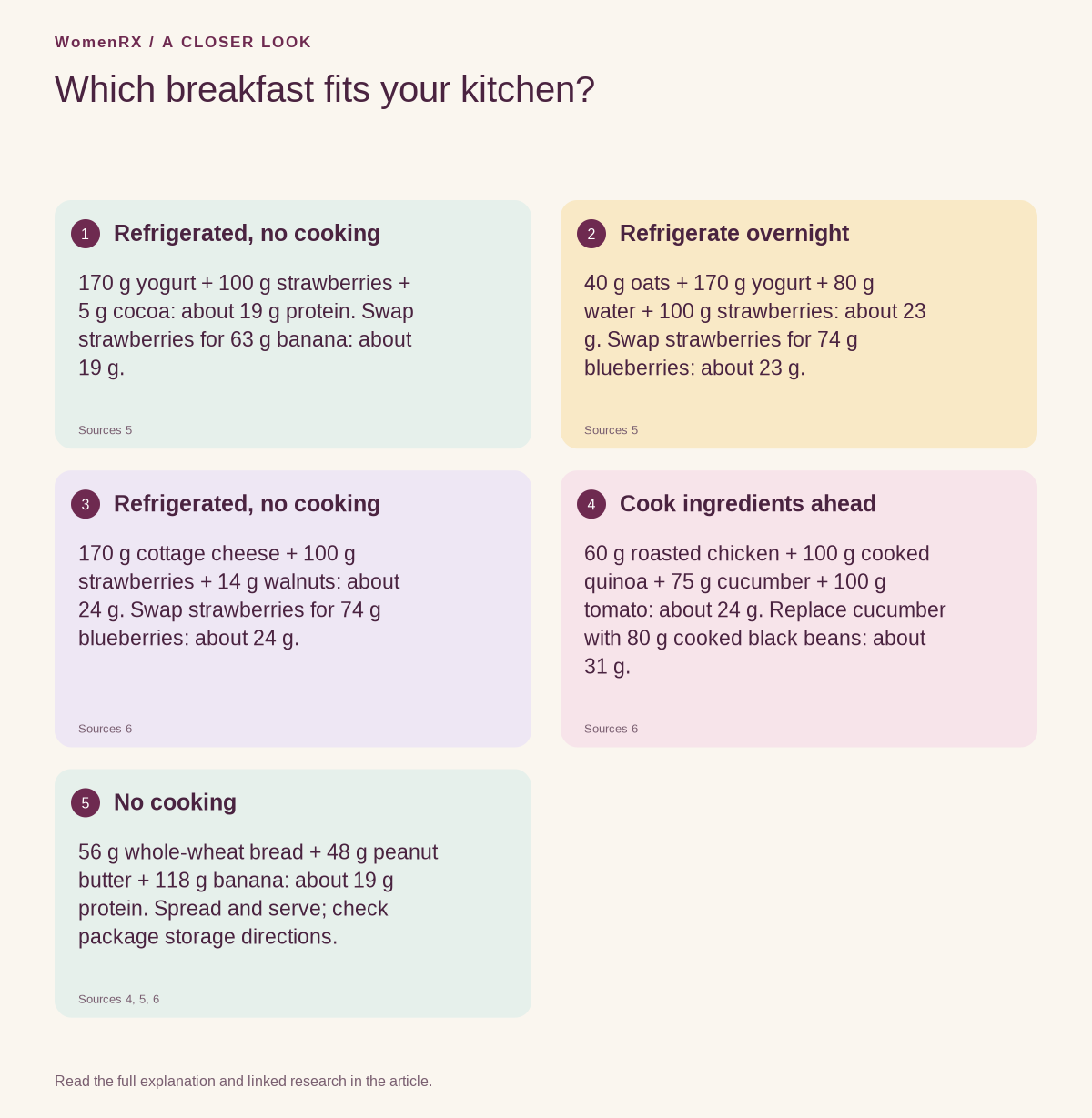
Which breakfast fits your kitchen?
Refrigerated, no cooking: 170 g yogurt + 100 g strawberries + 5 g cocoa: about 19 g protein. Swap strawberries for 63 g banana: about 19 g.5
Refrigerate overnight: 40 g oats + 170 g yogurt + 80 g water + 100 g strawberries: about 23 g. Swap strawberries for 74 g blueberries: about 23 g.5
Refrigerated, no cooking: 170 g cottage cheese + 100 g strawberries + 14 g walnuts: about 24 g. Swap strawberries for 74 g blueberries: about 24 g.6
Cook ingredients ahead: 60 g roasted chicken + 100 g cooked quinoa + 75 g cucumber + 100 g tomato: about 24 g. Replace cucumber with 80 g cooked black beans: about 31 g.6
No cooking: 56 g whole-wheat bread + 48 g peanut butter + 118 g banana: about 19 g protein. Spread and serve; check package storage directions.456
Read the figure as text
Compare complete servings by what you need to prepare or store before eating. The article gives the measured ingredients for every option.- Refrigerated, no cooking: 170 g yogurt + 100 g strawberries + 5 g cocoa: about 19 g protein. Swap strawberries for 63 g banana: about 19 g.5
- Refrigerate overnight: 40 g oats + 170 g yogurt + 80 g water + 100 g strawberries: about 23 g. Swap strawberries for 74 g blueberries: about 23 g.5
- Refrigerated, no cooking: 170 g cottage cheese + 100 g strawberries + 14 g walnuts: about 24 g. Swap strawberries for 74 g blueberries: about 24 g.6
- Cook ingredients ahead: 60 g roasted chicken + 100 g cooked quinoa + 75 g cucumber + 100 g tomato: about 24 g. Replace cucumber with 80 g cooked black beans: about 31 g.6
- No cooking: 56 g whole-wheat bread + 48 g peanut butter + 118 g banana: about 19 g protein. Spread and serve; check package storage directions.456
Sources you can check
- Dietary Strategies and Nutritional Management in Patients Receiving GLP-1 and Dual GIP/GLP-1 Receptor Agonists as Adjuncts to Lifestyle Interventions: A Systematic Review of Randomised Clinical Trials.de Paulo RS, Bonifácio DB, de Carvalho MHL, Bressan J. · Diabetes, obesity & metabolism · 2026Return to first citation
- MedlinePlus: Protein in diet, including tofu and other plant sourcesAccessed 2026-09-25Return to first citation
- Nutritional priorities to support GLP-1 therapy for obesity: four-society joint advisory2025Return to first citation
- USDA SR Legacy reference composition: bananaAccessed 2026-09-25Return to first citation
- USDA SRLegacy ingredient calculations for 30 breakfast assemblies, part 1Accessed 2026-09-26Return to first citation
- USDA SRLegacy ingredient calculations for 30 breakfast assemblies, part 2Accessed 2026-09-26Return to first citation
- Dairy and Eggs (Food Safety for Moms-to-Be) | FDAAccessed 2026-09-25Return to first citation
- Leftovers and Food Safety | Food Safety and Inspection ServiceAccessed 2026-09-25Return to first citation
- Keeping "Bag" Lunches Safe | Food Safety and Inspection ServiceAccessed 2026-09-25Return to first citation
- Nutrition for Older Adults: MedlinePlusAccessed 2026-09-25Return to first citation
- Maternal Diet and Breastfeeding | Breastfeeding special circumstances | CDCAccessed 2026-09-25Return to first citation