How to Use Greek Yogurt Beyond Breakfast
Greek yogurt works in sauces, wraps, savory bowls, and sweet snacks, but the product and portion you choose determine the nutrition.
Use plain Greek yogurt as a lemon-herb sauce, a binder for a chickpea wrap, a cool topping for a savory bowl, or the base of a fruit-and-walnut snack. Before estimating protein or other nutrients, compare the serving size and Nutrition Facts on the product you’ll use. The measured blueberry-walnut bowl below is one example, not a number to apply to every yogurt. 1
Make one sweet bowl with a measured estimate
Spoon 170 g plain nonfat Greek yogurt into a bowl. Add 74 g rinsed raw blueberries and 14 g chopped edible English walnuts. That makes one serving. You can eat it as a snack, dessert, or part of a meal; it isn’t a daily nutrition target or a weight-loss formula.
| Estimated nutrition for one bowl | Amount |
|---|---|
| Calories | 234 |
| Protein | 20 g |
| Carbohydrate | 18.8 g |
| Fat | 10 g |
| Fiber | 2.7 g |
These rounded figures come from adding USDA reference values for the three ingredients at the weights shown. They’re calculations, not a laboratory measurement of a finished bowl. Honey, granola, a larger handful of walnuts, or a different yogurt would change the total. 1
The yogurt accounts for about 17.3 g of the bowl’s estimated 20 g protein. The walnuts account for about 9.1 g of its 10 g fat. The blueberries contribute about 10.7 g of its 18.8 g carbohydrate. That’s why changing the yogurt or the size of a topping can shift the nutrition in different ways. These are estimates for the specified ingredients, not values to copy onto another brand’s tub. 1
Choose the yogurt for the job
Plain yogurt gives you room to season a savory dish or sweeten a snack yourself. Flavored yogurt may already have the taste you want for a fruit bowl or dip. A plant-based yogurt can fill the same recipe role if you like its texture, but its nutrition needs to come from its own label, not a dairy-yogurt estimate. And “plain” and “strained” aren’t opposites: the yogurt in the measured bowl above is both.
If you’re comparing products, start with serving size and protein, then check total carbohydrate, added sugars, fat, and calcium. Compare equal amounts when you can. Look at the ingredient list, too, particularly when choosing between a plain product you’ll flavor yourself and one that’s already flavored. The word “Greek” alone can’t tell you the numbers for the portion you’ll eat.
Put plain yogurt to work at lunch or dinner
The sauce below has measured ingredients and a two-portion yield. None of the savory options has a calculated nutrition total. Amounts in the other ideas are starting points for flavor and texture.
Make a lemon-herb sauce (2 portions). Stir 170 g plain Greek yogurt with 1 tablespoon lemon juice, 1 tablespoon chopped dill or parsley, and 1 small minced garlic clove. For a thinner dressing, stir in 1 tablespoon water, adding another tablespoon if needed. Divide the sauce into 2 portions and spoon it over roasted vegetables, a grain bowl, or chicken.
Build a chickpea wrap. Mash chickpeas with enough plain yogurt to bind them, then add lemon, spices, and crunchy vegetables. Here the yogurt helps hold the filling together; the chickpeas, vegetables, and wrap are part of the meal’s nutrition too.
Finish a warm savory bowl. Add a spoonful of plain yogurt to lentils, roasted sweet potatoes, or a tomato-based dish just before eating. It gives you a cool, tangy contrast without turning the whole dish into a yogurt sauce.
Make a cocoa dip. Mix plain yogurt with cocoa and a little sweetener to taste, then serve it with fruit. A vanilla-flavored yogurt is another option, but compare labels rather than assuming the two versions have the same carbohydrates or protein.
For any of these, count the amount that reaches your plate. If a label lists nutrients for one serving and you use half that serving in a sauce, start with half the listed amounts for the yogurt. Count the other ingredients separately, then divide by the number of portions you actually eat.
If you’re pregnant, check that the specific dairy yogurt you buy is made with pasteurized milk; don’t assume based on the style of yogurt or the recipe. The FDA advises checking dairy-product labels for pasteurization during pregnancy. 2
What goes into this yogurt bowl
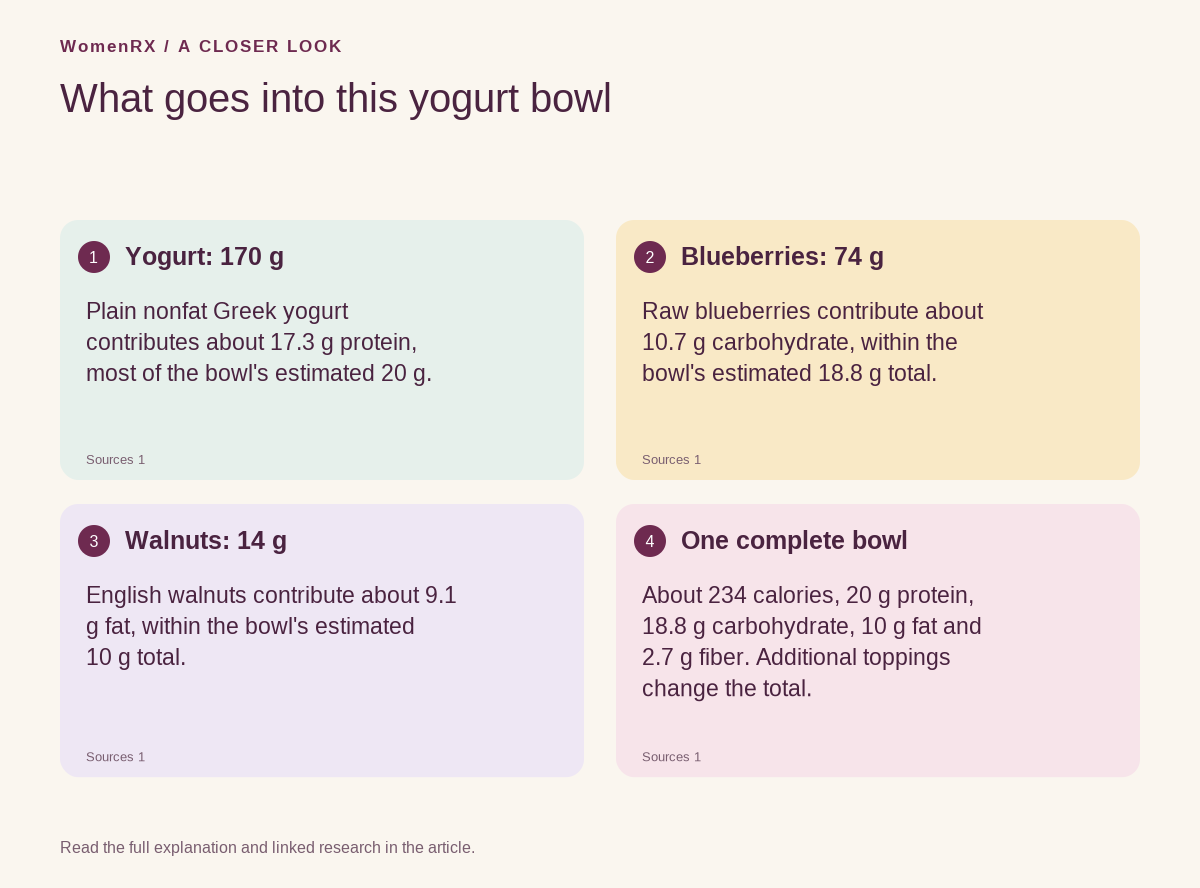
Yogurt: 170 g: Plain nonfat Greek yogurt contributes about 17.3 g protein, most of the bowl's estimated 20 g.1
Blueberries: 74 g: Raw blueberries contribute about 10.7 g carbohydrate, within the bowl's estimated 18.8 g total.1
Walnuts: 14 g: English walnuts contribute about 9.1 g fat, within the bowl's estimated 10 g total.1
One complete bowl: About 234 calories, 20 g protein, 18.8 g carbohydrate, 10 g fat and 2.7 g fiber. Additional toppings change the total.1
Read the figure as text
The measured ingredients contribute different parts of the total.- Yogurt: 170 g: Plain nonfat Greek yogurt contributes about 17.3 g protein, most of the bowl's estimated 20 g.1
- Blueberries: 74 g: Raw blueberries contribute about 10.7 g carbohydrate, within the bowl's estimated 18.8 g total.1
- Walnuts: 14 g: English walnuts contribute about 9.1 g fat, within the bowl's estimated 10 g total.1
- One complete bowl: About 234 calories, 20 g protein, 18.8 g carbohydrate, 10 g fat and 2.7 g fiber. Additional toppings change the total.1
More questions, answered
Can I use plant-based yogurt in the measured bowl?
Yes, if you like its flavor and texture. The bowl’s nutrition table won’t describe that version: use the plant-based product’s label, your measured amount, and the blueberries and walnuts you actually add to make a new estimate. 1