Practical Ways to Add Protein to Breakfast
A skyr bowl, overnight oats, and an egg plate offer different mixes of protein, fiber, and morning prep.
For a breakfast you can assemble in the morning, try plain skyr with banana and peanut butter. Skyr oats can be mixed the night before, while an egg and quinoa plate works when both are already cooked. The skyr figures below come from a specific product label; the other ingredient figures are estimates you can replace with values for the foods you use.59
Three breakfasts, with the portions spelled out
You don’t need to make breakfast complicated to add protein. Pick a combination that fits the time you have, then look at fiber as well as protein. Fruit and whole grains can contribute fiber; dairy and eggs are protein sources.138
Both skyr meals use the serving and nutrition figures on the product page for siggi’s plain nonfat skyr. The other ingredient values are estimates from USDA food-composition entries, scaled to the portions shown. Prep times are approximate, and cooking the eggs and quinoa ahead isn’t included.59
| Breakfast and dietary pattern | Ingredients for one serving | Estimated calories | Protein | Carbohydrate | Fat | Fiber | Estimated prep |
|---|---|---|---|---|---|---|---|
| Banana and peanut butter skyr, dairy-based vegetarian | One 150 g cup siggi’s plain nonfat skyr; 63 g peeled banana; 8 g smooth unsalted peanut butter | 194 | 18.5 g | 22.1 g | 4.3 g | 2.0 g | About 2-4 minutes in the morning to stir and slice |
| Blueberry skyr oats, dairy-based vegetarian | 40 g dry regular rolled oats; one 150 g cup siggi’s plain nonfat skyr; 80 g water; 74 g blueberries | 284 | 21.8 g | 43.8 g | 2.9 g | 5.8 g | About 3-5 minutes to mix the night before, plus 1-2 minutes to add berries in the morning |
| Egg, quinoa, and banana, egg-based vegetarian | 100 g edible hard-boiled egg; 92.5 g cooked quinoa; 63 g peeled banana | 322 | 17.4 g | 35.2 g | 12.6 g | 4.2 g | About 2-4 minutes to plate and slice if the egg and quinoa are already cooked |
All nutrition figures are per serving and approximate. The egg weight is the edible cooked egg, not the weight with shells. The oat weight is dry; the quinoa weight is cooked. The oats’ water adds no macros. No oil, sweetener, or extra toppings are included in the totals.59
For the first bowl, stir the measured peanut butter into the skyr, then add sliced banana. For the oats, mix the oats, skyr, and water in a clean covered jar and refrigerate overnight; stir and add washed blueberries in the morning. Use regular rolled oats for this version, not steel-cut oats. For the egg plate, serve the already hard-boiled egg with cooked quinoa and sliced banana.9
The oats have the most calculated protein and fiber of these three servings, but they require a step the night before. The egg plate has less calculated protein than either skyr option, and its quick morning depends on having cooked foods ready. Cooking eggs or quinoa from scratch adds time that isn’t included in the estimate.59
What the label does, and doesn’t, cover
The specified skyr label lists 16 g protein, 6 g carbohydrate, 0 g fat, and 0 g fiber per 150 g cup.5 The banana, peanut butter, oats, blueberries, eggs, and quinoa in the comparison are calculated from food-composition data, not current labels for products in your kitchen.9 In particular, an oat or peanut butter package may differ from the reference values. Use its Nutrition Facts label and your measured portion when you want to compare what you actually bought.
For a plant-based version of the egg plate, replace the 100 g hard-boiled egg with 100 g tofu, prepared according to its package directions. Keep the cooked quinoa and banana portions the same. Tofu is a protein source, but the egg plate’s totals won’t apply: use your tofu label and include any cooking oil when you recalculate. Preparation may take longer, too.89 A healthy eating pattern also needs to work with your energy needs, preferences, culture, and budget, not just one number on a breakfast chart.2
Calculate the breakfast you actually made
For a packaged food, begin with the serving size on its Nutrition Facts label. Note how much you use, then scale the listed calories, protein, carbohydrate, fat, and fiber to your portion. Add each ingredient’s amounts to get the meal total. For example, if you use twice a yogurt label’s serving, count twice its listed amounts before adding the fruit and other ingredients. Use your own oat and peanut butter labels in place of the reference estimates if you want a total for the packages in your kitchen.
For an unpackaged food, food-composition data can provide an estimate. The 63 g banana portions in the table are calculated from USDA values per 100 g; 63 ÷ 100 = 0.63, so each listed nutrient is multiplied by 0.63. The same method scales the cooked-quinoa values to 92.5 g for the egg plate.679
Keep fiber visible as its own line when you compare meals. Fiber is a type of carbohydrate, so don’t add its grams to the listed total carbohydrate a second time.3 Changing skyr, adding oats, or choosing a different peanut butter? Replace or add that ingredient’s figures rather than carrying over an example total. A topping left out of the calculation means the result is no longer the whole meal’s macros.
Protein at breakfast isn’t a weight-loss promise
Protein needs vary with age, health, and activity, and most Americans already get enough protein overall.1 You may choose a more protein-rich breakfast because it suits the meal you want. That’s different from assuming every woman needs a high-protein breakfast.
A 12-week randomized trial in 57 adolescents with overweight or obesity who usually skipped breakfast found differences between a higher-protein breakfast and continuing to skip breakfast. It found no detected differences between the higher-protein and normal-protein breakfast groups on the reported outcomes. That study doesn’t establish a breakfast target or show that adding protein to breakfast causes weight loss in adult women.4
If you’re pregnant, protein matters alongside the rest of your nutrition, and the dairy and egg choices call for food-safety care: choose dairy made with pasteurized milk and cook eggs until the yolks and whites are firm.810 If you’re breastfeeding, energy and several nutrient needs can change, so a breakfast protein figure isn’t a stand-in for what you eat across the day.11 The useful starting point here is a meal that fits your day, not a universal protein target.12
Breakfast macros and morning work
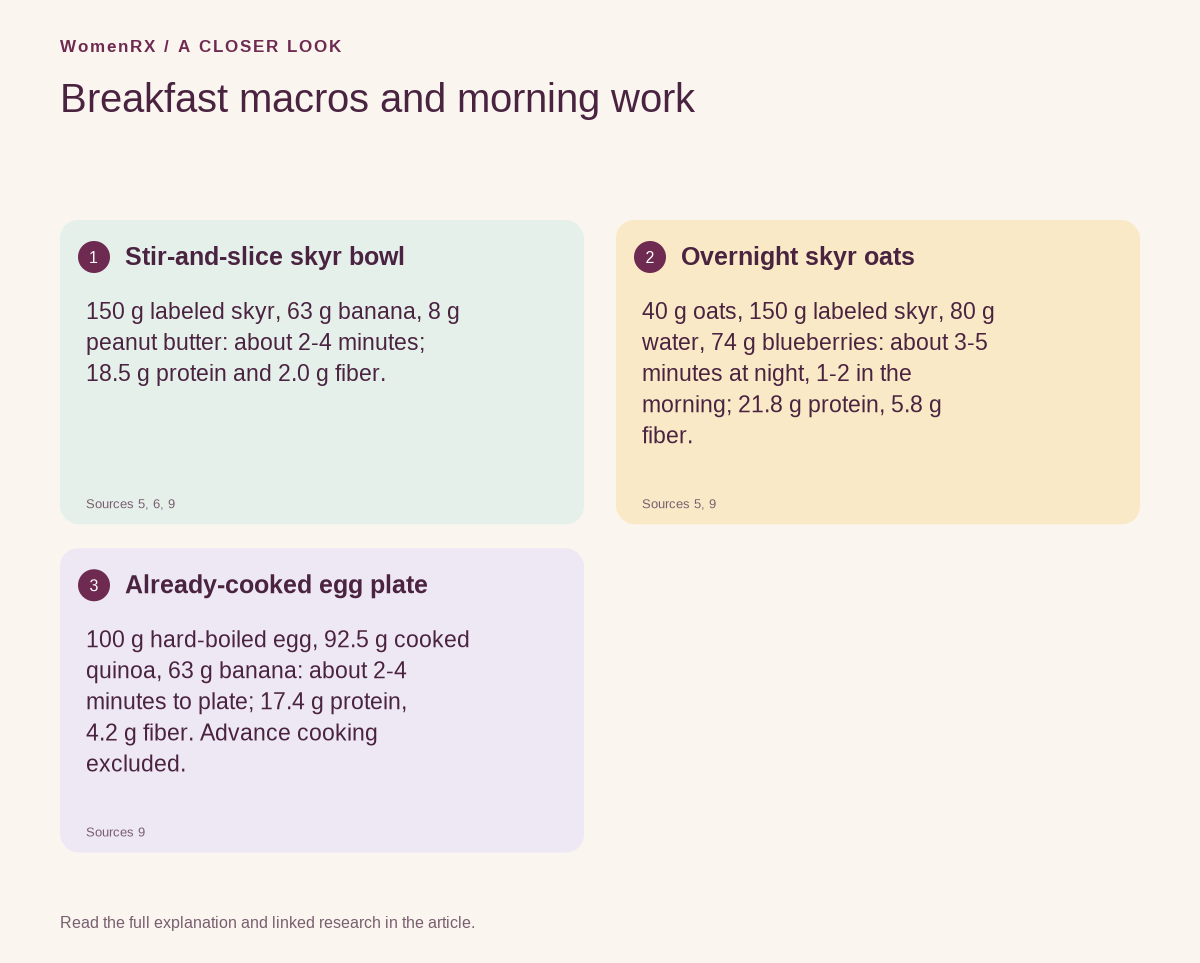
Stir-and-slice skyr bowl: 150 g labeled skyr, 63 g banana, 8 g peanut butter: about 2-4 minutes; 18.5 g protein and 2.0 g fiber.569
Overnight skyr oats: 40 g oats, 150 g labeled skyr, 80 g water, 74 g blueberries: about 3-5 minutes at night, 1-2 in the morning; 21.8 g protein, 5.8 g fiber.59
Already-cooked egg plate: 100 g hard-boiled egg, 92.5 g cooked quinoa, 63 g banana: about 2-4 minutes to plate; 17.4 g protein, 4.2 g fiber. Advance cooking excluded.9
Read the figure as text
Compare the stated portions by estimated protein, fiber, and preparation time. Cooking eggs and quinoa ahead isn’t included.- Stir-and-slice skyr bowl: 150 g labeled skyr, 63 g banana, 8 g peanut butter: about 2-4 minutes; 18.5 g protein and 2.0 g fiber.569
- Overnight skyr oats: 40 g oats, 150 g labeled skyr, 80 g water, 74 g blueberries: about 3-5 minutes at night, 1-2 in the morning; 21.8 g protein, 5.8 g fiber.59
- Already-cooked egg plate: 100 g hard-boiled egg, 92.5 g cooked quinoa, 63 g banana: about 2-4 minutes to plate; 17.4 g protein, 4.2 g fiber. Advance cooking excluded.9
Sources you can check
- Dietary Proteins: MedlinePlusAccessed 2026-09-25Return to first citation
- Nutrition: MedlinePlusAccessed 2026-09-25Return to first citation
- Dietary Fiber: MedlinePlusAccessed 2026-09-25Return to first citation
- A high-protein breakfast prevents body fat gain, through reductions in daily intake and hunger, in "Breakfast skipping" adolescents.Leidy HJ, Hoertel HA, Douglas SM, Higgins KA, Shafer RS. · Obesity (Silver Spring, Md.) · 2015Return to first citation
- Plain Nonfat Skyr Yogurt 5.3oz - High Protein - siggi'sAccessed 2026-09-25Return to first citation
- USDA SR Legacy reference composition: bananaAccessed 2026-09-25Return to first citation
- USDA SR Legacy reference composition: quinoaAccessed 2026-09-25Return to first citation
- MedlinePlus: Protein in diet, including tofu and other plant sourcesAccessed 2026-09-25Return to first citation
- USDA SRLegacy ingredient values: calculated Banana and peanut butter yogurt, Egg, quinoa and banana breakfast, Blueberry yogurt oatsAccessed 2026-09-25Return to first citation
- Dairy and Eggs (Food Safety for Moms-to-Be) | FDAAccessed 2026-09-25Return to first citation
- Maternal Diet and Breastfeeding | Breastfeeding special circumstances | CDCAccessed 2026-09-25Return to first citation