How to Build an Egg Breakfast That Fits Your Morning
Start with eggs, then choose a side or add-on that fits your time, taste, and protein or fiber goal.
Start with eggs and build around what you want more of: fruit or vegetables, a whole grain, beans, or yogurt. Two hard-boiled eggs with avocado and banana provide an estimated 14.8 g protein and 6.7 g fiber. If you want more protein from eggs alone, four hard-boiled eggs with banana provide an estimated 25.9 g protein, along with more fat from the extra eggs. Both estimates depend on the exact portions. 4
Make the three-ingredient plate
Start with two already hard-boiled large eggs, peeled, for 100 g of edible egg. Slice them and add 75 g raw avocado and 63 g peeled raw banana. That’s one serving. There’s no bread, dressing, or cooking fat in this version. It’s an assembled breakfast, not a tested weight-loss recipe. 4
Here’s the estimated nutrition for that exact plate, calculated from the edible weights above:
| One serving | Estimated amount |
|---|---|
| Energy | 331 calories |
| Protein | 14.8 g |
| Carbohydrate | 21.9 g |
| Fat | 21.8 g |
| Fiber | 6.7 g |
These are rounded ingredient estimates, not measurements of a finished plate. The eggs supply most of the protein in this combination, while the avocado supplies most of its fiber. The banana adds fruit without another ingredient to prepare in a pan. 4
If you’re pregnant, use thoroughly cooked eggs: FDA guidance says the whites and yolks should be firm. Follow any local food-safety guidance you’ve been given, too. 5
If you want more protein from the eggs
Using the same ingredient values, you can estimate two higher-protein versions by starting with four already hard-boiled large eggs, or 200 g edible egg. Choose one side. These are alternative servings, not additions to the three-ingredient plate above. 4
| One measured serving | Calories | Protein | Carbohydrate | Fat | Fiber |
|---|---|---|---|---|---|
| Four eggs (200 g) + peeled banana (63 g) | 366 | 25.9 g | 16.6 g | 21.4 g | 1.6 g |
| Four eggs (200 g) + raw avocado (75 g) | 430 | 26.7 g | 8.6 g | 32.2 g | 5.0 g |
The estimates scale the hard-boiled egg values to 200 g, add the stated edible weight of banana or avocado, and round after totaling. Four eggs contribute more protein than two, but also more fat. Between these two sides, avocado contributes more fiber and fat; banana contributes more carbohydrate. Neither serving includes toast, dressing, or cooking fat. 4
Change the plate to suit your morning
The useful question is what you want alongside the eggs. Here are three other ways to put breakfast together. Their portions are examples you can adjust, not measured recipes with the same macros as the plates above.
| If you want… | Try this combination | Count these ingredients for your estimate |
|---|---|---|
| A savory breakfast | Two hard-boiled eggs, one slice of whole-grain toast, and a sliced tomato | Eggs, bread, and tomato; add any spread you use |
| Beans and vegetables | Two hard-boiled eggs, about ½ cup of cooked beans, and a handful of greens | Eggs, beans, and greens; add any oil, cheese, or sauce you use |
| A no-cook side | Two already hard-boiled eggs, about ¾ cup of plain yogurt, and a handful of berries | Eggs, yogurt, and berries; add any nuts or seeds you use |
If more fiber is the goal, look at the plant foods on your plate. Whole grains, fruit, vegetables, nuts, and seeds are fiber sources; beans provide fiber too. Fiber can help you feel full faster. 23 If more protein is the goal, yogurt, cheese, or beans can add protein without simply adding more eggs. The amount depends on the food and portion you choose. 1
The tradeoff is worth noticing: an add-on can change several parts of the meal at once. Cheese adds protein but isn’t interchangeable with fruit for fiber. Bread, beans, avocado, and cooking oil will each change a meal’s estimate differently. Think in ingredients, not in labels like “healthy egg scramble.”
Recalculate when you make a swap
You don’t need one universal number for an egg breakfast. Make a short ingredient list and total the nutrition information for protein, carbohydrate, and fat:
- Start with the eggs. Match the nutrition information to the egg size, cooked form, and edible amount you actually use. The measured plates above use 100 g or 200 g of hard-boiled egg, not a generic value for any two or four eggs. 4
- Add each side and filling. Use the listed serving for packaged bread, yogurt, cheese, or beans, adjusted to your portion. For unpackaged produce, use a food-composition reference that matches the food and its approximate edible weight.
- Count what went into the pan or onto the plate. Include cooking oil or butter, spreads, and toppings if you used them. None is included in the measured plates’ estimates. 4
- Keep fiber alongside the totals. Record it separately from protein, carbohydrate, and fat so you can see whether your swap serves your fiber goal.
For a reference that reports nutrients per 100 g, multiply each listed value by your edible weight in grams ÷ 100, then add the ingredients and round the total. That’s how the three-ingredient plate and its higher-protein alternatives were estimated. If you replace banana with toast or change the avocado portion, recalculate those ingredients rather than carrying over a plate’s total. 4
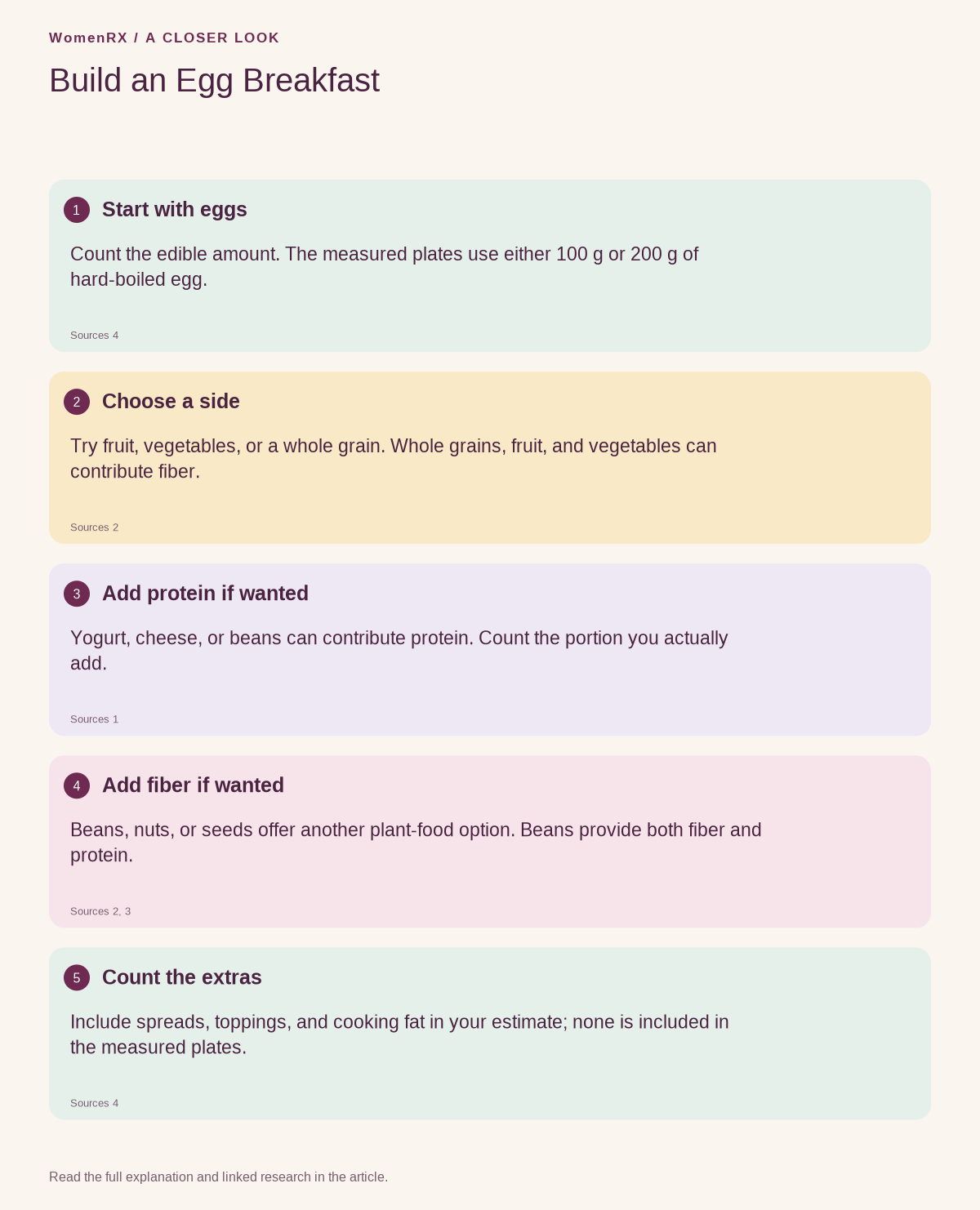
Build an Egg Breakfast
Start with eggs: Count the edible amount. The measured plates use either 100 g or 200 g of hard-boiled egg.4
Choose a side: Try fruit, vegetables, or a whole grain. Whole grains, fruit, and vegetables can contribute fiber.2
Add protein if wanted: Yogurt, cheese, or beans can contribute protein. Count the portion you actually add.1
Add fiber if wanted: Beans, nuts, or seeds offer another plant-food option. Beans provide both fiber and protein.23
Count the extras: Include spreads, toppings, and cooking fat in your estimate; none is included in the measured plates.4
Read the figure as text
Choose a base and side, then count optional additions in the version you actually make.- Start with eggs: Count the edible amount. The measured plates use either 100 g or 200 g of hard-boiled egg.4
- Choose a side: Try fruit, vegetables, or a whole grain. Whole grains, fruit, and vegetables can contribute fiber.2
- Add protein if wanted: Yogurt, cheese, or beans can contribute protein. Count the portion you actually add.1
- Add fiber if wanted: Beans, nuts, or seeds offer another plant-food option. Beans provide both fiber and protein.23
- Count the extras: Include spreads, toppings, and cooking fat in your estimate; none is included in the measured plates.4
Sources you can check
- Dietary Proteins: MedlinePlusAccessed 2026-09-25Return to first citation
- Dietary Fiber: MedlinePlusAccessed 2026-09-25Return to first citation
- Nutrient and popping characteristics of Wyoming-grown Peruvian popping beans.Bolak J, Gifford C, Rule D, Heitholt J, Keith JF. · Food science & nutrition · 2022Return to first citation
- USDA SR Legacy ingredient data: calculated eggs meal exampleAccessed 2026-09-25Return to first citation
- Dairy and Eggs (Food Safety for Moms-to-Be) | FDAAccessed 2026-09-25Return to first citation