Eggs and Weight Loss: What the Evidence Really Shows
Eggs can make a filling meal, but short-term fullness is not the same as lasting weight loss.
Eggs can be part of a weight-management meal, but research hasn’t shown that eating eggs by itself reliably causes weight loss. Some short-term breakfast studies found greater fullness or less food eaten at lunch after higher-protein, egg-containing meals. Those studies tested whole meals, not eggs alone; a review of adult trials found no significant overall effect of whole eggs on body weight. 3 4 5
Fullness is a short-term finding, not a weight-loss result
Protein-rich breakfasts may help some people feel fuller through the morning. In a randomized crossover study of 35 premenopausal women, sausage-and-egg convenience breakfasts with more protein led to greater reported satiety than a low-protein pancake breakfast or water. After the highest-protein meal, participants also ate less at lunch than after the low-protein breakfast or water. 3
That finding has an important boundary: the researchers compared complete meals, not eggs with another food while holding everything else constant. The breakfasts included sausage, and the study measured appetite and food intake over a test day, not long-term weight change. Also, although the egg-based breakfasts reduced lunch intake relative to some comparisons, the breakfast-plus-lunch total was higher than with no breakfast. Feeling fuller or eating less at one meal doesn’t automatically mean you eat less overall. 3
A second crossover trial in 48 healthy adults found that egg-based breakfasts with more protein, or with moderate protein plus fiber, reduced intake at the next meal compared with a low-protein cereal breakfast. The study measured short-term appetite and food intake, not lasting weight loss. Its abstract describes a healthy adult sample but doesn’t report results by sex. 4
What longer-term weight studies say
A 2023 systematic review and meta-analysis included 32 controlled clinical trials. Across the trials that measured each outcome, whole-egg consumption had no significant overall effect on body weight, BMI, waist circumference, or fat-free mass. Some subgroup results differed depending on study duration, participants’ health, the comparison food, and whether the study involved calorie restriction. Those mixed results don’t establish that eggs cause weight loss. 5
The review abstract reports overall adult results but doesn’t give a women-specific pooled estimate. The women-only breakfast trial measured appetite and lunch intake over a single test day, not body-weight change over time. So the short-term fullness finding is relevant to its premenopausal participants, but it can’t tell you whether eggs produce a lasting weight-loss effect for women generally. 3 5
The whole plate matters more than the egg label
The egg studies tested meals with particular amounts of protein, calories, fat, or fiber. The cited breakfast trials did not compare cooking methods, so they can’t identify a best method for weight loss. They also don’t show that eggs have a special effect regardless of what else is on the plate. 3 4
For a practical comparison, look at the complete meal: how the eggs are prepared, what’s added during cooking, and what you serve alongside them. For example, eggs cooked with added ingredients and a substantial side are a different overall meal from eggs served simply with fruit or vegetables. The relevant question isn’t whether one version is categorically “good” or “bad,” but how the whole meal fits your appetite and eating pattern. Body weight reflects the broader balance of food energy and energy use, which varies from person to person. 2
If eggs help you build a breakfast that keeps you satisfied, they may be a useful protein option. If you don’t enjoy them, other protein foods can serve the same role; eggs aren’t required for weight loss. Protein is needed in the diet, and individual needs vary with factors including age, sex, health, and activity. 1
A useful way to decide
Try judging the meal by what it does for you, rather than expecting the egg itself to change your weight. Does the meal feel satisfying? Do the cooking additions and sides suit the way you want to eat? Would you still choose it regularly? These are practical fit questions, not a proven egg-specific weight-loss formula.
The evidence supports a modest conclusion: egg-containing, higher-protein breakfasts can affect short-term fullness and next-meal intake in some study settings. It doesn’t show that eggs alone lead to lasting weight loss, and the cited breakfast trials can’t identify a best cooking method or a specific egg intake for that purpose.
Eggs: Fullness Versus Weight Change
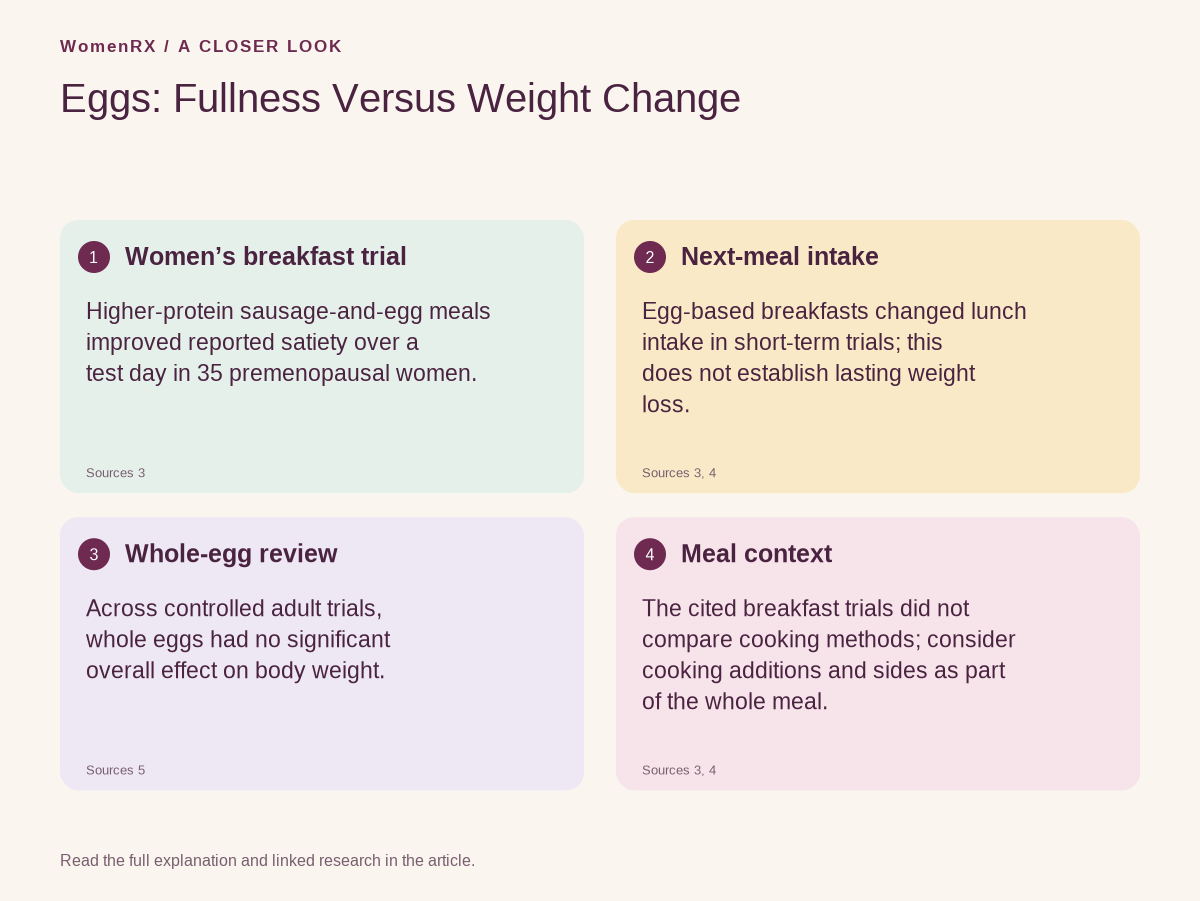
Women’s breakfast trial: Higher-protein sausage-and-egg meals improved reported satiety over a test day in 35 premenopausal women.3
Next-meal intake: Egg-based breakfasts changed lunch intake in short-term trials; this does not establish lasting weight loss.34
Whole-egg review: Across controlled adult trials, whole eggs had no significant overall effect on body weight.5
Meal context: The cited breakfast trials did not compare cooking methods; consider cooking additions and sides as part of the whole meal.34
Read the figure as text
These findings answer different questions: what happens to appetite over a few hours, and what controlled trials show about body weight.- Women’s breakfast trial: Higher-protein sausage-and-egg meals improved reported satiety over a test day in 35 premenopausal women.3
- Next-meal intake: Egg-based breakfasts changed lunch intake in short-term trials; this does not establish lasting weight loss.34
- Whole-egg review: Across controlled adult trials, whole eggs had no significant overall effect on body weight.5
- Meal context: The cited breakfast trials did not compare cooking methods; consider cooking additions and sides as part of the whole meal.34
More questions, answered
Do eggs cause weight gain?
The overall results of a review of controlled adult trials found no significant effect of whole eggs on body weight. Some subgroup findings differed, so this doesn’t mean every eating pattern or individual will respond the same way. 5
Does an egg breakfast keep you full longer?
Some short-term studies found greater fullness after higher-protein, egg-containing breakfasts. One study involved premenopausal women, but it compared whole meals and followed appetite over a test day, not lasting weight change. 3
Sources you can check
- Dietary Proteins: MedlinePlusAccessed 2026-09-25Return to first citation
- Obesity: MedlinePlusAccessed 2026-09-25Return to first citation
- A randomized, controlled, crossover trial to assess the acute appetitive and metabolic effects of sausage and egg-based convenience breakfast meals in overweight premenopausal women.Rains TM, Leidy HJ, Sanoshy KD, Lawless AL, Maki KC. · Nutrition journal · 2015Return to first citation
- The effects of the combination of egg and fiber on appetite, glycemic response and food intake in normal weight adults - a randomized, controlled, crossover trial.Bonnema AL, Altschwager DK, Thomas W, Slavin JL. · International journal of food sciences and nutrition · 2016Return to first citation
- The effect of whole egg consumption on weight and body composition in adults: a systematic review and meta-analysis of clinical trials.Emrani AS, Beigrezaei S, Zademohammadi F, Salehi-Abargouei A. · Systematic reviews · 2023Return to first citation