How Can You Build a Protein-Focused Breakfast That Fits Your Morning?
Build around a protein food you like and have on hand, then adapt the rest of breakfast to your appetite, time, and budget.
Make a protein food you have and enjoy the main part of breakfast, then add fruit, vegetables, or a grain if they suit you. Pantry choices can make that easier, and you don’t have to force breakfast when you aren’t hungry. Protein may help some people feel fuller, but small adult studies found mixed effects on appetite and food intake. 1 4 5
Start with what fits your morning
A practical breakfast is one you can put together and want to eat. Make a protein food such as yogurt, eggs, or beans the main part of the meal, then add oats, toast, fruit, or vegetables if you want them. Protein foods include dairy, meat, beans, nuts, and some grains; eggs are another option studied at breakfast. 1 4
Breakfast doesn't need to be the same every day, or a meal you force when you aren't hungry. Think of the ideas below as mix-and-match options, not a required menu. A healthy eating pattern can reflect your preferences and budget rather than strict rules. 2
Four templates, four different mornings
For a quick, cool breakfast: Spoon yogurt into a bowl and add nuts and fruit. To take it with you, pack the toppings separately and combine them when you're ready. Yogurt is a dairy protein source, and nuts add another plant-based option. 1
For a morning with time to cook: Make eggs and serve them with toast or another grain. Eggs have been tested as a breakfast protein source, though the study results don't mean an egg breakfast will keep everyone fuller. 4
For a dairy-free, pantry-first option: Put canned beans in a tortilla, with vegetables or salsa if you have them. Beans provide protein, and in one older-adult breakfast study the bean meals also contained more fiber than the beef meal. 1 6
For a no-cook, make-ahead option: Mix oats with yogurt the night before; add nuts or fruit in the morning if you like. Yogurt is the protein anchor here. The amount depends on what and how much you use. 1
These are starting points, not nutrition prescriptions. For a budget-conscious version, compare the prices of protein foods you already buy, such as beans, eggs, yogurt, and nuts, and choose what fits. There isn't one cheapest choice for everyone.
What fullness research can, and can't, tell you
Protein can change how full people say they feel, but a change in appetite ratings doesn't necessarily mean they eat less later. In a randomized crossover study of 20 healthy adults with overweight or obesity, an egg breakfast produced greater reported fullness than a cereal breakfast on the first test day, but not the seventh. Energy intake at lunch wasn't significantly lower on either day. 4
A small crossover study in 18 adults compared a plant-based drink and an animal-based breakfast, each with 30 grams of protein, with a 10-gram-protein, high-carbohydrate breakfast. The plant-based drink suppressed reported appetite more than the lower-protein breakfast, but the study found no difference in later food intake. Appetite responses also didn't differ between the drink and the animal-based breakfast. This comparison did not test the plant-food templates above. 5
A separate randomized crossover trial offers a useful comparison for a plant-based breakfast. Among 35 older adults, meals made with ¾ cup of black or red kidney beans had 21.4 grams of protein and 11.9 grams of fiber; the beef meal had 34.9 grams of protein and 1.7 grams of fiber. The meals did not significantly differ in reported appetite, lunch intake, or total daily energy intake. These were whole test meals, so the figures aren't protein amounts for beans or beef alone. 6
Taken together, the studies support flexibility more than a single ideal formula. A protein source can be part of a satisfying breakfast, and beans offer a way to combine protein and fiber, but fullness and later eating don't respond identically for everyone. The studies were small, and their reported findings don't include a women-specific comparison. 4 5 6
Age and life stage matter, but not as a breakfast rule
Protein needs vary with age and health. Researchers studying older adults discuss higher daily protein intake, while lower appetite can make eating enough harder. Breakfast may be an opportunity to include protein, but these findings don't establish a specific breakfast target for older women. 1 5
During pregnancy, breakfast is one chance to eat foods that contribute more than protein. Nutrient needs change, including higher recommended intakes of iron and choline. Eggs are a source of choline; beans and nuts provide plant-based iron. That doesn't make any one of these breakfasts a complete pregnancy meal or set a protein target for breakfast. 3
The breakfast studies described above do not establish how much protein to eat during pregnancy or breastfeeding, or whether their fullness findings apply differently during those stages. 4 5
For everyday planning, use the option that matches your appetite and routine: a quick bowl, freshly cooked eggs, pantry beans, or oats and nuts. If you don't want breakfast, these templates can work for a later meal or snack.
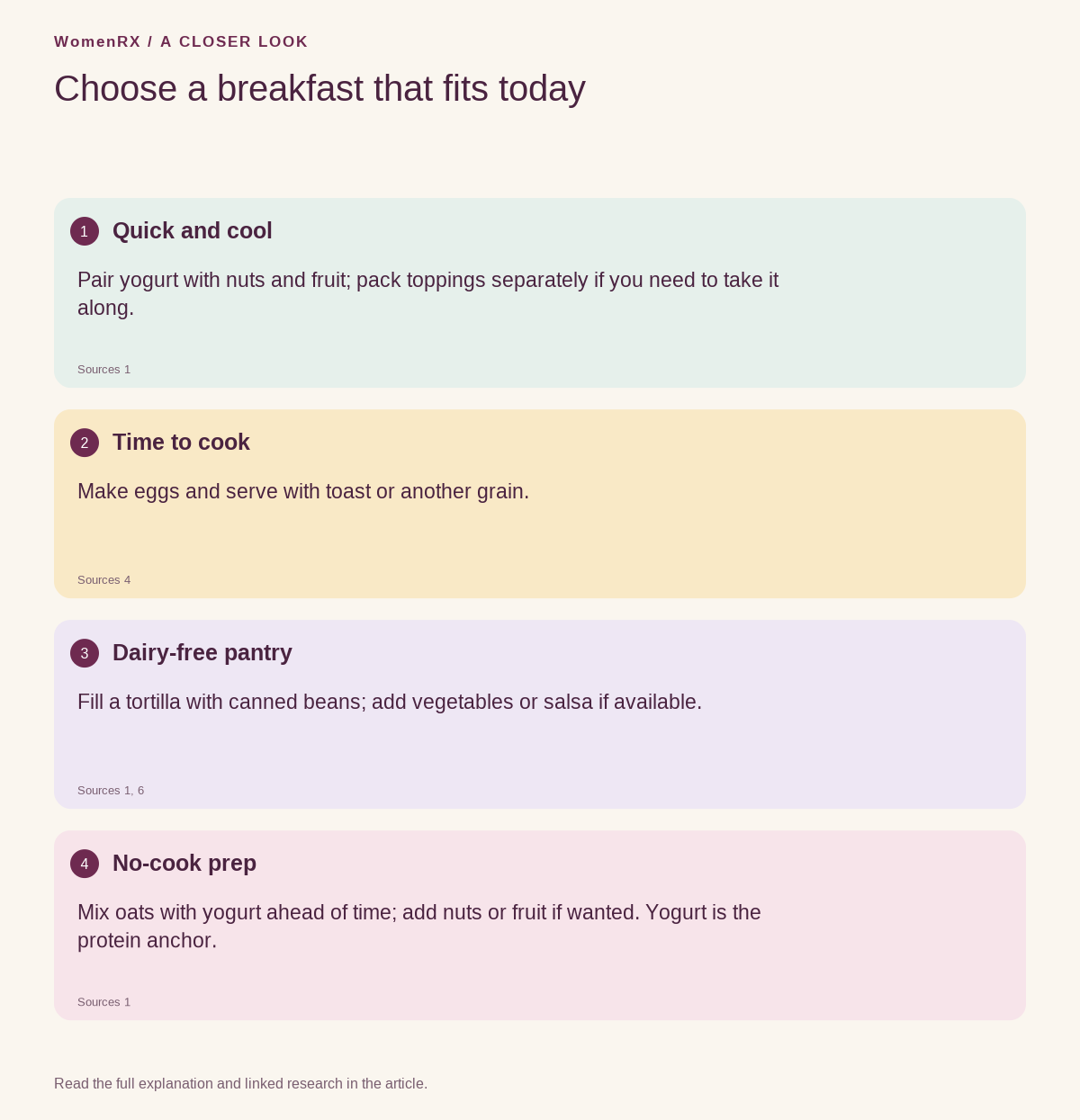
Choose a breakfast that fits today
Quick and cool: Pair yogurt with nuts and fruit; pack toppings separately if you need to take it along.1
Time to cook: Make eggs and serve with toast or another grain.4
Dairy-free pantry: Fill a tortilla with canned beans; add vegetables or salsa if available.16
No-cook prep: Mix oats with yogurt ahead of time; add nuts or fruit if wanted. Yogurt is the protein anchor.1
Read the figure as text
Start with an available protein food, then choose a preparation style that matches your time and appetite. Add other foods if they suit you.- Quick and cool: Pair yogurt with nuts and fruit; pack toppings separately if you need to take it along.1
- Time to cook: Make eggs and serve with toast or another grain.4
- Dairy-free pantry: Fill a tortilla with canned beans; add vegetables or salsa if available.16
- No-cook prep: Mix oats with yogurt ahead of time; add nuts or fruit if wanted. Yogurt is the protein anchor.1
More questions, answered
Does plant protein have to come from one food?
No. MedlinePlus describes most plant proteins as incomplete and recommends eating different plant protein sources across the day to get the amino acids your body needs. 1
Does a higher-protein breakfast always reduce what you eat later?
No. In small adult breakfast studies, appetite ratings sometimes changed without a significant difference in subsequent food intake. 4 5
Sources you can check
- Dietary Proteins: MedlinePlusAccessed 2026-09-25Return to first citation
- Nutrition: MedlinePlusAccessed 2026-09-25Return to first citation
- Dietary Supplements and Life Stages: Pregnancy - Health Professional Fact SheetAccessed 2026-09-25Return to first citation
- A randomized trial to manipulate the quality instead of quantity of dietary proteins to influence the markers of satiety.Bayham BE, Greenway FL, Johnson WD, Dhurandhar NV. · Journal of diabetes and its complications · 2014Return to first citation
- The effect of consuming different dietary protein sources at breakfast upon self rated satiety, peptide YY, glucagon like peptide-1, and subsequent food intake in young and older adults.Watson AW, Brooks A, Moore L, Barley S, Holliday A. · European journal of nutrition · 2025Return to first citation
- Beans Improve Satiety to an Effect that Is Not Significantly Different from Beef in Older Adults: A Randomized, Crossover Trial.Fluit MJ, Adams BF, Ribau ZJ, Duncan AM. · The Journal of nutrition · 2025Return to first citation