Build a Protein Grocery List You’ll Actually Use
Start with the meals you’ll make, then compare protein foods by serving, cost, effort, and fit with your life.
Pick the meals you need to cover before you pick protein foods. Choose a few options you’ll cook or open this week, then compare their protein per serving, price, sodium, and preparation effort. Meat, dairy, beans, nuts, and some grains can all contribute protein; the right mix depends on your eating pattern and needs, not a single target for all women. 2
Plan meals first, then shop
A grocery list works better when every protein food has a job. Count the breakfasts, lunches, and dinners you expect to make at home. Then ask which need almost no preparation, which you’re willing to cook, and which ingredients you’ll use more than once. This keeps the list tied to your budget, time, and storage space rather than to an impressive-looking collection of foods.
For example, here’s a five-meal plan for one person, not a prescribed menu or portion plan:
- Yogurt with oats and fruit
- Eggs with toast and vegetables
- Bean tacos with vegetables
- Tofu and frozen-vegetable rice bowls
- Fish with potatoes and vegetables
A matching shop could be one small tub of yogurt, one carton of eggs, one can of beans, one package of tofu, and one package of fish, plus oats, fruit, bread or tortillas, rice, potatoes, and vegetables. Adjust package sizes to the number of people eating, your appetite, and what you already have. If five different protein foods stretch the budget or leave too many leftovers, repeat a meal and buy fewer kinds.
Choose from the aisles that suit you
Animal foods: Eggs, poultry, meat, and fish can anchor a meal. Eggs also provide choline, a nutrient worth particular attention during pregnancy. 23
Dairy: Milk, yogurt, and cheese offer another way to include protein, including in a breakfast or meal that doesn’t require cooking. Check the product you’re buying rather than assuming every yogurt or dairy alternative has the same protein content. Dairy foods also provide calcium, a nutrient considered during pregnancy. 23
Plants: Beans, lentils, soy foods such as tofu, nuts, and some grains give you choices if you eat little or no meat. If your diet is entirely plant-based, include a variety of protein foods over the day rather than relying on one staple for everything. 2 During pregnancy, a vegetarian or vegan pattern also calls for attention to nutrients beyond protein, particularly iron and iodine. 3
Pantry and freezer options: Canned beans and fish, dry lentils, and frozen fish or other protein foods can make a plan easier to carry out when you won’t shop again soon. Choose the form that fits your storage space and the work you’re willing to do. These are shopping categories, not separate nutritional rankings: a can of beans is both a plant food and a pantry option.
Compare what you’ll actually eat
When two products seem interchangeable, use this quick comparison:
- Protein per serving: Read the protein amount alongside the labeled serving size. Ask whether that serving resembles the amount you’d use in a meal.
- Price for the meals you’ll get: Divide the package price by the number of portions you expect to use, not just the number printed on a label. A larger package is no bargain if some will go uneaten.
- Sodium: Compare the sodium listed for the same amount of food, especially when choosing among canned or prepared options. Check the full meal too, since sauces and toppings may add sodium.
- Preparation effort: Include the work between buying and eating. A food that costs less but needs cooking you can’t fit in this week may not be the better choice.
This method won’t name a universal winner. It might lead you to dry lentils for a batch you want to cook, or to canned beans for a meal you need to assemble quickly. The useful comparison is between foods that solve the same meal problem.
Make room for different needs
There isn’t one protein number that fits every woman. Needs vary with age, health, and activity, and most Americans already get enough protein from food. 2 If you’re shopping for an older woman whose meals have become smaller, it may help to make protein foods easier to include in meals she already enjoys. A review of whole-food interventions in community-dwelling adults age 50 and older found that these approaches increased protein intake compared with control groups. The studies included men and women and did not report a women-only result in the abstract; they don’t establish a grocery-list formula or a benefit from any one food. 4
If you’re pregnant, seafood needs a more specific choice than simply “fish.” US guidance summarized by the NIH recommends seafood lower in mercury, with salmon, sardines, and trout among the examples. 3 Mercury can build up in fish, and exposure during pregnancy can reach the baby. 1 That’s a useful check at the fish counter, but it isn’t a complete pregnancy food-safety checklist for the rest of your cart. Pregnancy also changes needs for several nutrients, so a protein-focused list shouldn’t be your only nutrition plan. 3
Before checking out, look back at your meals. Do you have a protein food for each one, a realistic way to prepare it, and room to store it? If yes, the list is doing its job. You can change the foods next week without starting the method over.
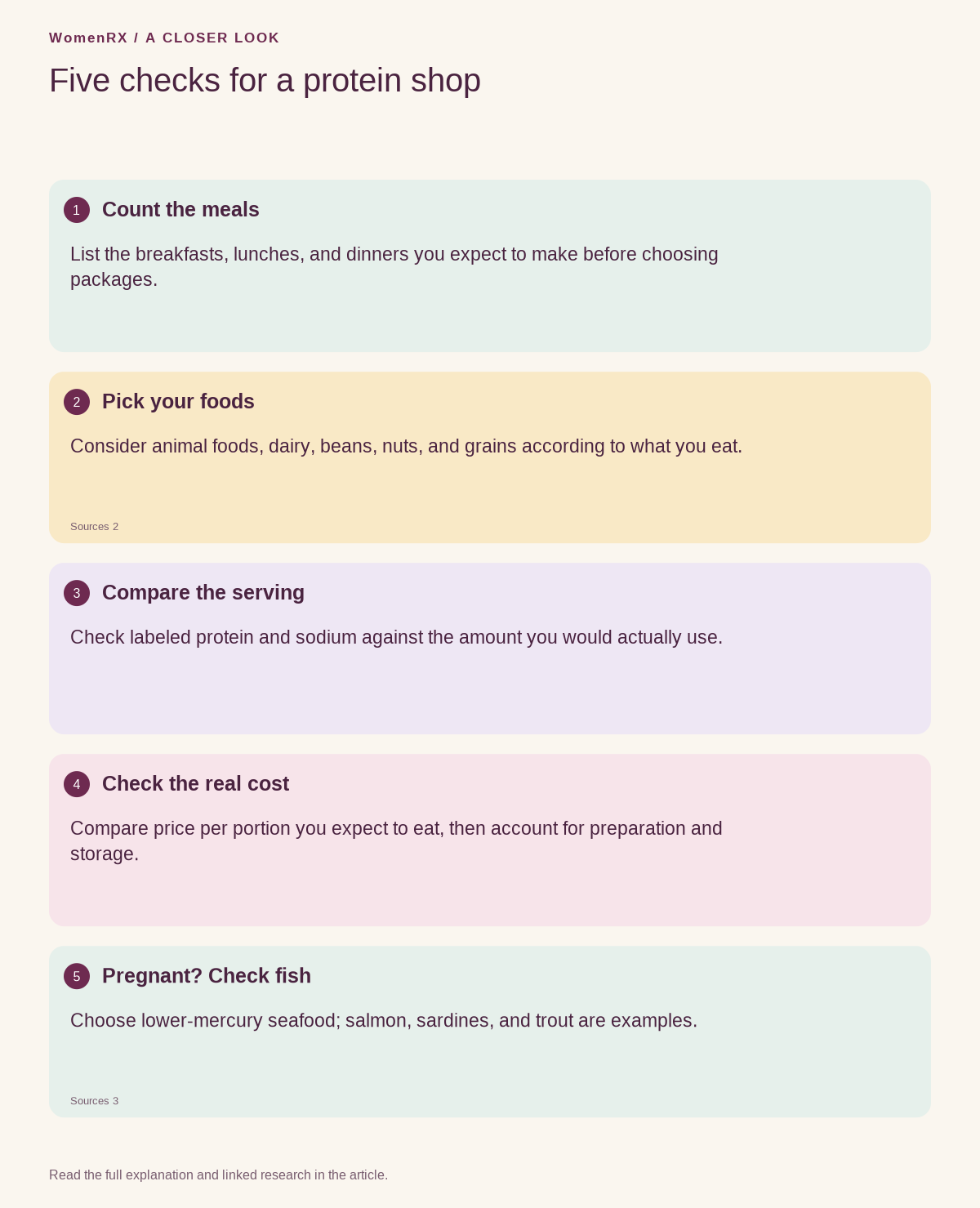
Five checks for a protein shop
Count the meals: List the breakfasts, lunches, and dinners you expect to make before choosing packages.
Pick your foods: Consider animal foods, dairy, beans, nuts, and grains according to what you eat.2
Compare the serving: Check labeled protein and sodium against the amount you would actually use.
Check the real cost: Compare price per portion you expect to eat, then account for preparation and storage.
Pregnant? Check fish: Choose lower-mercury seafood; salmon, sardines, and trout are examples.3
Read the figure as text
Use these checks on each meal you plan, then compare products that could fill the same spot on your list.- Count the meals: List the breakfasts, lunches, and dinners you expect to make before choosing packages.
- Pick your foods: Consider animal foods, dairy, beans, nuts, and grains according to what you eat.2
- Compare the serving: Check labeled protein and sodium against the amount you would actually use.
- Check the real cost: Compare price per portion you expect to eat, then account for preparation and storage.
- Pregnant? Check fish: Choose lower-mercury seafood; salmon, sardines, and trout are examples.3
More questions, answered
Do plant proteins need to be paired in the same meal?
The practical aim is variety across the day. Beans, nuts, grains, and other plant foods can all contribute protein, and eating different types helps provide the amino acids your body needs. 2
Do I need protein powder on my grocery list?
Not necessarily. Meat, dairy, beans, nuts, and some grains are food sources of protein, and most Americans get enough protein from their diets. Whether a supplement has a place depends on your circumstances, not on the idea that a protein grocery list is incomplete without one. 2
Sources you can check
- Mercury: MedlinePlusAccessed 2026-09-25Return to first citation
- Dietary Proteins: MedlinePlusAccessed 2026-09-25Return to first citation
- Dietary Supplements and Life Stages: Pregnancy - Health Professional Fact SheetAccessed 2026-09-25Return to first citation
- Effectiveness of Whole Food Interventions on Protein Intake in Community-Dwelling Older Adults: A Systematic Review and Meta-Analysis.Heijmans MWF, Koopmans L, Hopman MTE, Verlaan S, Schoufour JD, Eijsvogels TMH. · Nutrition reviews · 2026Return to first citation