Protein-Rich Snacks for Different Appetites and Schedules
A yogurt bowl and an egg plate offer different amounts of protein, but the useful choice also depends on your appetite and whether you can keep food cold.
If you’re hungry between meals, choose a snack that fits the gap and your day. A measured Greek yogurt, banana, and peanut butter bowl provides an estimated 19.8 g of protein; a hard-boiled egg and apple plate provides 12.8 g. These are examples, not targets or universal product values. If you’re comfortable until your next meal, you don’t need to add a snack simply because it’s snack time.36
First, decide what the snack needs to do
A long stretch between lunch and dinner calls for a different choice than a short wait before a meal. If you’re hungry and won’t eat for a while, you might choose a snack that includes a protein source. Convenience and the protein in your portion can help you choose; the food names alone cannot tell you which will keep you full longer. If dinner is soon and you’re comfortable, you don’t need to eat simply because it’s snack time. Your overall food needs vary with factors such as activity, body size, and health; one snack plan won’t fit everyone.3
Protein comes from more places than packaged bars or shakes. Dairy, eggs, nuts, beans, and soy foods all count. Plant foods can contribute to your protein intake across the day; you don’t have to assemble every snack into a precisely matched set of proteins.15
Two measured snacks you can compare
These examples use historical USDA food-composition values for specified ingredients, not current manufacturer labels or measurements of finished snacks. The totals include every listed ingredient and no optional toppings. Your yogurt, peanut butter, eggs, and fruit may differ, so treat the numbers as estimates rather than promises about a particular package.6
For a fridge and a spoon: banana and peanut butter yogurt. Stir 8 g smooth unsalted peanut butter into 170 g plain nonfat Greek yogurt. Peel and slice 63 g banana and add it to the bowl. That makes one serving. The yogurt accounts for most of this example’s protein; the banana and peanut butter change the snack’s carbohydrate and fat totals as well as its flavor and texture.6
| One measured bowl | Energy | Protein | Carbohydrate | Fat | Fiber |
|---|---|---|---|---|---|
| 170 g yogurt + 63 g banana + 8 g peanut butter | 204.2 kcal | 19.8 g | 22.3 g | 5.0 g | 2.0 g |
For food prepared ahead: egg and apple plate. Start with fully hard-boiled eggs. Peel and slice 100 g edible egg, then wash and slice 91 g apple with its skin. Assemble one plate. The egg supplies nearly all the protein in this example; the apple adds most of its carbohydrate and fiber.6
| One measured plate | Energy | Protein | Carbohydrate | Fat | Fiber |
|---|---|---|---|---|---|
| 100 g hard-boiled egg + 91 g apple | 202.3 kcal | 12.8 g | 13.7 g | 10.8 g | 2.2 g |
For these specific measured combinations, the yogurt bowl has more protein, while their estimated energy is similar. That doesn’t establish which one will keep you full longer. Choose the bowl if you want something spoonable and have a way to keep it cold; choose the plate if you’d rather prepare eggs ahead and pack them safely.68
Match other choices to the kind of day
A few minutes to assemble: beans or hummus with vegetables. Vegetables with hummus are one combination suggested in healthy-eating guidance. You could also use beans or edamame as the protein part of a small plate; both are plant protein choices. A prepared dip saves assembly time. If you’re considering canned or cooked beans instead, compare equal portions using their labels and the prices where you shop. Don’t assume a serving of hummus and a serving of beans provide the same protein.345
Easy to carry: nuts with whole fruit. Nuts offer a protein-containing option when you can’t assemble a snack at a table. A whole apple is also easier to pack than the sliced apple in the egg plate. If single-serve nut packs seem expensive, compare their price per labeled serving with a larger package you could portion yourself. That’s a shopping comparison, not a claim that the larger package always costs less.149
The practical tradeoff is preparation and storage, not a ranking of “good” snacks. Yogurt needs a spoon and cold storage; an egg plate takes work ahead of time and also needs cold storage. Whole fruit and peanut butter can travel without a cold source, while the protein contribution of nuts, beans, or hummus depends on the portion and product you choose.49
Get macros from the portion, not the snack’s name
For a packaged food, start with the serving size and servings per container on its Nutrition Facts label. The listed protein, carbohydrate, fat, and calories generally describe one labeled serving, not necessarily the whole package or the amount you put in a bowl.4
If your snack is one labeled serving of yogurt plus half a labeled serving of nuts, add the yogurt’s listed protein to half the nuts’ listed protein. Do the same separately for carbohydrate, fat, and calories. Two labeled servings of yogurt would contribute twice the values listed for one. If you add fruit, include information for the amount used before calling the sum the snack’s complete macros. A labeled serving is a calculation unit, not a suggested portion.4
The measured recipes show why this matters. The yogurt alone contributes an estimated 17.3 g protein per 170 g; the complete bowl contributes 19.8 g per serving after banana and peanut butter are counted. Those figures come from generic food-composition entries. For a bowl made with your own products, use their labels and the amounts you actually add rather than transferring the recipe estimate to a different serving.46
If you’re pregnant, let storage shape the choice
Pregnancy changes nutritional needs, so a snack shouldn’t be judged by protein alone. Eggs, dairy, beans, and nuts can also contribute other nutrients to a varied diet.2 For the dairy-and-egg options here, choose yogurt made with pasteurized milk and cook eggs until both yolks and whites are firm.7
A packed yogurt bowl or egg plate needs a reliable way to stay cold. USDA guidance says cold perishable foods should be kept at 40°F or below; perishable food left at room temperature for more than two hours should be discarded, or after one hour when the temperature is above 90°F. If you can’t keep a prepared snack cold, a whole piece of fruit with peanut butter is a simpler portable choice.89
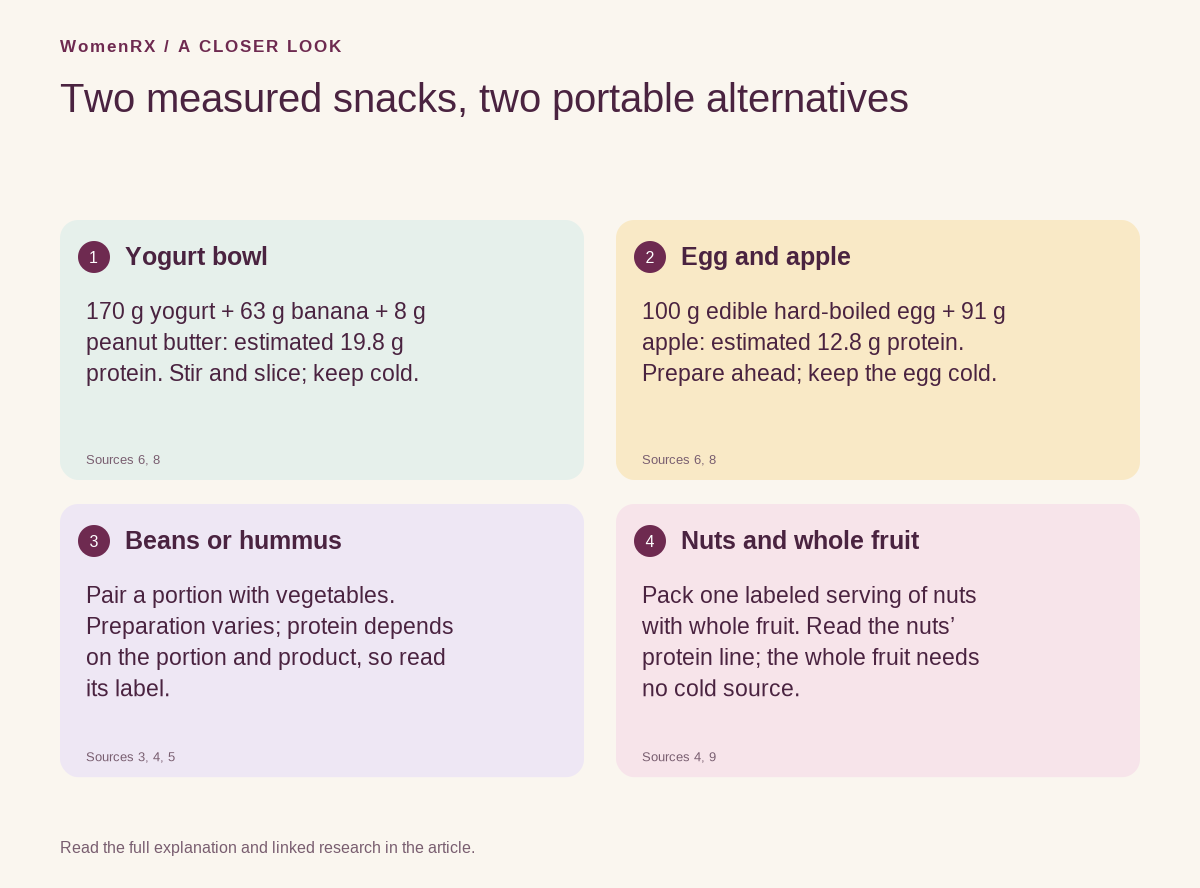
Two measured snacks, two portable alternatives
Yogurt bowl: 170 g yogurt + 63 g banana + 8 g peanut butter: estimated 19.8 g protein. Stir and slice; keep cold.68
Egg and apple: 100 g edible hard-boiled egg + 91 g apple: estimated 12.8 g protein. Prepare ahead; keep the egg cold.68
Beans or hummus: Pair a portion with vegetables. Preparation varies; protein depends on the portion and product, so read its label.345
Nuts and whole fruit: Pack one labeled serving of nuts with whole fruit. Read the nuts’ protein line; the whole fruit needs no cold source.49
Read the figure as text
Protein figures apply only to the stated ingredient weights and historical generic food values. For the unmeasured alternatives, use the portion and protein amount on your product’s label.46- Yogurt bowl: 170 g yogurt + 63 g banana + 8 g peanut butter: estimated 19.8 g protein. Stir and slice; keep cold.68
- Egg and apple: 100 g edible hard-boiled egg + 91 g apple: estimated 12.8 g protein. Prepare ahead; keep the egg cold.68
- Beans or hummus: Pair a portion with vegetables. Preparation varies; protein depends on the portion and product, so read its label.345
- Nuts and whole fruit: Pack one labeled serving of nuts with whole fruit. Read the nuts’ protein line; the whole fruit needs no cold source.49
Sources you can check
- Dietary Proteins: MedlinePlusAccessed 2026-09-25Return to first citation
- Dietary Supplements and Life Stages: Pregnancy - Health Professional Fact SheetAccessed 2026-09-25Return to first citation
- MedlinePlus: Managing weight with healthy eatingAccessed 2026-09-25Return to first citation
- Food Labeling: MedlinePlusAccessed 2026-09-25Return to first citation
- MedlinePlus: Protein in diet, including tofu and other plant sourcesAccessed 2026-09-25Return to first citation
- USDA SRLegacy ingredient values: calculated Banana and peanut butter yogurt, Egg and apple snack plateAccessed 2026-09-25Return to first citation
- Dairy and Eggs (Food Safety for Moms-to-Be) | FDAAccessed 2026-09-25Return to first citation
- Leftovers and Food Safety | Food Safety and Inspection ServiceAccessed 2026-09-25Return to first citation
- Keeping "Bag" Lunches Safe | Food Safety and Inspection ServiceAccessed 2026-09-25Return to first citation