Build a Protein Smoothie for a Snack or Meal
Start with yogurt and fruit, then adjust the additions and portions to fit what you need the smoothie to do.
For a snack, try plain Greek yogurt, banana, and water. For a meal-intended smoothie, start with that blend and add peanut butter, rolled oats, berries, and milk. The snack example below has an estimated 18.0 g protein; the larger version needs its own calculation because every addition changes the nutrition. Neither is automatically a complete meal. 4 2
A smoothie can be a convenient snack or part of a meal, but the blender doesn’t decide which one it is. What matters is what you put in it, how much you make, and whether it leaves you comfortably satisfied. This recipe gives you a measured starting point rather than a fixed rule for what counts as a snack or meal.
Make the measured smoothie
For one smoothie, blend:
- 170 g plain nonfat Greek yogurt
- 63 g peeled raw banana, weighed without the peel
- 16 g smooth unsalted peanut butter
- 120 g water
Blend until smooth. The amounts below are estimates calculated from USDA ingredient data, not measurements of the finished drink. Water contributes no calories or macros. 4
| Version, one serving | Calories | Protein | Carbohydrate | Fat | Fiber |
|---|---|---|---|---|---|
| Yogurt and banana, blended with water | About 156 | 18.0 g | 20.5 g | 0.9 g | 1.6 g |
| Same ingredients, plus peanut butter | About 252 | 21.6 g | 24.1 g | 9.1 g | 2.4 g |
The first row leaves out the peanut butter; its estimates are calculated from the yogurt and banana amounts above. Adding the measured peanut butter contributes most of the difference in calories and fat between the two versions. It also adds some protein and fiber. These numbers apply to the specified ingredients and edible weights, not to every yogurt, banana, or peanut butter you might use. 4
Build for the occasion
For a snack: Blend the measured yogurt and banana with water, leaving out the peanut butter. The yogurt supplies most of its protein, while the banana contributes carbohydrate and some fiber. If this is enough for you between meals, there’s no need to add ingredients just to make the drink bigger. 4
For a meal-intended smoothie: Start with the full measured recipe, including peanut butter. As an example of a larger blend, add ½ cup rolled oats and 1 cup berries, and use 1 cup milk in place of the water. Add more water if you prefer it thinner. This is a build-your-own example, not a second recipe with calculated macros: the oats and berries add plant foods that can contribute fiber, while the milk and larger portions change the drink’s overall nutrition. Check the amounts and labels of what you use if you want its totals. 1 3 4
That larger smoothie may work as a meal for you, or you may want food alongside it. Adding ingredients makes a drink more substantial, but doesn’t establish that it supplies everything you need from a meal or across the day. A healthy eating pattern includes protein, carbohydrates, fats, and other nutrients. 2
You don’t need protein powder to make either version: protein also comes from everyday foods, including dairy and nuts. Protein needs vary with factors such as age, health, and activity. 1
Adjust without assuming the macros stay the same
If you use a different yogurt, more banana, milk instead of water, or a different amount of peanut butter, the table no longer describes your drink. Check the labels and amounts of the products you actually use if you need a closer estimate. Fruit can provide sweetness without an added sweetener; overall nutrition guidance recommends limiting added sugars. 2
The measured recipe is modest in fiber even with the peanut butter. Fruit and whole grains can add fiber, but any additions need their own nutrition calculation. If you’re increasing fiber beyond what you usually eat, do it gradually: a quick increase can cause gas, bloating, or cramps. 3
A thick smoothie may not suit you, and you don’t have to use a drink as a meal. Try a smaller amount, change the texture, or choose a solid snack or meal instead. If the snack version leaves you hungry soon afterward, you could try the peanut butter version next time or have food alongside it.
If you’re pregnant: Choose yogurt made with pasteurized milk. Unpasteurized dairy can carry bacteria that are particularly harmful during pregnancy; check the label if you’re unsure how the yogurt was made. 5
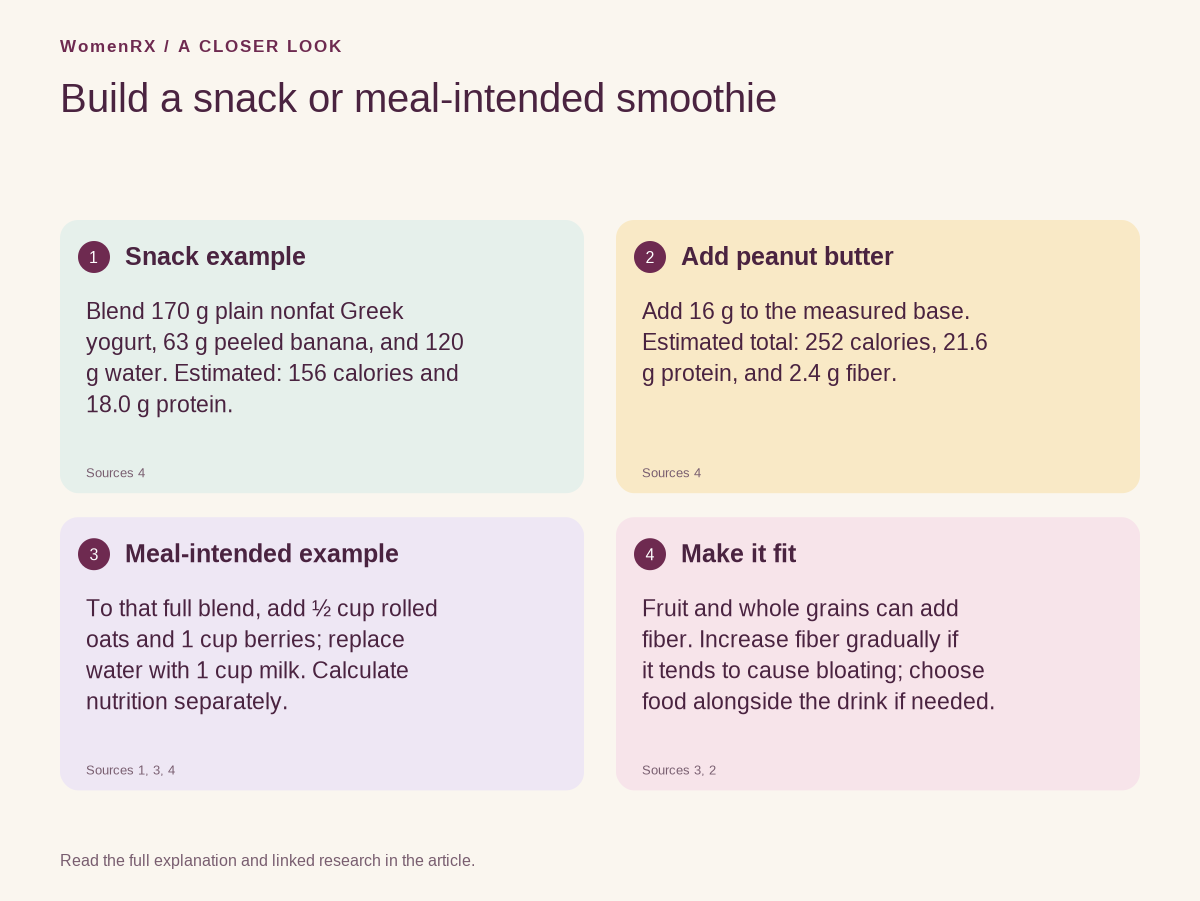
Build a snack or meal-intended smoothie
Snack example: Blend 170 g plain nonfat Greek yogurt, 63 g peeled banana, and 120 g water. Estimated: 156 calories and 18.0 g protein.4
Add peanut butter: Add 16 g to the measured base. Estimated total: 252 calories, 21.6 g protein, and 2.4 g fiber.4
Meal-intended example: To that full blend, add ½ cup rolled oats and 1 cup berries; replace water with 1 cup milk. Calculate nutrition separately.134
Make it fit: Fruit and whole grains can add fiber. Increase fiber gradually if it tends to cause bloating; choose food alongside the drink if needed.32
Read the figure as text
Start with the same yogurt-and-banana base. Additions change what the drink contains, so only the measured versions have calculated totals.- Snack example: Blend 170 g plain nonfat Greek yogurt, 63 g peeled banana, and 120 g water. Estimated: 156 calories and 18.0 g protein.4
- Add peanut butter: Add 16 g to the measured base. Estimated total: 252 calories, 21.6 g protein, and 2.4 g fiber.4
- Meal-intended example: To that full blend, add ½ cup rolled oats and 1 cup berries; replace water with 1 cup milk. Calculate nutrition separately.134
- Make it fit: Fruit and whole grains can add fiber. Increase fiber gradually if it tends to cause bloating; choose food alongside the drink if needed.32
More questions, answered
Do I need protein powder for this smoothie?
No. The measured yogurt-and-banana version contains an estimated 18.0 g of protein, mostly from the yogurt. Adding the specified peanut butter brings the estimate to 21.6 g. 4
Do I need to add a sweetener?
No. The measured recipe uses banana and has no added sweetener. If you change ingredients, check their labels if added sugar matters to you. Nutrition guidance recommends limiting added sugars overall. 2 4
Sources you can check
- Dietary Proteins: MedlinePlusAccessed 2026-09-25Return to first citation
- Nutrition: MedlinePlusAccessed 2026-09-25Return to first citation
- Dietary Fiber: MedlinePlusAccessed 2026-09-25Return to first citation
- USDA SR Legacy ingredient data: calculated smoothie meal exampleAccessed 2026-09-25Return to first citation
- Dairy and Eggs (Food Safety for Moms-to-Be) | FDAAccessed 2026-09-25Return to first citation