Can Chickpeas Support Weight Management?
Chickpeas can help you build a meal that suits your appetite, though pulse research shows only a modest average weight difference.
Chickpeas can fit into a weight-management meal, but the weight evidence is for pulses as a group, not chickpeas alone. A review of randomized trials found a small average weight difference between diets with and without a pulse intervention. 3 For a useful meal or snack, decide whether chickpeas will be the main component, a side, or a substitute for something you’d otherwise eat.
Chickpeas can be a useful part of a meal when you enjoy them and they fit the way you want to eat. But they aren’t a weight-loss food on their own. The most relevant trial evidence is about pulses as a group, including chickpeas, and the average weight difference was modest. 3
What the pulse research actually found
A 2016 systematic review and meta-analysis combined 21 randomized trials with 940 participants. Compared with diets without a pulse intervention, diets containing pulses were associated with an average 0.34 kg lower body weight. The median pulse intake in the studies was about one serving a day, and the median trial lasted six weeks. That is a small average difference across studies, not a prediction of what one person will lose or a result for chickpeas specifically. 3
The review included pulses such as beans, lentils, chickpeas, and dry peas. The reported pooled weight result does not establish a separate benefit for women, a chickpea-specific effect on fullness, or how well the weight difference lasts over time. 3
Choose their role before choosing a portion
Think about what the chickpeas will do in the meal, then about what else is on the plate. These amounts are meal-planning examples, not portions tested for weight loss:
- Main component: Try about three-quarters of a cup of cooked chickpeas in a bowl with vegetables and a grain. They could take the place of some of the meat or another ingredient you’d usually put in that bowl; they needn’t be an extra topping.
- Side: Try about a quarter cup alongside another main component, in place of some of a side you’d otherwise serve. This lets you try chickpeas without making them the focus of the meal.
- Mixed dish: Stir about half a cup into soup, replacing some of another ingredient, or add them to a vegetable-and-grain dish. What you replace changes the meal more than the chickpeas’ role as a topping does.
- Snack: Try a small bowl, such as about a quarter cup of cooked chickpeas, instead of a snack you’d otherwise have. A chickpea-based dip with cut vegetables is another option, though the whole prepared dip matters, not just its chickpea ingredient.
You can adjust any of these examples to the meal and your appetite. If you’re managing energy intake, the distinction is whether chickpeas replace some of what you were going to eat or are added to an unchanged meal. Long-term weight loss involves a healthy dietary pattern and reduced energy intake, not a chickpea-specific method. 1
Canned, dried, or prepared: choose what works tonight
Canned chickpeas are handy when you want to drain them and add them to a bowl or soup right away. Dried chickpeas make more sense when you have time to soak and cook a batch until tender, then use it across meals. Neither choice has a demonstrated weight-management advantage over the other in the pulse results discussed above. 3
A prepared dish or dip saves another step, but look at the whole product rather than assuming it’s nutritionally the same as plain chickpeas. If sodium matters to you, compare the Nutrition Facts labels on packaged options; labels show how much sodium is in prepared foods. 2 Pick the form you’ll use, then decide what place it has in the meal.
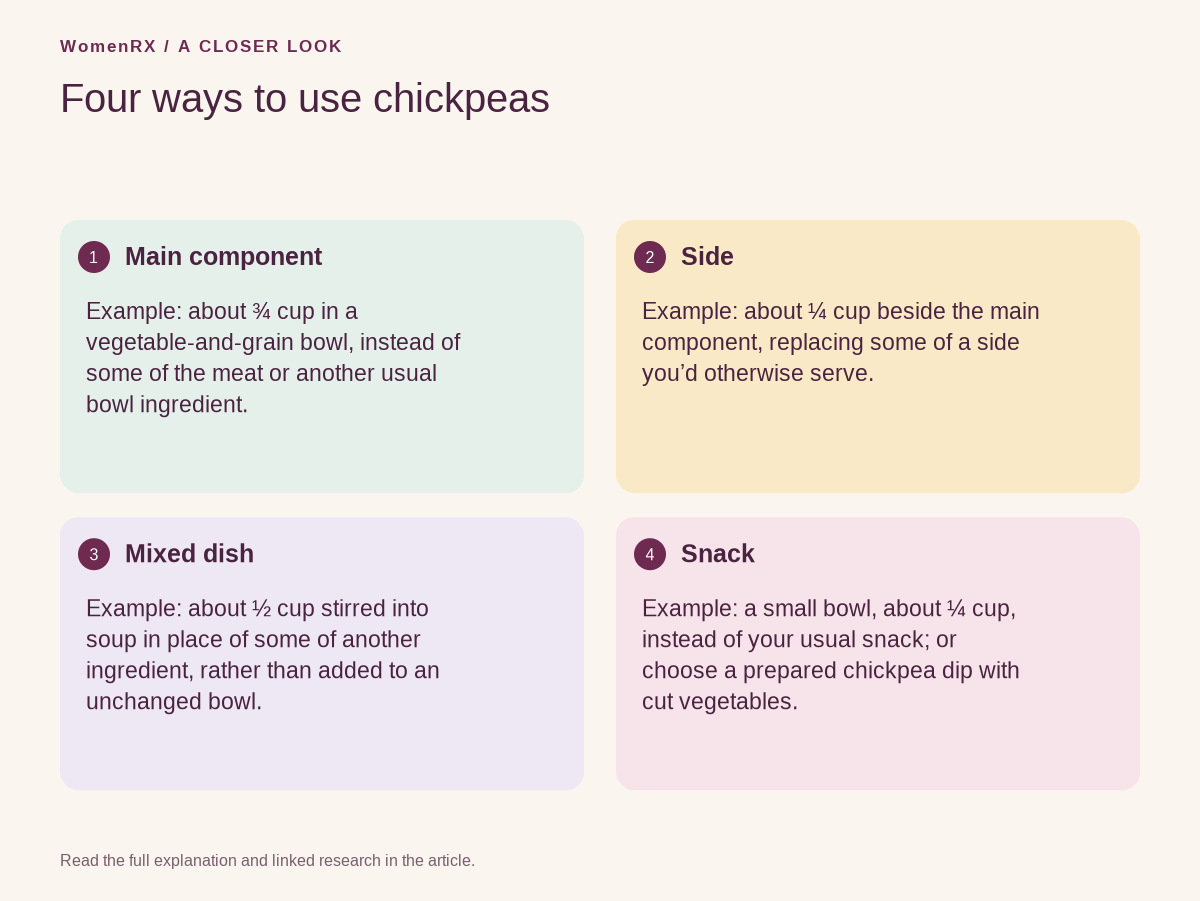
Four ways to use chickpeas
Main component: Example: about ¾ cup in a vegetable-and-grain bowl, instead of some of the meat or another usual bowl ingredient.
Side: Example: about ¼ cup beside the main component, replacing some of a side you’d otherwise serve.
Mixed dish: Example: about ½ cup stirred into soup in place of some of another ingredient, rather than added to an unchanged bowl.
Snack: Example: a small bowl, about ¼ cup, instead of your usual snack; or choose a prepared chickpea dip with cut vegetables.
Read the figure as text
These are illustrative amounts, not tested weight-loss portions. Compare what chickpeas replace in each option.- Main component: Example: about ¾ cup in a vegetable-and-grain bowl, instead of some of the meat or another usual bowl ingredient.
- Side: Example: about ¼ cup beside the main component, replacing some of a side you’d otherwise serve.
- Mixed dish: Example: about ½ cup stirred into soup in place of some of another ingredient, rather than added to an unchanged bowl.
- Snack: Example: a small bowl, about ¼ cup, instead of your usual snack; or choose a prepared chickpea dip with cut vegetables.
Sources you can check
- Dietary Supplements for Weight Loss - Health Professional Fact SheetAccessed 2026-09-25Return to first citation
- Sodium: MedlinePlusAccessed 2026-09-25Return to first citation
- Effects of dietary pulse consumption on body weight: a systematic review and meta-analysis of randomized controlled trials.Kim SJ, de Souza RJ, Choo VL, Ha V, Cozma AI, Chiavaroli L, Mirrahimi A, Blanco Mejia S, Di Buono M, Bernstein AM, Leiter LA, Kris-Etherton PM, Vuksan V, Beyene J, Kendall CW, Jenk... · The American journal of clinical nutrition · 2016Return to first citation