Pregnancy Nausea Relief: What Helps and When to Call
Relief can start with small, manageable steps, but trouble eating or drinking normally deserves prompt attention.
Pregnancy nausea isn’t defined by what time of day it happens; how much it affects drinking, eating, and daily life matters more. Try small, frequent sips of clear fluids and bland foods, and ask your prenatal care team whether vitamin B6 or doxylamine with B6 is appropriate. If you can’t keep fluids down, can’t eat or drink normally, or are losing weight, seek prompt assessment. 1 4 5
Focus on function, not the clock
“Morning sickness” is a familiar name, but it doesn’t describe how severe your symptoms are. A more useful question is whether you can keep fluids down, eat enough to get through the day, and manage your usual activities. Severe nausea can matter even without frequent vomiting: hyperemesis gravidarum can involve severe nausea and/or vomiting, difficulty eating or drinking normally, and major disruption to daily life. 5
Pregnancy nausea and vomiting often occur early in pregnancy, but the timing and severity vary. The underlying biology isn’t fully understood; research points to several possible interacting pathways rather than one simple cause. 4 Knowing the cause usually isn’t necessary to choose a first step. Your ability to drink and function is a practical guide to whether self-care is enough or you need help.
Start with what you can tolerate
If symptoms are mild and you’re managing fluids, try frequent small amounts of clear liquids rather than forcing a large drink at once. Bland foods may be easier to tolerate; avoiding foods or strong smells that trigger nausea may also help. Crackers before getting out of bed are one option, not a requirement or a remedy that works for everyone. 1
It’s okay to adapt what you eat while you feel sick. The immediate aim is to find fluids and foods you can tolerate, not to follow a perfect menu. If even small amounts of fluid won’t stay down, don’t keep relying on home measures alone. 1 5
Ask about vitamin B6 and doxylamine
Vitamin B6, also called pyridoxine, is one treatment to ask about for pregnancy nausea. A review describes B6 as a treatment option for mild-to-moderate symptoms, particularly in combination with doxylamine. That’s a discussion to have with your pregnancy care team, not a reason to assume the same approach fits everyone. 2 4
Before adding B6, tell your clinician what’s in your prenatal vitamin and any other supplements you take. Many prenatal products contain B6, and the NIH Office of Dietary Supplements notes that amounts used to relieve nausea can approach the U.S. upper limit for B6 during pregnancy. Checking the combined amount can help avoid unintentionally doubling up. 2
Doxylamine and other medicines should also be reviewed for your specific pregnancy and situation. Don’t start or stop a medicine on your own; pregnancy medicine decisions weigh the possible benefits and risks for you and the pregnancy. If the first approach isn’t enough, tell your care team rather than feeling you have to endure worsening symptoms. 3
Know when to get assessed
Contact your prenatal care team promptly if you can’t keep fluids down, can’t eat or drink normally, are losing weight, or nausea and vomiting are seriously limiting daily activities. These can be signs of severe pregnancy sickness and possible dehydration or other complications. You don’t need to diagnose hyperemesis gravidarum yourself to ask for help. 5
Assessment can include checking for dehydration. For severe vomiting, treatment may include fluids through an IV; what’s needed depends on the situation. 1 If you’re unsure whether your symptoms have crossed that line, describe what you can keep down and how the symptoms affect your day when you contact your care team.
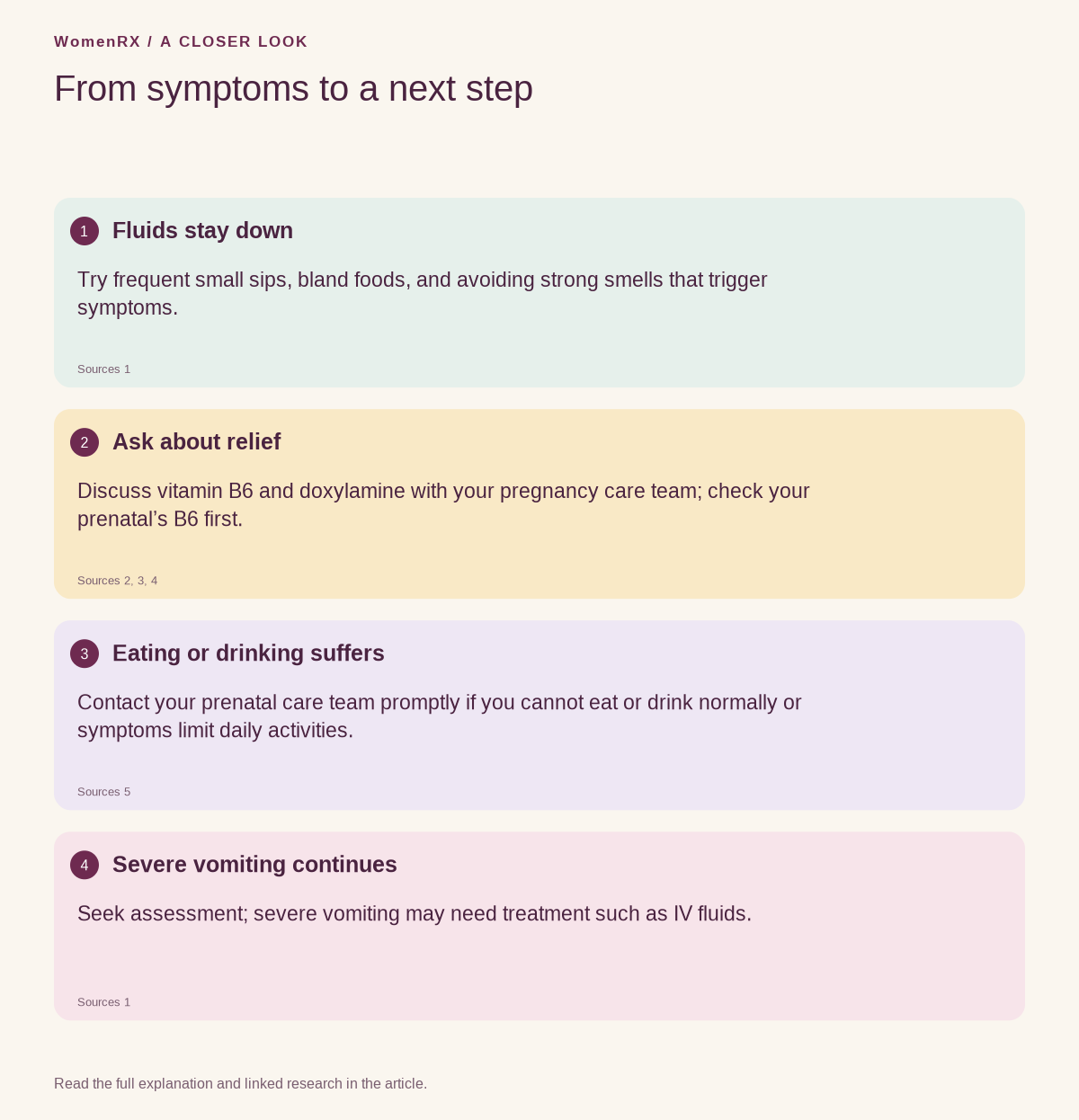
From symptoms to a next step
Fluids stay down: Try frequent small sips, bland foods, and avoiding strong smells that trigger symptoms.1
Ask about relief: Discuss vitamin B6 and doxylamine with your pregnancy care team; check your prenatal’s B6 first.234
Eating or drinking suffers: Contact your prenatal care team promptly if you cannot eat or drink normally or symptoms limit daily activities.5
Severe vomiting continues: Seek assessment; severe vomiting may need treatment such as IV fluids.1
Read the figure as text
Use hydration, eating, and daily function to choose whether to try comfort measures or seek prompt assessment.- Fluids stay down: Try frequent small sips, bland foods, and avoiding strong smells that trigger symptoms.1
- Ask about relief: Discuss vitamin B6 and doxylamine with your pregnancy care team; check your prenatal’s B6 first.234
- Eating or drinking suffers: Contact your prenatal care team promptly if you cannot eat or drink normally or symptoms limit daily activities.5
- Severe vomiting continues: Seek assessment; severe vomiting may need treatment such as IV fluids.1
More questions, answered
Can severe pregnancy sickness happen without vomiting?
Yes. Hyperemesis gravidarum can involve severe nausea and/or vomiting, along with difficulty eating or drinking normally and significant limits on daily activities. 5
Should I add vitamin B6 if my prenatal already contains it?
Check with your pregnancy care team before adding more. Many prenatal vitamins contain B6, and combining products can raise the total amount you take. 2
Sources you can check
- Nausea | Vomiting | MedlinePlusAccessed 2026-09-25Return to first citation
- Dietary Supplements and Life Stages: Pregnancy - Health Professional Fact SheetAccessed 2026-09-25Return to first citation
- Pregnancy and Medicines | MedlinePlusAccessed 2026-09-25Return to first citation
- Vitamin B6 in nausea and vomiting of pregnancy: metabolism, mechanisms, and clinical implications-a narrative review.Gao Z, Yao Y, Chang H, Wang Y, Yu J, Shi B, Gao Y, Wu X, Gao J. · Frontiers in nutrition · 2026Return to first citation
- Hyperemesis gravidarum and the dental patient.Martin K, Legg R. · British dental journal · 2026Return to first citation