Postpartum Thyroiditis: What Changes, and When to Follow Up
Thyroid symptoms can shift during the first year after birth, and feeling better doesn’t always mean thyroid function has returned to normal.
Postpartum thyroiditis can cause a temporary high-thyroid phase, a low-thyroid phase, either phase alone, or no noticeable symptoms. Because the symptoms can resemble ordinary postpartum changes, blood tests, usually including TSH and thyroid hormone levels, help clarify what’s happening. If you’re at higher risk or symptoms appear, ask about testing; follow-up can matter even after symptoms ease because some people develop lasting hypothyroidism. 124
The pattern can change, but it isn’t the same for everyone
Postpartum thyroiditis is an inflammation of the thyroid that can occur within a year after birth. Inflammation can release stored thyroid hormone into the bloodstream, creating a temporary high-thyroid, or thyrotoxic, phase. If the gland then makes too little hormone, a low-thyroid phase may follow. Some women have only one phase, and some have few or no obvious symptoms. 123
The phases often happen in different parts of the first postpartum year: the high-thyroid phase is commonly described around one to four months after birth, and the low-thyroid phase around four to eight months. Those are typical windows, not a schedule you can use to diagnose yourself. The timing and pattern vary. 12
During the high-thyroid phase, possible symptoms include palpitations, feeling anxious or unusually warm, and fatigue. In a low-thyroid phase, someone might notice low energy, feeling cold, dry skin, difficulty concentrating, or weight gain. These symptoms overlap with other postpartum experiences, so they can’t confirm thyroiditis on their own. Mood changes deserve attention in their own right; they aren’t automatically a thyroid problem. 124
What testing can tell you
If symptoms raise concern, or you have a risk factor, ask whether thyroid blood tests make sense. TSH and free T4 are among the results used to identify a change in thyroid function; a clinician may also consider thyroid antibodies and the pattern over time. One result may need context: thyroid levels can be changing between phases, and a single snapshot may not show the full course. 23
High-thyroid symptoms after birth can also occur with Graves’ disease, which is different from postpartum thyroiditis and can require different treatment. Thyroid peroxidase or thyroglobulin antibodies may be present in both conditions; thyroid-stimulating hormone receptor antibodies (TRAb) can help distinguish Graves’ disease. Your postpartum history, symptoms, blood tests, and how results change can all help guide that distinction. 3
Routine thyroid testing isn’t recommended for every postpartum woman without symptoms. A review recommends considering testing at six to twelve weeks postpartum for higher-risk groups, including women with a prior episode of postpartum thyroiditis, known thyroid antibody positivity, certain autoimmune conditions, or Hashimoto’s treated with thyroid hormone. The review also recommends checking TSH when postpartum depression or difficulty lactating is present. That doesn’t mean thyroid changes explain depression or feeding difficulty; it means thyroid function may be one part of the picture worth checking. 4
Why follow-up still matters when you feel better
Many women return to normal thyroid function within a year, but not everyone does. Some develop permanent hypothyroidism, and thyroid function testing is recommended periodically after recovery. Ask who will review your results and whether another test is needed, rather than assuming that symptoms improving means the thyroid has recovered. 24
If tests show low thyroid function, levothyroxine may be used in the hypothyroid phase. Treatment decisions and follow-up depend on your test results and circumstances. Levothyroxine can be used during breastfeeding, according to a review of thyroid disorders during lactation. 34
If you’re planning another pregnancy, mention a prior episode when discussing thyroid care. A history of postpartum thyroiditis is a risk factor for another episode, and ongoing monitoring may matter if thyroid function remains abnormal or you take thyroid hormone. 24
A useful way to start the conversation
You can describe what you’ve noticed, when it began, and whether it has changed, then ask: “Could thyroid testing help explain this?” If you’ve had thyroid disease, thyroid antibodies, or postpartum thyroiditis before, mention that too. If testing is done, ask what the TSH and free T4 show, whether the results could reflect a transition between phases, and when your thyroid function should be checked again. If you’re breastfeeding or planning another pregnancy, include that in the discussion.
These questions help connect the symptom you’re experiencing now with the possibility that thyroid function may shift over time, without assuming every postpartum change is thyroid-related.
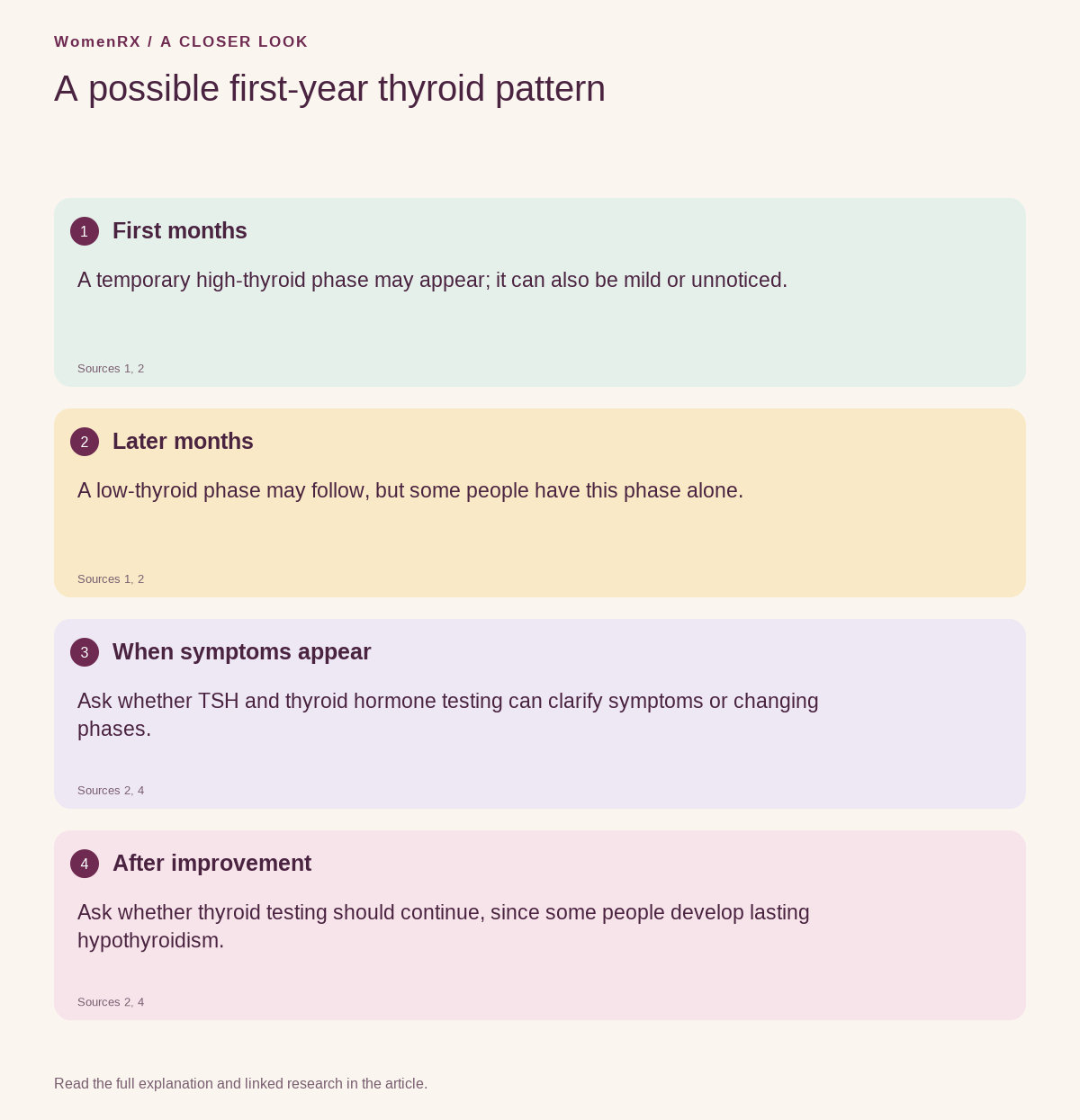
A possible first-year thyroid pattern
First months: A temporary high-thyroid phase may appear; it can also be mild or unnoticed.12
Later months: A low-thyroid phase may follow, but some people have this phase alone.12
When symptoms appear: Ask whether TSH and thyroid hormone testing can clarify symptoms or changing phases.24
After improvement: Ask whether thyroid testing should continue, since some people develop lasting hypothyroidism.24
Read the figure as text
Postpartum thyroiditis can change phases over time, but the pattern and timing vary. This timeline shows typical windows alongside testing and follow-up discussions.- First months: A temporary high-thyroid phase may appear; it can also be mild or unnoticed.12
- Later months: A low-thyroid phase may follow, but some people have this phase alone.12
- When symptoms appear: Ask whether TSH and thyroid hormone testing can clarify symptoms or changing phases.24
- After improvement: Ask whether thyroid testing should continue, since some people develop lasting hypothyroidism.24
More questions, answered
Does postpartum thyroiditis always cause both high and low thyroid phases?
No. It may cause a high-thyroid phase, a low-thyroid phase, both in sequence, or few noticeable symptoms. The pattern varies from person to person. 12
Can I breastfeed if I need levothyroxine?
A review of thyroid care during lactation reports that levothyroxine can be used while breastfeeding. Ask how your thyroid levels and treatment will be followed in your situation. 4
Sources you can check
- Postpartum ThyroiditisCarlson K, Mikes BA. · 2025Return to first citation
- Biochemical transition during triphasic postpartum thyroiditis: confusion with central hypothyroidism.Oyibo SO, Green OS, Laliwala NM, Sagi SV. · Endocrinology, diabetes & metabolism case reports · 2021Return to first citation
- Diagnoses of obstetric and postpartum thyroid disease: a Danish validation study.Houmøller AM, Gerlif K, Torp NMU, Andersen SL. · Scientific reports · 2024Return to first citation
- An update on thyroid disorders in the postpartum period.Peng CC, Pearce EN. · Journal of endocrinological investigation · 2022Return to first citation