Hashimoto’s Thyroiditis: What Your Tests Mean for Treatment
Thyroid antibodies can point to an autoimmune cause, but hormone tests show whether your thyroid needs treatment now.
A positive thyroid antibody test can support a Hashimoto’s diagnosis, but it doesn’t tell you whether your thyroid is making enough hormone or whether you need levothyroxine. TSH and thyroid hormone tests help answer that question. Normal function may call for periodic TSH checks; hypothyroidism is treated with thyroid hormone replacement. If you’re planning a pregnancy, bring your results into the discussion. 23
An antibody result and a hormone result tell different stories
Hashimoto’s thyroiditis is an autoimmune condition that can damage the thyroid over time. It doesn’t always mean the gland has stopped making enough hormone. People with Hashimoto’s can have normal thyroid function or hypothyroidism. Some have a temporary period of excess thyroid hormone in the blood as stored hormone is released from damaged thyroid tissue. 3
That’s why it helps to separate cause from current function. Thyroid antibody tests look for markers that can help identify an autoimmune thyroid disorder. TSH, usually the first thyroid blood test, and thyroid hormone tests help assess how the gland is working. A positive antibody result may help explain why thyroid function has changed, but it doesn’t measure hormone production or establish a need for medication on its own. 23
For example, if an antibody test is positive but thyroid function tests are normal, the immediate conversation is different from the one you’d have if testing shows hypothyroidism. One result points toward an autoimmune process; the other shows whether hormone replacement is needed now. 23
What happens after an abnormal result?
First, find out which result was flagged. An abnormal antibody result, an abnormal TSH result, and an abnormal thyroid hormone result don’t mean the same thing. Your results need to be read together rather than treated as a single yes-or-no test for Hashimoto’s. 23
If thyroid function is normal, periodic TSH measurements can check for a change toward hypothyroidism. Ask when your thyroid function should be checked again and what change would prompt another discussion. If testing shows hypothyroidism, thyroid hormone replacement becomes the treatment discussion. A review also notes that some people with milder thyroid dysfunction may need levothyroxine, but that decision isn’t settled by antibody status alone. 34
Symptoms matter, but they’re not a substitute for the function tests. Thyroid hormones affect energy use and functions including digestion, heart rate, and mood. A change you notice in midlife is worth taking seriously without assuming it must be Hashimoto’s. Testing helps establish whether thyroid function is part of the picture. 2
If levothyroxine is part of your plan
Levothyroxine replaces thyroid hormone when Hashimoto’s has led to hypothyroidism. Its effect is checked with laboratory results and a clinical assessment, because too much or too little replacement can cause problems. Over-replacement can reduce bone mineral density, a particular concern after menopause. 13
If results still suggest hypothyroidism while you’re taking levothyroxine, the answer isn’t necessarily more medication. The US prescribing information identifies inadequate absorption and drug interactions among possible reasons treatment may not be working as expected. For example, antacids, sucralfate, and proton pump inhibitors may reduce absorption. Mention medicines you take regularly when reviewing a result so that the test and your treatment can be considered together. 1
Pregnancy changes the conversation
If you’re planning a pregnancy or are pregnant, bring up your thyroid history and results even if you feel well. Pregnancy can increase thyroid hormone demand, and levothyroxine is the thyroid hormone treatment identified for replacement during pregnancy. That makes the distinction between positive antibodies and current thyroid function especially useful to discuss. 34
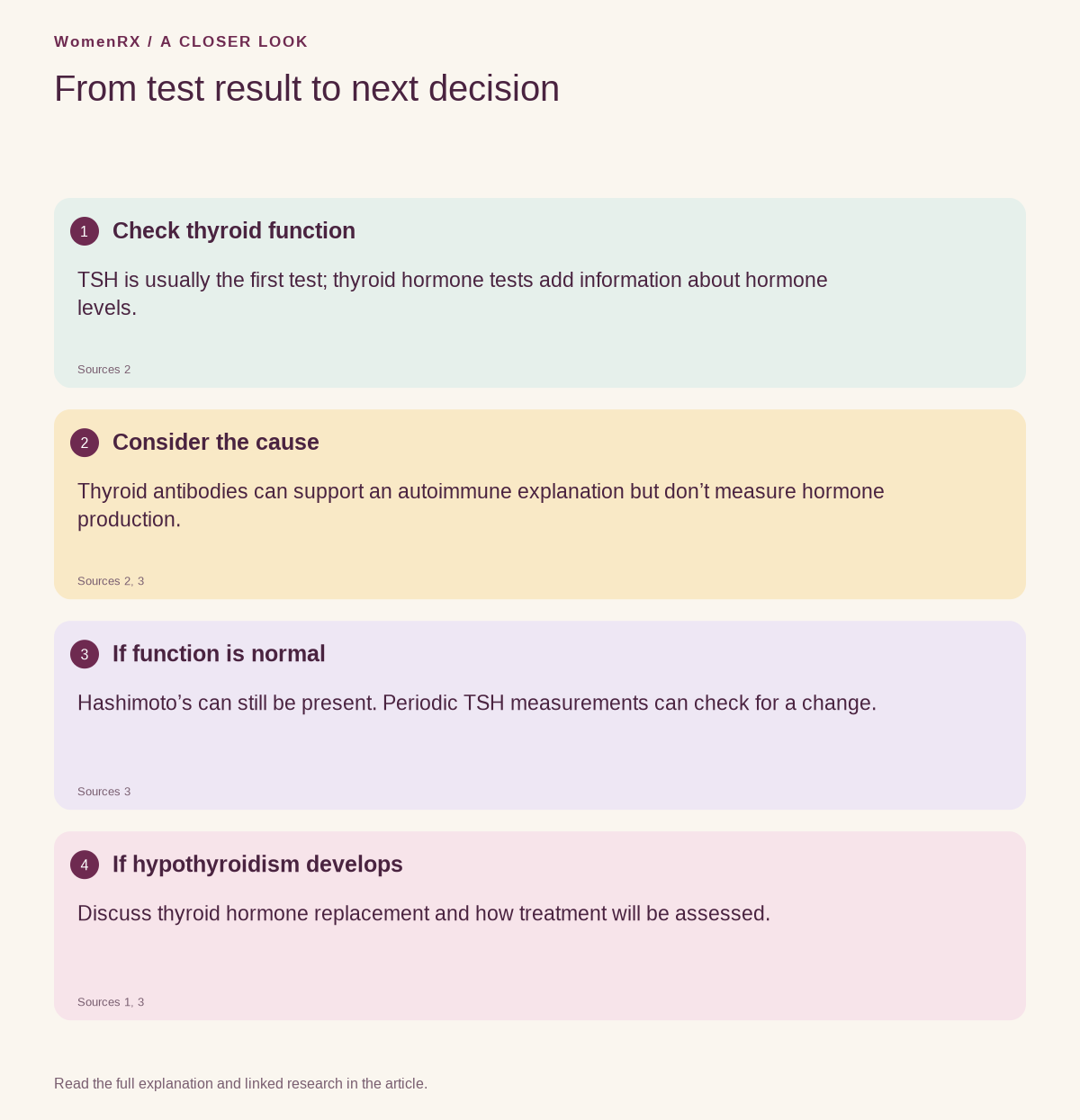
From test result to next decision
Check thyroid function: TSH is usually the first test; thyroid hormone tests add information about hormone levels.2
Consider the cause: Thyroid antibodies can support an autoimmune explanation but don’t measure hormone production.23
If function is normal: Hashimoto’s can still be present. Periodic TSH measurements can check for a change.3
If hypothyroidism develops: Discuss thyroid hormone replacement and how treatment will be assessed.13
Read the figure as text
Read the autoimmune clue alongside thyroid function, then match the next discussion to what the gland is doing now.- Check thyroid function: TSH is usually the first test; thyroid hormone tests add information about hormone levels.2
- Consider the cause: Thyroid antibodies can support an autoimmune explanation but don’t measure hormone production.23
- If function is normal: Hashimoto’s can still be present. Periodic TSH measurements can check for a change.3
- If hypothyroidism develops: Discuss thyroid hormone replacement and how treatment will be assessed.13
More questions, answered
Do positive thyroid antibodies mean I’ll need medication later?
Not necessarily. Hashimoto’s can be present while thyroid function is normal. Periodic TSH measurements can check whether that changes; a positive antibody test alone doesn’t establish a future need for levothyroxine. 23
Sources you can check
- LEVOTHYROXINE SODIUM TABLET [CARDINAL HEALTH 107, LLC] | US prescribing information and patient instructionsAccessed 2026-09-25Return to first citation
- Thyroid Tests: MedlinePlusAccessed 2026-09-25Return to first citation
- Hashimoto thyroiditis: an evidence-based guide to etiology, diagnosis and treatment.Klubo-Gwiezdzinska J, Wartofsky L. · Polish archives of internal medicine · 2022Return to first citation
- [Hashimoto thyroiditis, therapeutic options and extrathyroidal options - an up-to-date overview].Petnehazy E, Buchinger W. · Wiener medizinische Wochenschrift (1946) · 2020Return to first citation