Getting Help for Postpartum Depression or Anxiety
You can start with the maternity clinician, primary care provider, or mental health professional you can reach soonest.
If depression or anxiety is making daily life harder during pregnancy or after birth, tell a clinician rather than waiting to see if it passes. For postpartum depression, care may include talk therapy or medication; anxiety can also be evaluated by a clinician, who may provide treatment or refer you to mental health care. Share how symptoms affect sleep, caregiving, and feeding, and get urgent help if you may not be safe. 1 2

Start with the person you can reach
You don’t have to work out whether this is “serious enough” before asking for help. If you’re pregnant or recently gave birth, contact your maternity or obstetric care team, your primary care provider, or a mental health professional. If one route is hard to access, try another. A provider can ask about your symptoms and health history and may refer you to a mental health professional for an evaluation. 1 2
Depression can begin during pregnancy and continue after birth; postpartum depression can also begin within the first year after childbirth. 1 Anxiety is another reason to reach out, especially if worry feels hard to control or is interfering with daily activities. 2 You don’t need to wait until a scheduled postpartum visit to bring up symptoms that are affecting you now.
When you contact someone, say plainly what has changed and how it is affecting your day. For example: “I’m anxious most of the day and can’t settle enough to sleep when I have the chance,” or “I’m finding it hard to manage basic tasks or care for myself.” These are examples of details that may help a clinician understand what’s going on, not a test you need to pass.
Talk through care that fits your situation
For postpartum depression, treatment may include talk therapy or medication. 1 Anxiety can also be evaluated and treated: general anxiety care may include psychotherapy, medication, or both, with a provider helping determine an approach. These are general anxiety treatments, rather than a postpartum-specific treatment plan. 2
Tell the clinician if you’re pregnant or breastfeeding, and describe any concerns about medication and feeding. MedlinePlus advises discussing breastfeeding so a provider can consider treatment options. 1 You can also explain how much sleep you’re getting, whether you can rest when someone else cares for the baby, and which parts of daily life feel hardest. This helps make the conversation about your actual needs, not just a symptom label.
Support from family, friends, or a support group may be helpful alongside care. 1 If there’s someone you trust, you could ask them to help with a specific task, such as making the call, staying with you, or taking a shift with the baby while you rest. Those are examples of practical support, not a substitute for treatment when symptoms are serious.
Know when to use an urgent route
If you’re thinking about suicide or hurting yourself or your baby, get help right away: call 911 or go to an emergency room. 1 Confusion, hallucinations, or dangerous behavior after birth can be signs of postpartum psychosis, a medical emergency; call 911 or go to an emergency room. 1 If you’re worried about immediate safety, you can also reach out to a loved one or close friend while arranging emergency help. 1
For symptoms that are distressing but don’t involve an immediate safety risk, contact a provider promptly and explain what is happening. A simple route is shown below: use emergency care for immediate danger, and contact maternity, primary care, or mental health services to discuss ongoing symptoms and next steps.
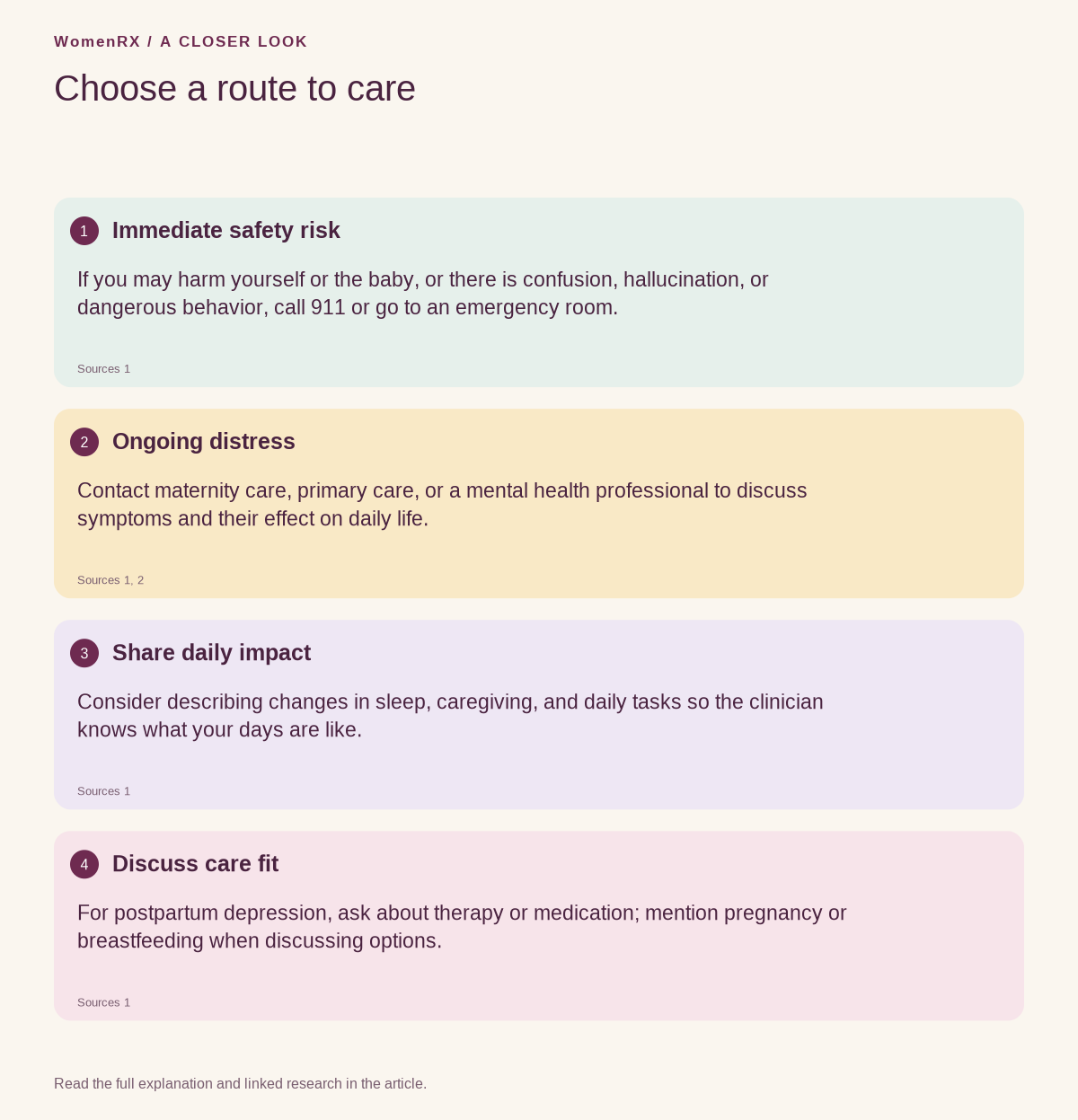
Choose a route to care
Immediate safety risk: If you may harm yourself or the baby, or there is confusion, hallucination, or dangerous behavior, call 911 or go to an emergency room.1
Ongoing distress: Contact maternity care, primary care, or a mental health professional to discuss symptoms and their effect on daily life.12
Share daily impact: Consider describing changes in sleep, caregiving, and daily tasks so the clinician knows what your days are like.1
Discuss care fit: For postpartum depression, ask about therapy or medication; mention pregnancy or breastfeeding when discussing options.1
Read the figure as text
Use immediate safety needs to choose the next step; for ongoing symptoms, start with a provider you can reach.- Immediate safety risk: If you may harm yourself or the baby, or there is confusion, hallucination, or dangerous behavior, call 911 or go to an emergency room.1
- Ongoing distress: Contact maternity care, primary care, or a mental health professional to discuss symptoms and their effect on daily life.12
- Share daily impact: Consider describing changes in sleep, caregiving, and daily tasks so the clinician knows what your days are like.1
- Discuss care fit: For postpartum depression, ask about therapy or medication; mention pregnancy or breastfeeding when discussing options.1
More questions, answered
Should I wait until my postpartum checkup to ask for help?
No. If symptoms are affecting you now, contact a provider now. MedlinePlus advises talking with a provider if you think you may have postpartum depression. 1
What should I mention if I’m breastfeeding?
Tell the provider that you’re breastfeeding and discuss your concerns about feeding and treatment options. MedlinePlus specifically recommends sharing breastfeeding status when discussing treatment for postpartum depression. 1
Sources you can check
- Postpartum Depression: MedlinePlusAccessed 2026-09-25Return to first citation
- Anxiety: MedlinePlusAccessed 2026-09-25Return to first citation