Postpartum Depression: Signs, Screening, and Support
Mood changes that linger, feel severe, or make daily care difficult deserve attention, even before two weeks have passed.
The baby blues often ease within a few days to a week. Depression symptoms that are more severe, persist beyond two weeks, or interfere with daily life may signal postpartum depression, which can begin anytime in the first year after childbirth. A screening questionnaire can flag symptoms, but a clinician’s evaluation, not a score alone, is used to assess what’s going on. 13
A difficult stretch after birth doesn’t automatically mean postpartum depression. But you don’t have to wait until you’re unable to manage to reach out. What matters is how intense the feelings are, whether they’re easing, and how much they’re affecting your everyday life.
Look at the pattern, not just one hard day
Mood swings, crying spells, and anxiety can happen in the first days after birth. These “baby blues” commonly settle within a few days to a week. Postpartum depression is more concerning when symptoms are stronger, persist beyond two weeks, or make it hard to care for yourself or manage daily tasks. It can begin at any point in the first year after childbirth, not only around the six-week visit. 12
Depression doesn’t always feel like sadness. A persistently low mood or losing interest in things you usually care about can be signs; basic activities such as sleeping or eating may also become difficult. A clinician will want to understand how symptoms affect your life, not just whether you can name a particular feeling. 3
The two-week mark is a useful distinction, not a reason to put off asking for help. If symptoms feel severe, are getting worse, or are already disrupting daily care, contact a provider sooner. Postpartum depression is a health condition, not a verdict on how much you love your baby or how well you parent. 12
A screening result starts a conversation
A provider may use questions about mood, sleep, and thoughts, or a questionnaire such as the Edinburgh Postnatal Depression Scale. A positive screen means symptoms need a closer look; it does not, by itself, establish a diagnosis. Diagnosis involves a clinical evaluation of your symptoms. Depending on what you’re experiencing, a provider may also consider whether another medical condition or a medicine could be contributing to depression-like symptoms. 13
Screening is most useful when it leads to follow-up. In one single-center study of patients screened at a six-week postpartum clinic, a positive screen was associated with more referrals, but the researchers also found a gap between screening and referral, diagnosis, or treatment. That study describes one clinic, not what will happen in every care setting. If you’ve filled out a questionnaire and haven’t heard what comes next, it’s reasonable to ask who will review the result and how to arrange an evaluation. 4
Make the first step specific
You can contact the clinician who provided your pregnancy or postpartum care, your primary care provider, or a mental health provider. You might say: “I’m feeling low most days, and it’s making it hard to get through my usual tasks. Can we talk about an evaluation for postpartum depression?” You don’t need to be certain what the cause is before you ask.
If you’re supporting someone else, offer practical help rather than taking over. For example, ask whether she’d like you to sit with her while she calls, help find the clinic’s contact information, or take on a task so she has time to speak privately. Family and friend support can be part of postpartum support; it doesn’t replace assessment when symptoms are persistent or impairing. 1
Birth and caregiving circumstances differ. A difficult recovery, a baby who needs hospital care, or limited support may shape what daily life feels like, but none of those details alone can confirm or rule out depression. The same core question remains: are symptoms persisting or making it harder to function? You deserve an assessment based on your experience, not assumptions about what this period should feel like.
When safety needs immediate attention
If you might harm yourself or someone else, or can’t stay safe, get urgent help now: call or text 988 in the United States. If there’s immediate danger, call 911 or go to an emergency room. You don’t need to wait for a routine appointment. 1
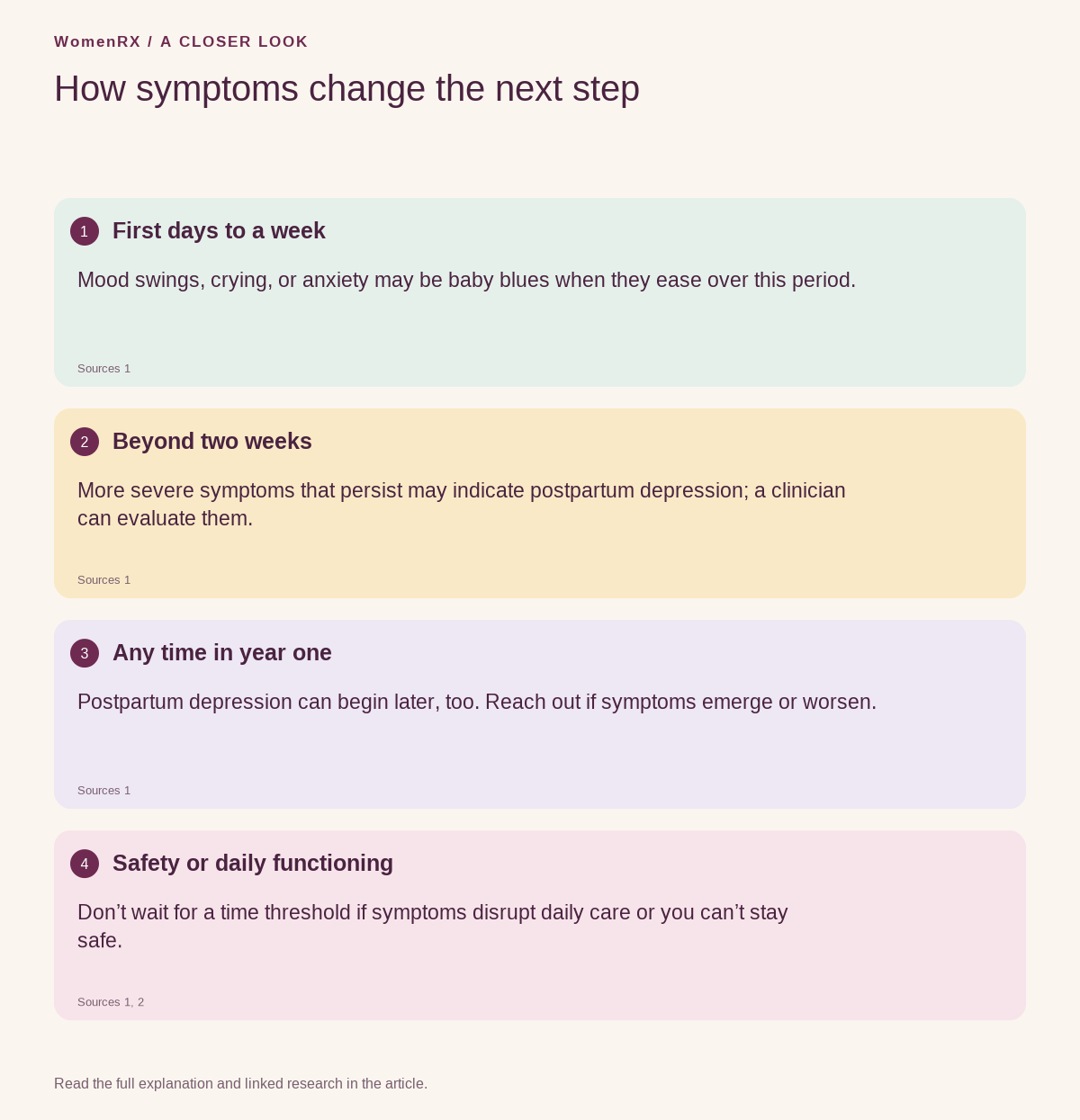
How symptoms change the next step
First days to a week: Mood swings, crying, or anxiety may be baby blues when they ease over this period.1
Beyond two weeks: More severe symptoms that persist may indicate postpartum depression; a clinician can evaluate them.1
Any time in year one: Postpartum depression can begin later, too. Reach out if symptoms emerge or worsen.1
Safety or daily functioning: Don’t wait for a time threshold if symptoms disrupt daily care or you can’t stay safe.12
Read the figure as text
The time course can help distinguish common early mood changes from symptoms that deserve assessment. Severe symptoms or safety concerns call for action sooner.- First days to a week: Mood swings, crying, or anxiety may be baby blues when they ease over this period.1
- Beyond two weeks: More severe symptoms that persist may indicate postpartum depression; a clinician can evaluate them.1
- Any time in year one: Postpartum depression can begin later, too. Reach out if symptoms emerge or worsen.1
- Safety or daily functioning: Don’t wait for a time threshold if symptoms disrupt daily care or you can’t stay safe.12
More questions, answered
Can postpartum depression start after the six-week checkup?
Yes. Postpartum depression can begin anytime in the first year after childbirth, so new or worsening symptoms later in that period still deserve attention. 1
Does a positive postpartum depression screen mean I have depression?
No. A questionnaire can identify symptoms that need follow-up, but diagnosis comes from a clinical evaluation. Ask who will review your result and what the next step is. 14
Sources you can check
- Postpartum Depression: MedlinePlusAccessed 2026-09-25Return to first citation
- Postpartum Care: MedlinePlusAccessed 2026-09-25Return to first citation
- Depression: MedlinePlusAccessed 2026-09-25Return to first citation
- Patient outcomes following positive depression screening in a postpartum clinic: A single center retrospective cohort study.Jethwa AJ, Guo N, Harrison N, Chakraborty D, Mendoza K, Kii N, Carvalho B, Panelli DM, Sultan P. · Medical research archives · 2026Return to first citation