Could Seasonal Changes Be Affecting Your Mood?
A repeating season-linked dip can be more than winter tiredness when depression symptoms affect daily life and ease as the season changes.
Seasonal affective disorder is depression that follows a recurring seasonal pattern, most often beginning in late fall or winter and easing in spring or summer. Sleepiness or carbohydrate cravings may occur with winter-pattern depression, but neither confirms SAD. A clinician can also consider other causes, including certain medicines, thyroid disorders, or bipolar disorder, which can have a seasonal pattern too. 124
The calendar matters, but symptoms matter too
SAD, also called depression with a seasonal pattern, usually starts in late fall or early winter and improves in spring or summer. Spring- or summer-onset episodes can happen, but they’re less common. A hard winter day or feeling tired when it’s dark outside doesn’t, by itself, establish a depressive disorder. The more meaningful clue is a recurring seasonal pattern alongside symptoms that affect your everyday life. 12
Depression can involve a low mood or losing interest in activities. In winter-pattern depression, excessive sleepiness and carbohydrate cravings may also occur. These symptoms can help describe what’s going on, but they aren’t a self-test. 24
What else could explain the change?
Seasonal timing is one part of the picture, not a reason to skip other possibilities. Some medicines and medical conditions, including thyroid disorders, can cause symptoms that resemble depression. Bipolar disorder can involve intense mood swings, and it can also have a seasonal pattern. If you have a bipolar diagnosis or a history of significant mood swings, bring that up when discussing treatment options. 24
For depression, a clinician may consider whether low mood or loss of interest has been present most of the day, nearly every day, for at least two weeks, and whether it’s affecting daily activities. They may also ask about your medical history and medicines, and consider whether another condition could be contributing. You don’t need to wait for another season to seek help if symptoms are already disrupting your life. 2
SAD is reported more often in women, but that doesn’t establish a hormone-driven cause or mean women need a different treatment. The exact causes of SAD are unknown, and the treatment comparisons described below don’t provide a clear women-specific result. 15
Comparing light therapy, talk therapy, and medication
Light therapy is a common treatment for SAD. Research reviews don’t give one simple answer about how much it helps: a 2024 network meta-analysis of 21 randomized trials involving 1,037 people reported a benefit but rated the evidence quality low. A separate health technology assessment found no hint of benefit when it pooled all types of phototherapy against placebo, but did find hints of short-term benefit for light-box therapy on some depression outcomes. 35
Those findings aren’t a guarantee for an individual. In the assessment, placebo comparisons measured outcomes at the end of treatment periods lasting two to eight weeks. Two studies also compared light-box therapy with cognitive behavioral therapy (CBT) and reported similar remission rates at one year. That limited follow-up doesn’t establish what happens over the long term for everyone. 5
Psychotherapy, including CBT, is another option. In the assessment’s direct comparisons, light-box therapy wasn’t shown to be more beneficial than CBT. Antidepressant medication may also be considered, alone or alongside other approaches. Light-box therapy wasn’t shown to be more beneficial than fluoxetine in the comparisons, but the assessment didn’t compare it with other antidepressants. These results describe study comparisons, not a prediction about which option will suit you best. 15
A useful question before choosing is: “Could my seasonal symptoms be part of bipolar disorder, and how does that affect which treatment we consider?” That’s especially relevant if you have a bipolar diagnosis or a history of significant mood swings, since bipolar disorder can have a seasonal pattern too. If light therapy is being considered, ask whether it fits your situation and how it should fit into your overall treatment plan. 24
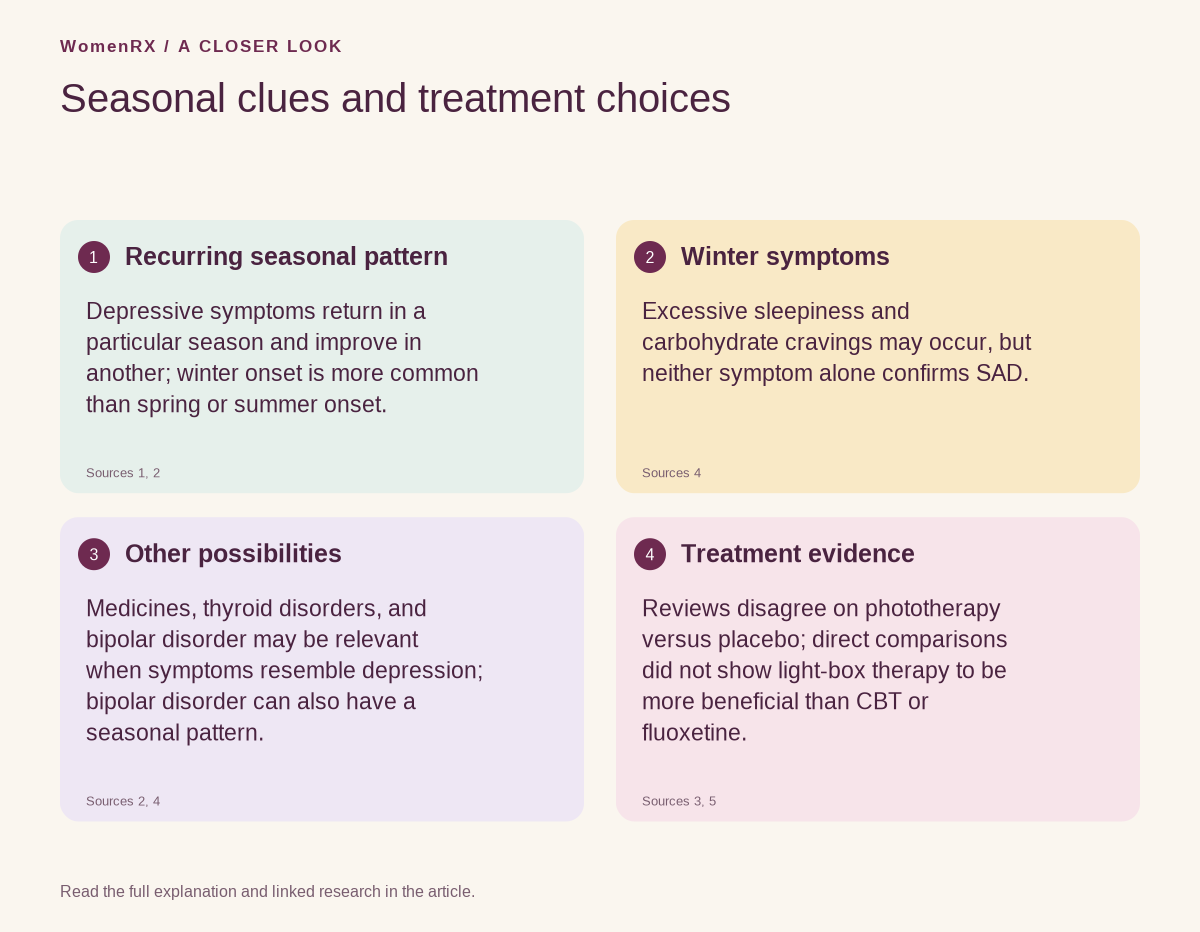
Seasonal clues and treatment choices
Recurring seasonal pattern: Depressive symptoms return in a particular season and improve in another; winter onset is more common than spring or summer onset.12
Winter symptoms: Excessive sleepiness and carbohydrate cravings may occur, but neither symptom alone confirms SAD.4
Other possibilities: Medicines, thyroid disorders, and bipolar disorder may be relevant when symptoms resemble depression; bipolar disorder can also have a seasonal pattern.24
Treatment evidence: Reviews disagree on phototherapy versus placebo; direct comparisons did not show light-box therapy to be more beneficial than CBT or fluoxetine.35
Read the figure as text
Compare the recurring pattern that may suggest SAD, other explanations worth considering, and what treatment comparisons do and don’t show.- Recurring seasonal pattern: Depressive symptoms return in a particular season and improve in another; winter onset is more common than spring or summer onset.12
- Winter symptoms: Excessive sleepiness and carbohydrate cravings may occur, but neither symptom alone confirms SAD.4
- Other possibilities: Medicines, thyroid disorders, and bipolar disorder may be relevant when symptoms resemble depression; bipolar disorder can also have a seasonal pattern.24
- Treatment evidence: Reviews disagree on phototherapy versus placebo; direct comparisons did not show light-box therapy to be more beneficial than CBT or fluoxetine.35
More questions, answered
Can seasonal-pattern depression start in summer?
Yes. Depression episodes can begin in spring or summer, although winter-onset SAD is more common. 1
Does light therapy work better than CBT or medication?
The health technology assessment found no hint that light-box therapy was more beneficial than CBT or fluoxetine in the direct comparisons it reviewed. It did not compare light therapy with every type of psychotherapy or antidepressant, so the findings don’t settle every treatment choice. 5
Sources you can check
- Seasonal Affective Disorder: MedlinePlusAccessed 2026-09-25Return to first citation
- Depression: MedlinePlusAccessed 2026-09-25Return to first citation
- Treatment measures for seasonal affective disorder: A network meta-analysis.Chen ZW, Zhang XF, Tu ZM. · Journal of affective disorders · 2024Return to first citation
- Forty years of seasonal affective disorder.Rybakowski J. · Psychiatria polska · 2024Return to first citation
- Seasonal affective disorder: Do non-drug interventions such as light and vitamin therapy lead to better results? IQWiG Reports - Commission No. HT18-042021Return to first citation