Postpartum Recovery: What Changes and When to Get Help
Bleeding, soreness, and breast changes can be part of recovery, but some symptoms need attention right away.
After birth, expect some vaginal bleeding, cramps, fatigue, and changes in your breasts and bowel habits. A vaginal birth may also leave you healing from a tear; a cesarean adds an abdominal incision to care for. Recovery doesn’t follow one deadline. Heavy bleeding, fever, severe pain, trouble breathing, or a worsening headache should not wait for a routine checkup. 1456
The first days: several things are healing at once
Vaginal bleeding begins after birth whether you delivered vaginally or by cesarean. It can be fairly heavy at first, then usually decreases and turns brownish over the following weeks. Cramps may feel like period pain, particularly while breastfeeding, because feeding makes the uterus contract. Use pads while the bleeding continues so you can see how much you’re losing. 56
Breasts may become full and tender as milk production changes in the first few days. Constipation, swollen feet, and tiredness can also be part of early recovery. Rest matters, even if eating, sleeping, and caring for your baby are most of what you can manage at first. None of these expected changes means you have to put up with pain or a symptom that is getting worse. 164
How the birth can change what needs attention
After a vaginal birth, soreness around a tear or stitches can make sitting or peeing uncomfortable. Trouble peeing, marked soreness, or an unpleasant smell deserves a call to your care team. A little urine leakage with a cough or laugh is common after birth; pelvic floor exercises may help, and leakage that persists is worth bringing up at postpartum care. Tell your care team if stool leaks or constipation won’t go away, too. 6
After a cesarean, you’re healing from abdominal surgery as well as the changes that follow any birth. Incision discomfort can last for weeks. Gentle movement is encouraged, but avoid pushing through activities that hurt and follow the activity guidance given for your own recovery. Watch the incision: increasing redness, swelling, pain, pus, or foul-smelling fluid needs prompt medical advice. Severe pain should not be dismissed as ordinary surgical recovery. 5
Your birth route isn’t the whole story. Prior pain, mental health during pregnancy, social support, and other aspects of health have been associated with how people recover beyond six weeks. Complications can change follow-up needs as well. If you had a serious pregnancy or birth complication, the plan for ongoing care may matter long after the incision or bleeding has healed. 32
A recovery timeline, not a deadline
- First days: Bleeding and cramps, breast fullness, bowel changes, and soreness may all need attention at once. After a cesarean, incision care is part of that picture. 156
- Following weeks: Bleeding generally decreases, although spotting or bleeding can occur off and on for up to six weeks. A cesarean incision or a vaginal tear may still be healing. 156
- Beyond six weeks: A calendar milestone doesn’t settle persistent pain, bladder or bowel symptoms, or emotional difficulties. Recovery can extend beyond the early postpartum weeks, especially after complications. 326
- At any point: A warning sign takes priority over the timeline. Seek care for it when it happens rather than waiting for a scheduled visit. Some urgent maternal warning signs remain relevant throughout the year after delivery. 4
Signs that should not wait
Seek medical care immediately for any of the following after birth:
- Heavy bleeding: soaking through one or more pads in an hour, passing clots bigger than an egg, or passing tissue. Faintness with sudden heavy bleeding is also a warning sign. 46
- A severe or worsening headache, vision changes, fainting, or extreme swelling of the face or hands. These aren’t symptoms to write off as lack of sleep. 4
- Chest pain, trouble breathing, a fast or pounding heartbeat, or severe belly pain that doesn’t go away. 4
- A temperature of 100.4°F (38°C) or higher, or vaginal discharge that smells bad. 4
- Pain, tenderness, swelling, redness, or warmth in a leg, particularly the calf; or pain, tenderness, or swelling in an arm. The CDC specifically flags these symptoms during pregnancy and up to six weeks after birth. 4
- Thoughts of harming yourself or your baby. Get immediate help rather than trying to manage those thoughts alone. 4
This isn’t a test you have to pass before asking for help. If something feels seriously wrong, say that you’ve recently given birth when you seek care. The CDC advises telling a care provider if you were pregnant within the past year. 4
Emotional recovery counts, too
Feeling sad or having the “baby blues” can happen after birth. But extreme sadness or being unable to care for yourself or your baby may signal postpartum depression and needs attention. Thoughts of harm belong in the immediate-help category above. Physical healing and emotional recovery can move at different speeds; neither has to be judged against someone else’s experience. 143
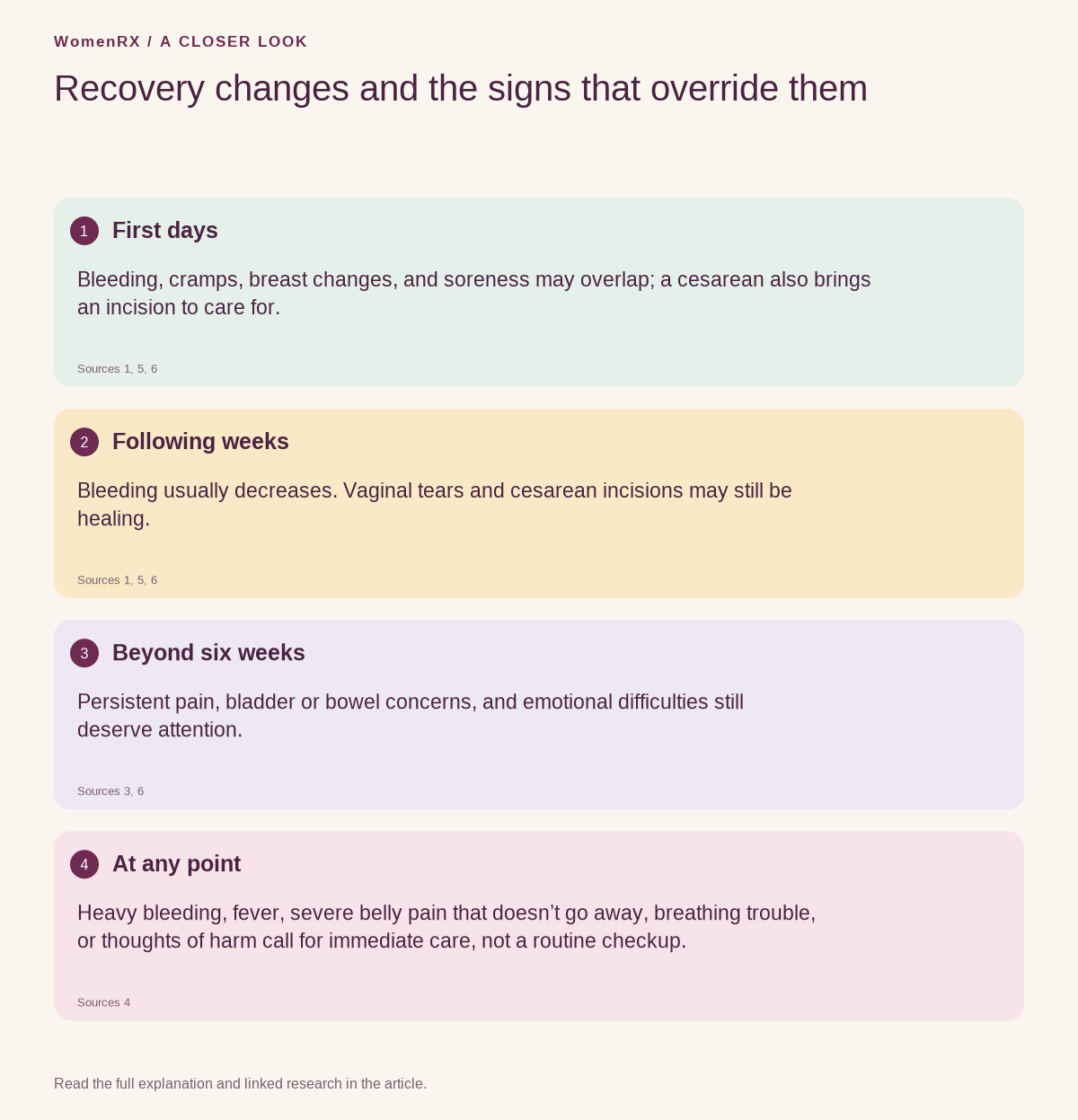
Recovery changes and the signs that override them
First days: Bleeding, cramps, breast changes, and soreness may overlap; a cesarean also brings an incision to care for.156
Following weeks: Bleeding usually decreases. Vaginal tears and cesarean incisions may still be healing.156
Beyond six weeks: Persistent pain, bladder or bowel concerns, and emotional difficulties still deserve attention.36
At any point: Heavy bleeding, fever, severe belly pain that doesn’t go away, breathing trouble, or thoughts of harm call for immediate care, not a routine checkup.4
Read the figure as text
Broad phases show what may change after birth, while the final item marks symptoms that should not wait for a scheduled visit.- First days: Bleeding, cramps, breast changes, and soreness may overlap; a cesarean also brings an incision to care for.156
- Following weeks: Bleeding usually decreases. Vaginal tears and cesarean incisions may still be healing.156
- Beyond six weeks: Persistent pain, bladder or bowel concerns, and emotional difficulties still deserve attention.36
- At any point: Heavy bleeding, fever, severe belly pain that doesn’t go away, breathing trouble, or thoughts of harm call for immediate care, not a routine checkup.4
More questions, answered
Is bleeding after a cesarean normal?
Yes. Vaginal bleeding can happen after a cesarean as well as a vaginal birth. It generally decreases over the following weeks. Bleeding that soaks through one or more pads in an hour, clots bigger than an egg, or passed tissue needs immediate medical care. 564
Sources you can check
- Postpartum Care: MedlinePlusAccessed 2026-09-25Return to first citation
- From Survival to Recovery: Long-Term Sequelae of Severe Maternal Morbidity and Obstetric Critical Illness.Schroeder BE, Kuller JA, Craig A, Dotters-Katz SK, Ashana D. · Obstetrical & gynecological survey · 2026Return to first citation
- The influence of antenatal and pregnancy-related factors on recovery after childbirth: a systematic review.Frijmersum ZZ, Van der Meij E, De Vries R, Anema JR, Huirne JAF, Bakker PCAM. · AJOG global reports · 2026Return to first citation
- Urgent Maternal Warning Signs and Symptoms | HEAR HER Campaign | CDCAccessed 2026-09-25Return to first citation
- Caesarean section - Recovery - NHSAccessed 2026-09-25Return to first citation
- Your body after the birth - NHSAccessed 2026-09-25Return to first citation